
How to Choose Eye Treatments for Sun Protection
An ordinary eye cream is not sun protection. For a product to serve that role, it must be appropriately labeled with sunscreen directions and used in the required amount; antioxidant, brightening, or daytime wording alone does not establish UV protection.
The buying question is therefore twofold: does the eye treatment layer comfortably beneath a separate broad-spectrum sunscreen, or is it itself a labeled sunscreen suitable for the directed eye-area placement?
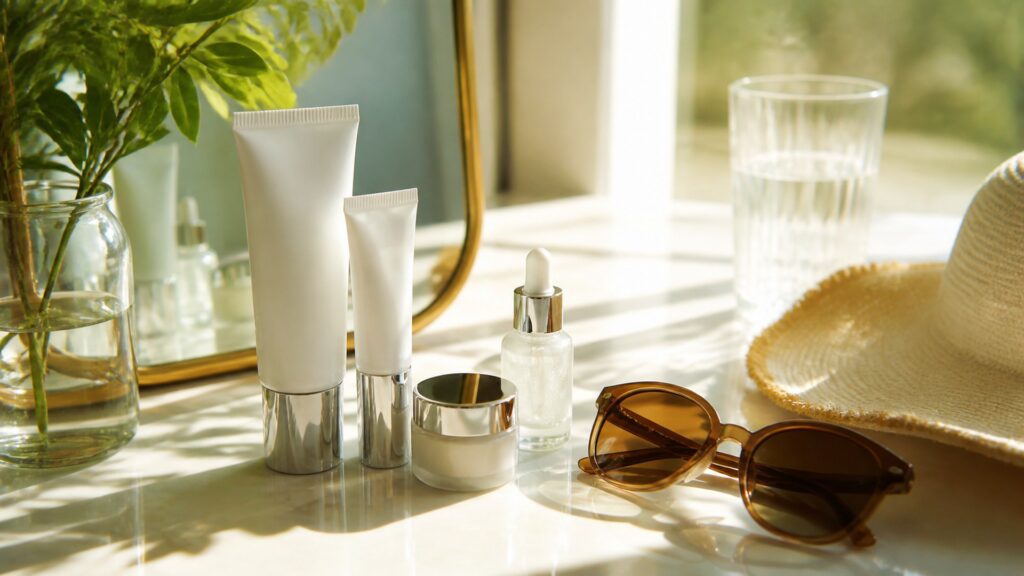
Buying framework
Define the sun protection routine before comparing products
Use the setting, frequency, and skin priorities to narrow eye treatments logically.
Start with the use case: Read the Drug Facts or applicable sunscreen labeling instead of inferring SPF from cosmetic ingredients.
Rank the practical tradeoffs: Confirm where the sunscreen may be applied and avoid direct eye contact while achieving practical coverage around the orbital area.
Check instructions early: Test the complete morning sequence for pilling, migration, and makeup disruption before relying on it outdoors.
Use profiles
Match eye treatments to the person and pace
Three shopper profiles expose different priorities for sun protection.
Routine-focused buyer: A user with a separate facial sunscreen needs an eye product that does not create a slippery barrier or cause the protective layer to roll off.
Performance-focused buyer: Someone choosing an SPF eye product should assess labeled broad-spectrum protection, water resistance when relevant, amount, reapplication, and package size.
Occasional or flexible user: A person whose sunscreen stings the eyes may need professional or product-specific guidance rather than leaving the surrounding area unprotected.
Specifications
Read the specifications through a sun protection lens
Translate technical language into visible routine benefits.
Handling lens
Separate the cosmetic eye-treatment dose from the sunscreen dose; they may differ substantially even in one package.
Ownership lens
Observe the layer in bright light for gaps, clumping, and movement before adding concealer.
Formula Texture: Broad-spectrum labeling indicates coverage across UVA and UVB under the applicable sunscreen rules.
Packaging Hygiene: SPF describes labeled sunburn protection when the product is used as directed; a tiny cosmetic dab may not supply the tested amount.
Ingredient Tolerability: Water-resistance duration matters for sweating or swimming and does not mean waterproof.
Layering Compatibility: Texture compatibility determines whether users can apply sufficient sunscreen without patchiness or rolling.
Day-Versus-Night Use: A narrow nozzle can help placement but must still dispense enough product for the labeled directions.
Common mistakes
Avoid shortcuts that undermine sun protection
A good purchase can still disappoint when selection or use is based on the wrong assumption.
Buying from one metric: Do not count antioxidants, caffeine, or an opaque jar as evidence of UV protection.
Skipping compatibility checks: Avoid mixing sunscreen into eye cream, because dilution and uneven blending can compromise labeled use.
Ignoring post-use care: Do not apply only once in the morning when the sunscreen directions call for reapplication.
Decision guidance
Choose the simplest option that covers the real need
Use these decision rules to finish a shortlist for sun protection.
Choose the basic format when: Use a separate sunscreen when the preferred eye treatment has no sunscreen labeling.
Choose the flexible format when: Choose an SPF eye product only when its protection, application amount, finish, and placement directions are workable.
Pause before upgrading when: Reject products that imply sun defense through vague language without the required protection information.
Ownership & compatibility
Plan for clean, repeatable ownership
The best value remains convenient after the first few uses.
Consumables and replacements: Keep sunscreen packaging closed and note expiration or open-period guidance.
Cleaning and storage: Carry a practical reapplication option when exposure continues beyond the initial morning routine.
Routine compatibility: Replace products exposed to conditions outside their stated storage range rather than assuming protection remains unchanged.
FAQ
How to Choose Eye Treatments for Sun Protection FAQ
Practical answers about choosing and owning eye treatments for sun protection.
What matters most when choosing eye treatments for sun protection?
Is the most expensive option better for sun protection?
How should I compare two similar eye treatments options?
Bottom line
Buy for repeatable sun protection results
A focused shortlist is easier to own and use well.
Prioritize fit: Require genuine sunscreen labeling before crediting UV protection.
Verify the limits: Protect the amount and evenness of the final sunscreen layer.
Count ownership costs: Plan reapplication instead of treating morning cosmetics as all-day coverage.
Reading Shortcuts
Jump to the key eye treatments decisions.
Decision Reminders
Keep these checks beside your shortlist.
- Check formula texture: Keep products out of the eye and stop use if significant irritation develops.
- Check packaging hygiene: Introduce one new formula at a time and patch test when appropriate.
- Check ingredient tolerability: Treat sunscreen as a separate daytime requirement unless the product is labeled with adequate SPF.
Glossary Snippets
Plain-language eye treatments terms.
When to Use a Top 10 Review
Use a ranked list to identify a manageable set of strong candidates.
- You are still exploring: A ranked list can reveal the main formats and price tiers.
- You want a shortlist: Start broad, then confirm fit with this buying guide.
Have finalists? Use a Comparison.
When to Use a Comparison
Use a direct comparison when only a few candidates remain.
- Features are close: Side-by-side details clarify meaningful differences.
- Prices overlap: Compare ownership value, not only purchase price.
Still exploring? See the Top 10.