
How to Choose Foot Creams for Foot Care Routine Building
Foot cream works best when it supports cleansing, thorough drying, pressure control, nail care, clean socks, and appropriate footwear. Applied carelessly, the same product can create slippery floors, excess moisture between toes, or residue that discourages daily use.
Build a repeatable sequence rather than adding cream as an isolated final step. Decide when the feet are inspected, where the formula goes, how long it sets, and what sock or shoe conditions follow.
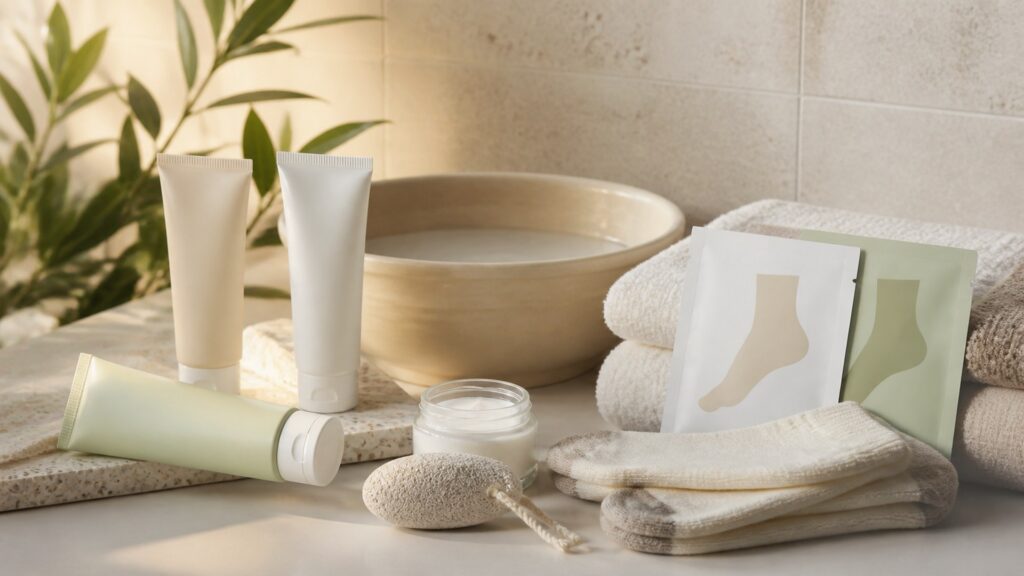
Buying framework
Define the foot care routine building routine before comparing products
Use the setting, frequency, and skin priorities to narrow foot creams logically.
Start with the use case: Start with clean feet and dry carefully, especially between the toes.
Rank the practical tradeoffs: Assign moisturizer, roughness treatment, and pressure relief to separate zones and purposes.
Check instructions early: Set an application time that allows full inspection and safe absorption before walking.
Use profiles
Match foot creams to the person and pace
Three shopper profiles expose different priorities for foot care routine building.
Routine-focused buyer: A morning user needs a light dose that will not compromise shoe grip.
Performance-focused buyer: An evening user can use richer heel care with clean breathable socks when suitable.
Occasional or flexible user: An active-treatment user should schedule filing or acids conservatively rather than stacking them.
Specifications
Read the specifications through a foot care routine building lens
Translate technical language into visible routine benefits.
Handling lens
Trace the routine through the next period of standing or walking.
Ownership lens
Remove steps whose only effect is duplicated abrasion or moisture.
Humectant And Emollient Balance: Pump dosing helps reproduce coverage and prevents oversized slippery applications.
Featured Ingredients: Rich creams work better as targeted heel layers than indiscriminate whole-foot coatings.
Texture And Absorption: Keratolytics need separation from shaving, abrasion, fissures, and irritated skin.
Fragrance Profile: Socks alter occlusion, heat, absorption, and transfer.
Packaging Control: Footwear fit determines whether friction overwhelms moisturizing gains.
Common mistakes
Avoid shortcuts that undermine foot care routine building
A good purchase can still disappoint when selection or use is based on the wrong assumption.
Buying from one metric: Do not apply cream and immediately walk barefoot on smooth flooring.
Skipping compatibility checks: Avoid sealing damp toe spaces inside socks.
Ignoring post-use care: Do not file aggressively before using a strong roughness active.
Decision guidance
Choose the simplest option that covers the real need
Use these decision rules to finish a shortlist for foot care routine building.
Choose the basic format when: Use a simple moisturizer after bathing for routine intact-skin dryness.
Choose the flexible format when: Place targeted heel treatment at night when safe settling time is available.
Pause before upgrading when: Simplify the routine or seek care if repeated treatment increases cracks, pain, or rash.
Ownership & compatibility
Plan for clean, repeatable ownership
The best value remains convenient after the first few uses.
Consumables and replacements: Wash residue from hands and any contacted floor.
Cleaning and storage: Rotate clean socks and allow footwear to dry.
Routine compatibility: Inspect skin integrity before every active-treatment session.
FAQ
How to Choose Foot Creams for Foot Care Routine Building FAQ
Practical answers about choosing and owning foot creams for foot care routine building.
What matters most when choosing foot creams for foot care routine building?
Is the most expensive option better for foot care routine building?
How should I compare two similar foot creams options?
Bottom line
Buy for repeatable foot care routine building results
A focused shortlist is easier to own and use well.
Prioritize fit: Make cream placement one step in a complete foot routine.
Verify the limits: Plan absorption before socks, footwear, and walking.
Count ownership costs: Coordinate pressure relief with moisture and roughness care.
Reading Shortcuts
Jump to the key foot creams decisions.
Decision Reminders
Keep these checks beside your shortlist.
- Check humectant and emollient balance: Do not apply cosmetic cream between toes when excess moisture is a concern unless directed by a clinician.
- Check featured ingredients: People with diabetes, poor circulation, or reduced foot sensation should seek professional guidance for persistent foot problems.
- Check texture and absorption: Stop use if burning, significant redness, or persistent irritation develops.
Glossary Snippets
Plain-language foot creams terms.
When to Use a Top 10 Review
Use a ranked list to identify a manageable set of strong candidates.
- You are still exploring: A ranked list can reveal the main formats and price tiers.
- You want a shortlist: Start broad, then confirm fit with this buying guide.
Have finalists? Use a Comparison.
When to Use a Comparison
Use a direct comparison when only a few candidates remain.
- Features are close: Side-by-side details clarify meaningful differences.
- Prices overlap: Compare ownership value, not only purchase price.
Still exploring? See the Top 10.