
How to Choose Foot Creams for Seasonal Body Care
Seasonal footwear and weather change foot moisture more than many product labels acknowledge. Winter heating and closed boots can worsen dry heels, while summer sweat, sandals, longer walks, and pool exposure alter friction, residue, and the need for fast absorption.
Adjust placement and texture before replacing a tolerated cream. The safest seasonal routine responds to intact-skin dryness and pressure while continuing to screen cracks, blisters, infection signs, and symptoms that should not be managed as cosmetic dryness.
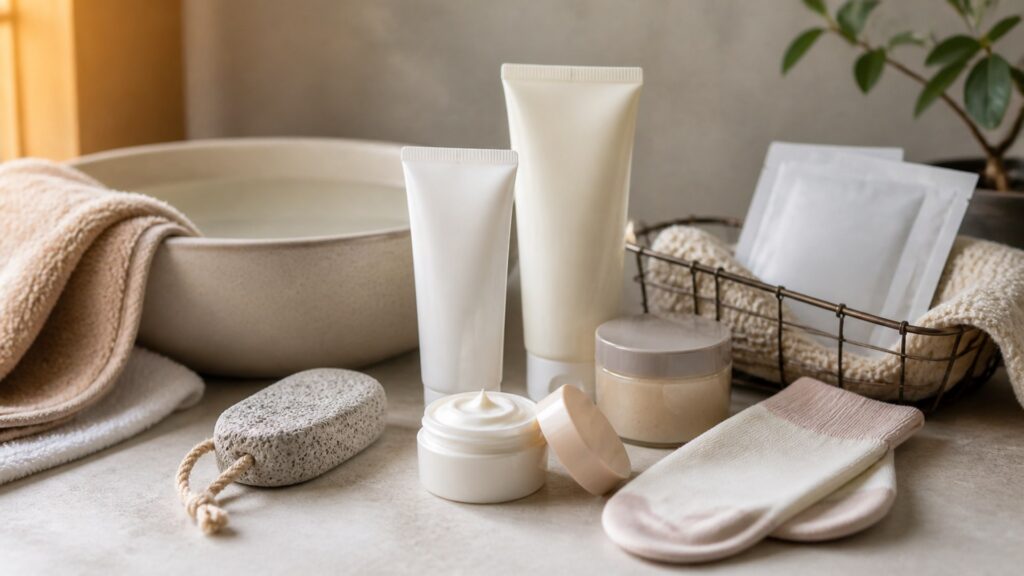
Buying framework
Define the seasonal body care routine before comparing products
Use the setting, frequency, and skin priorities to narrow foot creams logically.
Start with the use case: Connect changes to humidity, bathing, footwear, activity, sweat, or exposed skin.
Rank the practical tradeoffs: Inspect for winter fissures and summer maceration before applying active ingredients.
Check instructions early: Modify dose, zone, timing, or occlusion one variable at a time.
Use profiles
Match foot creams to the person and pace
Three shopper profiles expose different priorities for seasonal body care.
Routine-focused buyer: A winter-dry buyer may need targeted heel occlusion without coating toe spaces.
Performance-focused buyer: A summer walker needs low-residue hydration that remains comfortable inside sandals or shoes.
Occasional or flexible user: A traveler benefits from secure packaging and a simple formula that tolerates schedule changes.
Specifications
Read the specifications through a seasonal body care lens
Translate technical language into visible routine benefits.
Handling lens
Evaluate the formula after a normal day in seasonal footwear.
Ownership lens
Track cracks, sweat, and recurrence separately from immediate softness.
Humectant And Emollient Balance: Dense ointments reduce winter water loss but increase sock and floor transfer.
Featured Ingredients: Light lotions settle faster during heat and frequent daytime use.
Texture And Absorption: Urea strength should not be escalated across newly cracked skin.
Fragrance Profile: Fragrance and menthol may feel more intense when feet are warm.
Packaging Control: Product viscosity and seals can change under extreme storage temperatures.
Common mistakes
Avoid shortcuts that undermine seasonal body care
A good purchase can still disappoint when selection or use is based on the wrong assumption.
Buying from one metric: Do not apply a thick layer just before walking in open-back shoes.
Skipping compatibility checks: Avoid strong roughness actives on sunburned, blistered, or fissured feet.
Ignoring post-use care: Do not leave foot cream in a freezing bag or overheated vehicle.
Decision guidance
Choose the simplest option that covers the real need
Use these decision rules to finish a shortlist for seasonal body care.
Choose the basic format when: Increase targeted richness when dry weather causes intact heel tightness.
Choose the flexible format when: Reduce weight or shift to nighttime when heat makes residue impractical.
Pause before upgrading when: Pause cosmetic treatment and seek advice when seasonal damage breaks the skin.
Ownership & compatibility
Plan for clean, repeatable ownership
The best value remains convenient after the first few uses.
Consumables and replacements: Review sock material, shoe fit, and drying time as weather changes.
Cleaning and storage: Store the package within labeled conditions during travel.
Routine compatibility: Recheck application zones when sandals or boots alter pressure patterns.
FAQ
How to Choose Foot Creams for Seasonal Body Care FAQ
Practical answers about choosing and owning foot creams for seasonal body care.
What matters most when choosing foot creams for seasonal body care?
Is the most expensive option better for seasonal body care?
How should I compare two similar foot creams options?
Bottom line
Buy for repeatable seasonal body care results
A focused shortlist is easier to own and use well.
Prioritize fit: Adapt texture and placement to footwear as well as weather.
Verify the limits: Protect cracked winter skin and over-moist summer spaces differently.
Count ownership costs: Test seasonal changes through dose before buying a replacement.
Reading Shortcuts
Jump to the key foot creams decisions.
Decision Reminders
Keep these checks beside your shortlist.
- Check humectant and emollient balance: Do not apply cosmetic cream between toes when excess moisture is a concern unless directed by a clinician.
- Check featured ingredients: People with diabetes, poor circulation, or reduced foot sensation should seek professional guidance for persistent foot problems.
- Check texture and absorption: Stop use if burning, significant redness, or persistent irritation develops.
Glossary Snippets
Plain-language foot creams terms.
When to Use a Top 10 Review
Use a ranked list to identify a manageable set of strong candidates.
- You are still exploring: A ranked list can reveal the main formats and price tiers.
- You want a shortlist: Start broad, then confirm fit with this buying guide.
Have finalists? Use a Comparison.
When to Use a Comparison
Use a direct comparison when only a few candidates remain.
- Features are close: Side-by-side details clarify meaningful differences.
- Prices overlap: Compare ownership value, not only purchase price.
Still exploring? See the Top 10.