
How to Choose Fragrances for Summer
Choose summer fragrance by heat development, humidity, outdoor diffusion, close-air comfort, sweat interaction, portability, and midday reapplication.
The summer fragrance worksheet pairs heat development with humidity and diffusion, then reviews sunscreen and body-product overlap beside atomizer control. It holds midday dry-down apart from storage exposure so one strength cannot conceal another. The final route is checked through the humid commuter, the outdoor-event wearer, the air-conditioned-office wearer, the vacation packer, and the summer fragrance rotator; each route earns a distinct configuration rather than a demographic label. Summer Fragrance roadmap: Map the hottest route; Set a warm-weather radius; Run paired climate wears; Choose the carrying format; The humid commuter; The outdoor-event wearer; The air-conditioned-office wearer; The vacation packer; The summer fragrance rotator; Heat development; Humidity and diffusion; Sunscreen and body-product overlap; Atomizer control; Midday dry-down; Storage exposure; Buying from a fresh opening; Overspraying for longevity; Calling citrus automatically light; Ignoring scented sunscreen; Leaving perfume in a car; For hot commutes; For outdoor celebrations; For humid climates; For cool offices after heat; For seasonal rotation; Keep a climate log; Carry without cooking; Refresh considerately; Reassess in cooler weather.
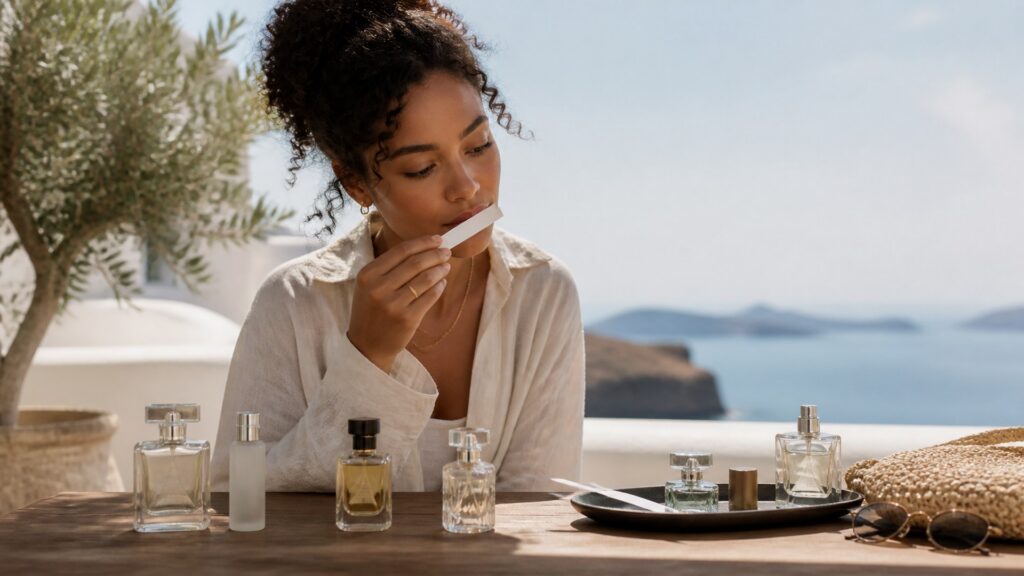
Buying framework
Map the hottest route
Build the summer fragrance purchase around its title-specific routine.
Map the hottest route: Test the commute, outdoor exposure, air-conditioned rooms, close seating, and midday refresh opportunity rather than an ideal cool counter.
Set a warm-weather radius: Heat can make a composition feel more expansive; decide the acceptable distance in the closest summer setting.
Run paired climate wears: Use the same dose on representative hot days and record opening, settled radius, sweetness, comfort, and late dry-down.
Choose the carrying format: Compare a secure travel spray with a full bottle that may face cars, sunlight, luggage, or temperature swings.
Who should buy what
Match the summer fragrance system to the actual user
These summer fragrance profiles require materially different configurations.
The humid commuter: Favor controlled diffusion, a clean late base, secure portability, and a refresh plan that avoids confined transit.
The outdoor-event wearer: Test sun, movement, breeze, sunscreen, and long exposure without treating extra sprays as durability.
The air-conditioned-office wearer: Choose by the transition from outdoor heat to cool shared rooms, where scent trapped in clothing may become more noticeable.
The vacation packer: Prioritize labeled leak-resistant travel formats, shade, breakage protection, and enough volume for testing plus the trip.
The summer fragrance rotator: Use samples or small bottles to cover fresh, evening, and humid-day roles without leaving large seasonal inventory unused.
What to pay attention to
Read the characteristics that change summer fragrance
Translate summer fragrance label language into observable use consequences.
Heat development: Evaluate how sweetness, musk, woods, citrus, aromatics, and density change after body temperature and outdoor exposure rise.
Humidity and diffusion: Test the exact formula because humid air, wind, movement, clothing, and dose can alter perceived spread.
Sunscreen and body-product overlap: Wear the candidate with the actual sunscreen, deodorant, lotion, hair products, and laundry scent used in summer.
Atomizer control: A consistent fine spray supports a repeatable lower dose; inspect caps, locks, leaks, and travel-container compatibility.
Midday dry-down: Score the base after heat and movement, not only a bright citrus or aquatic opening in an air-conditioned store.
Storage exposure: Avoid hot vehicles, direct sun, and repeated temperature swings; a portable bottle still needs a realistic cool storage plan.
Avoid these traps
Correct the shortcuts that undermine summer fragrance
Every summer fragrance mistake needs a concrete test or stopping rule.
Buying from a fresh opening: Many bright openings recede into sweeter, muskier, or woodier bases; wear each finalist through the hottest part of the day.
Overspraying for longevity: A larger morning cloud can overwhelm transit and offices without guaranteeing pleasant evening wear.
Calling citrus automatically light: Note family does not determine radius or density; test the whole formula at the intended dose.
Ignoring scented sunscreen: Layered personal-care products can change the total cloud and wearer comfort, so test the complete summer stack.
Leaving perfume in a car: Vehicle heat and sunlight create avoidable storage stress and can turn portability into damaged inventory.
Decision guidance
Choose the route that matches the dominant summer fragrance constraint
Use one summer fragrance path, then verify it under real conditions.
For hot commutes: Choose a restrained opening, controlled settled radius, and a secure format that can be refreshed privately later.
For outdoor celebrations: Rehearse sunscreen, clothing, movement, breeze, and close greetings; let the tightest social moment set dose.
For humid climates: Prefer the finalist that remains clear and comfortable after humidity, not whichever smelled brightest on paper.
For cool offices after heat: Check how scent held by clothing enters the indoor room and reduce application when the transition magnifies it.
For seasonal rotation: Buy samples, travel sizes, or smaller bottles unless the scent also earns warm indoor and shoulder-season roles.
Ownership & compatibility
Keep the summer fragrance routine interpretable after purchase
Maintenance determines whether the summer fragrance product remains useful.
Keep a climate log: Record temperature, humidity, setting, spray count, placement, products, and comfort so comparisons remain interpretable.
Carry without cooking: Use a protected bag location and remove fragrance from vehicles or direct sun as soon as possible.
Refresh considerately: Reapply only where permitted and away from elevators, desks, vehicles, queues, and other shared air.
Reassess in cooler weather: Lower heat may change perceived radius and useful duration, so the summer dose should not become an automatic year-round rule.
FAQ
How to Choose Fragrances for Summer FAQ
Answers tied to the exact summer fragrance category, routine, and ownership burden.
How should buyers evaluate heat development for summer fragrance?
How should buyers evaluate humidity and diffusion for summer fragrance?
How should buyers evaluate sunscreen and body-product overlap for summer fragrance?
How should buyers evaluate atomizer control for summer fragrance?
How should buyers evaluate midday dry-down for summer fragrance?
How should buyers evaluate storage exposure for summer fragrance?
How should buyers evaluate buying from a fresh opening for summer fragrance?
How should buyers evaluate overspraying for longevity for summer fragrance?
How should buyers evaluate calling citrus automatically light for summer fragrance?
Bottom line
For hot commutes
Make the summer fragrance decision from evidence gathered in its intended routine.
Set the baseline: Define what success means for summer fragrance before opening another product.
Run the decisive test: Use the hardest realistic summer fragrance condition to separate the finalists.
Own the result: Keep the summer fragrance routine measurable, maintainable, and within its stopping rules.
Reading Shortcuts
Navigate the summer fragrance decision.
Decision Reminders
Keep the summer fragrance comparison controlled.
- Summer Fragrance baseline: Write the starting condition for summer fragrance before testing.
- One summer fragrance change: Alter only one summer fragrance variable in each comparison cycle.
- Summer Fragrance stopping rule: Know when summer fragrance shopping should pause or escalate.
Glossary Snippets
Working terms for summer fragrance.
Using a Fragrances Top 10
Apply the summer fragrance baseline before accepting a ranked order.
- Apply summer fragrance: Remove options that fail the central summer fragrance requirement.
- Normalize summer fragrance: Compare finalists with the same summer fragrance method.
- Check summer fragrance burden: Include upkeep and repeat use in the summer fragrance score.
- Keep summer fragrance evidence: Record why each summer fragrance finalist advanced.
Popularity cannot replace the buyer’s summer fragrance baseline.
Comparing Summer Fragrance Finalists
Hold the summer fragrance technique and context steady between candidates.
- Start summer fragrance equally: Use the same summer fragrance preparation for every candidate.
- Observe summer fragrance midway: Check performance after the summer fragrance opening impression fades.
- Stress the summer fragrance weak point: Test the condition most likely to break the summer fragrance routine.
- Review summer fragrance ownership: Price the full summer fragrance cycle rather than one use.
Restart when the summer fragrance baseline changes materially.