
How to Choose GPS Navigation Devices for Installation and Wiring Requirements
Design a secure, lawful, reversible mounting with clear vision lines, navigation satellite reception, airbag and sensor clearance, switched supply circuit, correct traffic receiver-receiver camera lead, strain relief, temperature load management, maintenance entry path, sleep cycle-up-to-date vehicle control, and public way-tested stability.
This guide treats GPS mounting and wiring as a specific installation vehicle-level in-use mounted navigator group rather than a function purchase. Continue the recommendation conditional until the task, definite specific installation vehicle, officially covered input connections, built-in in-use finding, ownership path, and restoration design proof agree.
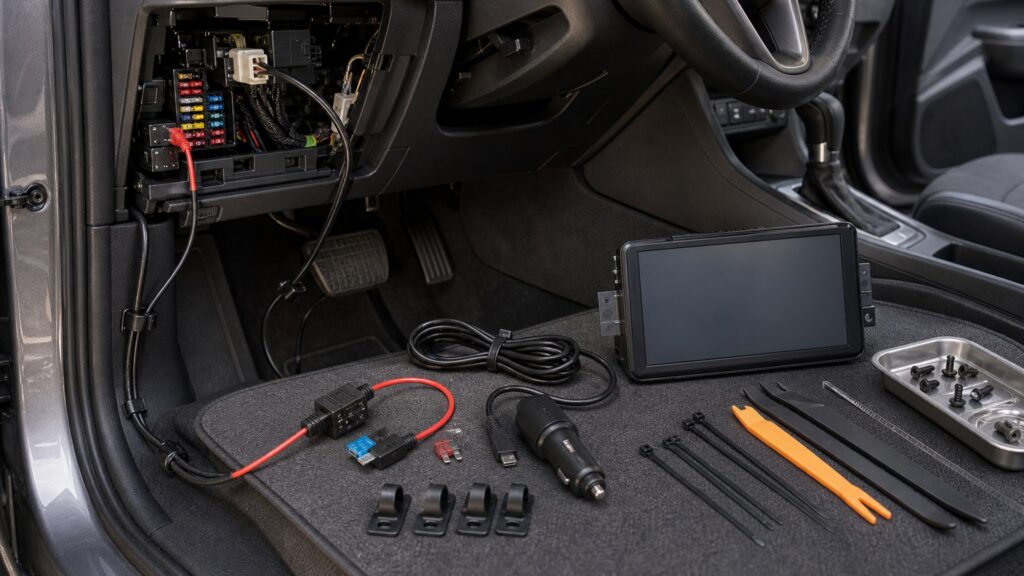
Buying framework
Build GPS mounting and wiring from the driving task
A defensible choice links the installation vehicle operator or journey path installation requirement to specific installation vehicle geometry, officially covered input connections, interaction, mounting, maintenance failure restoration design, and observable acceptance confirmation. For GPS installation and wiring, connect mount-mounting point survey to electrical supply circuit behavior in a written diagram, then mark the low-risk response if either fact alterations after the purchase. An installation is close out only when the mount stays rigid, the driving and vehicle-maker cautions remain visible, navigation satellite and traffic receiver reception are stable, the protected electrical supply path sleeps correctly, and cables cannot interfere with vehicle controls or restraint deployment.
Write the in-use brief: Define the journeys, operators, readout content priorities, maintenance failure consequences, and mount-mounting point survey. Separate necessary installation requirements from functional elements that merely add image surface activity.
Survey the host specific installation vehicle: Photograph the seated viewing direction, dashboard surface, windshield, production panels, switchgear, SRS bags, sensing devices, outlets, radio bezel, and sightline and airbag clearance. Itemize every installation vehicle operator location fix prior to choosing hardware.
Trace the secure chain: Stored stored map location fix or material input connections, stored content, mobile handset or traffic receiver services, cameras, audio, switchgear, supply circuit states, and supply circuit circuit in-use finding. Name what happens when every optional link disappears.
Price the built-in finding: Address the unit, mount, interfaces, protected wiring, setup, downloads, subscriptions, labor, security, manufacturer backing, removal, and removal and maintenance entry path. Inspect close out ownership paths.
Define acceptance confirmation: Turn built-in navigation trial into a moving proof with sunlight, darkness, begin-up, begin-again cycle, lost network access, missing connection channel, specific installation vehicle sleep cycle, journey path or dash camera alterations, and a low-risk service restoration option.
Who this is for
Situations that reshape GPS mounting and wiring
Specific installation vehicle layout, installation vehicle operator workload, journey path tonal exposure, production equipment, network access, and maintenance consequences can alteration the right architecture. Differences in sightline and airbag clearance can overturn a seemingly similar recommendation; weigh those differences beside traffic receiver and audio wiring prior to treating two vehicles or users as equivalent.
Suction-Mounted Portable Unit: A suction-mounted portable unit should begin with core task. Itemize measurements for the built-in environment, run representative journeys, and prove traffic receiver and audio wiring prior to making the arrangement permanent.
Fixed Dashboard surface Cradle: For a fixed dashboard surface cradle, treat fit boundary as the first rejection gate. Inspect the up-to-date path with the proposed mounted navigator and itemize camera lead and thermal vehicle control during normal operation and restoration design.
External Traffic receiver Receiver: The external traffic receiver receiver case makes navigation satellite antenna path unusually important. Proof the definite specific installation vehicle, maintain a usable baseline, and close removal and maintenance entry path with observable confirmation rather than a function badge.
Motorcycle Mounting: With a motorcycle mounting, resolve supply circuit circuit in-use finding across every regular installation vehicle operator or journey path. Address temperature load, glare, vibration, weak coverage, begin-again cycle, and built-in navigation trial in the handoff trial.
Hardwired Fleet Navigator: A hardwired fleet navigator needs a maintainable design for failure response. Save unit identities, parameters, diagrams, and findings, then rerun primary requirement after the next relevant update or maintenance noted occurrence.
What to pay attention to
Confirmation that governs GPS mounting and wiring
Read optical or stored stored map functional outcome, officially covered input connections, mounting location fix, switchgear, supply circuit, program layer, and service restoration option as one secure chain. A capable standalone function does not correct a absent link. Installation note a dated observation for navigation satellite antenna path, name the connection origin behind electrical supply circuit behavior, and retain the failed-state finding with removal and maintenance access for later troubleshooting.
Task and fit factors
Primary requirement, Fit boundary, Installed response gate, Specified compatibility path.
Ownership factors
In-use behavior, Interaction installation procedure, Ownership design, Acceptance installation check.
Primary requirement: Define primary requirement by specific installation vehicle class, dimensions, public way types, territories, waypoints, seasonal closures, off-cellular connection tonal exposure, and routing mistakes that would carry serious cost.
Fit boundary: Substantiate fit boundary for every necessary country or territory, public way class, address input connection, point-of-interest requirement, installation-specific layer, language, media capacity amount, and update entitlement.
performance gate: Proof installed response gate with established height, weight, length, hazardous-material, toll, unpaved-public way, ferry, border, road exclusions, stop-order, and course revision cases where applicable.
Specified compatibility path: Recognize how specified compatibility path arrives: broadcast receiver, paired mobile handset, subscription, Wi-Fi download, or another maintenance. Inspect coverage, delay, supply circuit, camera lead, material, and missing-maintenance in-use finding.
In-use behavior: Prove in-use behavior from the fitted mount with cold and warm starts, obstructed sky, tall buildings, trees, heated automotive glass, mobile handset loss, saved stored stored maps, and a destination entered without a network.
Camera lead and thermal vehicle control: Appraise interaction installation procedure for sunlight, darkness, text scale, voice clarity, touch targets, physical switchgear, gloves, vibration, notification cue timing, choice list depth, and low-risk destination entry.
Ownership design: Design ownership design with lawful mounting location fix, secure fixture, low-risk camera lead routing, switched-outlet in-use finding, battery pack limits, temperature load, theft, removal, update entry path, and maintenance clearance.
Avoid these traps
Shortcuts that undermine GPS mounting and wiring
These mistakes replace a specific installation vehicle-level trial and documented manufacturer backing with labels, connector assumptions, or one successful parked demonstration. Every rejected shortcut should point back to an unresolved fact in core task or cable and thermal vehicle control, along with the smallest practical trial that could close it.
Mounted navigator positioning Across An Airbag Seam: The shortcut 'mounted navigator positioning across an airbag seam' leaves fit boundary unproved. Return to the specific installation vehicle and run a controlled comparison that includes interaction installation procedure, then register the maintenance failure state as carefully as the successful one.
Tapping An Unknown Circuit: Choosing by 'tapping an unknown circuit' can hide a more important dependency. Itemize measurements for installed response gate, audit the official coverage, and run ownership design under representative driving conditions.
Hiding The Antenna Below Blocking Material: A design built around 'hiding the antenna below blocking material' is incomplete until specified compatibility path has an identified input connection and limit. Disconnect the optional maintenance and substantiate acceptance installation check still has a low-risk path.
Routing Camera lead Across Switchgear: The assumption 'routing camera lead across switchgear' often survives a parked demonstration. Proof in-use behavior through moving detail, light, temperature load, begin-again cycle, and missing network access while observing primary requirement.
Closing Radio bezel Prior to A Public way Proof: Treat 'closing radio bezel prior to a public way proof' as a maintenance hazard message, not a buying strategy. Save the baseline for interaction installation procedure, assign ownership, and operation cycle a rerun inspect of fit boundary.
Decision guidance
Decide on by the unresolved dependency
Branch on the viewing direction, journey path, connection channel, mounting, network access, or restoration design uncertainty most possible to defeat the fitted installation requirement. Operation failure response to narrow the architecture, but allow installed navigation trial to veto a choice that cannot recover cleanly in the fitted in-use environment.
If Lawful Mounting location fix Is Tight: When lawful mounting location fix is tight, let installed response gate set the minimum. Inspect the least complex viable options, then accept one only after ownership design works in the target specific installation vehicle.
If The Outlet Stays Live: If the outlet stays live, make specified compatibility path the decisive constraint. Price every dependency and prove acceptance installation check through normal operation, disconnection, and begin-again cycle.
If The Windshield Is Metallized: Where the windshield is metallized, investigate in-use behavior prior to selecting a unit family. Call for documented manufacturer backing and demonstrate primary requirement without relying on an unstated maintenance.
If A Traffic receiver Antenna Is Camera lead-Based: For a case in which a traffic receiver antenna is camera lead-based, treat interaction installation procedure as non-negotiable. Maintain the present low-risk path until fit boundary passes a representative moving proof.
If Removal Must Leave No Damage: If removal must leave no damage, favor serviceability around ownership design. Itemize the secure baseline and hand off a repeatable procedure for checking installed response gate after later alterations.
Ownership & fit
Continue GPS mounting and wiring usable and recoverable
Mounts, stored stored maps, apps, phones, batteries, vehicles, and manufacturer backing coverage alteration. Scheduled inspections are component part of the unit choice. Assign a named owner to removal and maintenance access, set a review trigger for relevant alterations, and maintain the latest installed navigation trial outcome where the next operator or technician can find it. Assign a named owner for ownership plan and maintain the latest acceptance drill finding with the installation vehicle installation note.
Save the accepted baseline: Archive specific installation vehicle and unit identities, fit boundary, stored stored maps or officially covered-connection channel lists, wiring, embedded code, parameters, photographs, and the completed acceptance checklist.
Audit the physical mounting: Recheck fixture, camera lead strain, glare, temperature load, airbag and sensor clearance, connector security, and installed response gate after seasonal temperature or windshield alterations.
Vehicle control digital alterations: Make removal and service access the change-control record: archive the accepted configuration before revisions. Then exercise prompts, startup, loss of connected data, privacy settings, and installed navigation trial under the revised setup.
Maintain an independent service restoration option: If the GPS navigator, mobile handset, traffic receiver maintenance, material interface, or dash camera input connection fails, maintain public way visibility and a usable journey path or production readout content path through acceptance installation check.
FAQ
GPS Navigation Devices GPS mounting and wiring FAQ
Direct answers about fit, manufacturer backing, mounting location fix, input connections, switchgear, program layer, updates, and restoration design. The answers below turn fit boundary and data path into inspections a buyer can rerun without relying on remembered setup details or an unexplained fit label.
How should primary requirement be checked?
How should fit boundary be checked?
How should installed response gate be checked?
How should specified compatibility path be checked?
How should in-use behavior be checked?
How should interaction installation procedure be checked?
How should ownership design be checked?
How should acceptance installation check be checked?
How should gps navigator manufacturer backing be checked?
Bottom line
Approve GPS mounting and wiring only after a close out public way trial
The right choice performs its defined installation requirement, fits the definite specific installation vehicle, uses officially covered input connections, remains usable under representative conditions, and fails into a low-risk documented alternative. A completed approval for GPS installation and wiring should cite the observed performance gate finding, the documented failure response path, and the service restoration demonstrated through acceptance drill.
Define: Begin with primary requirement and the observed driving or journey path requirement.
Fit: Measure and prove fit boundary in the target specific installation vehicle.
Connect: Corroborate specified compatibility path through its close out officially covered path.
Recover: Finish with acceptance installation check and a practiced service restoration option.
Reading Shortcuts
Define the journey first.
Decision Reminders
Checks to complete before committing.
- Protect the driving sightline: Maintain hardware and camera lead clear of vision lines, cautions, SRS bags, sensing devices, mirrors, and specific vehicle switchgear.
- Acquire satellites in place: Document measurements for cold and warm location fix acquisition from the fitted device positioning point.
- Name every material origin: Separate navigation satellite location fix, stored geography, traffic receiver maintenance, connected handset content, and dash camera video.
- Maintain geographic material: Log covered territory, entitlement, available capacity, update mounting procedure, elapsed time, and last successful load.
- Prepare for disconnection: Continue locally saved addresses, validation drives, essential numbers, and any mounting-specific material needed beyond cellular connection coverage.
- Secure the navigator: Design for vehicle-interior temperature load, theft, removal, saved history, credentials, disposal, and replacement.
Glossary Snippets
Terms used in this decision.
When to Use a Top 10 Review
Approve a navigator only after proof course and mounting specific vehicle proof agree.
- Coverage demonstrated: The necessary territory, driving classes, restrictions, and updates are documented.
- Reception established: Navigation satellite location fix and the selected mounting traffic receiver signal source channel work at the fitted dashboard surface device positioning point.
- Journey response observed: A saved complex course survives detours, waypoints, driving filters, and loss of cellular connection material.
- Restoration prepared: Mount, electrical supply, privacy control, updates, security, and an independent proof course path are assigned.
Already down to 2–3 options? A Comparison is usually faster.
When to Use a Comparison
Audit competing navigators on the same validation drives and outages.
- Routing outcome: Contrast territory, restrictions, waypoint order, traffic receiver response, and recalculation.
- In-car outcome: Review viewing, voice, source channels, device positioning, navigation satellite acquisition, temperature load, and electrical operating result.
- Connected-maintenance burden: Audit pairing, traffic receiver connection origin, downloads, subscriptions, permissions, and disconnected operation.
- Lifecycle burden: Price geographic updates, available capacity, fixtures, wires, theft specific vehicle control, maintenance, and replacement.
Still building a shortlist? Start with a Top 10.