
How to Choose Gym Accessories for Recovery
Recovery accessories can support a comfortable cooldown, gentle self-massage, or mobility routine, but they do not diagnose an injury or guarantee faster healing. Choose the tool around the body area, position, and pressure the user can control.
Begin with the lowest useful intensity and a stable way to enter and leave the position. Compare contact area, firmness, edges, leverage, surface grip, skin response, and the ability to reduce pressure immediately. Read warnings for heat, cold, compression, or textured tools and avoid using pain as proof that an accessory works. Persistent, severe, worsening, unexplained, or injury-related symptoms need appropriate professional assessment rather than a harder roller or longer session.
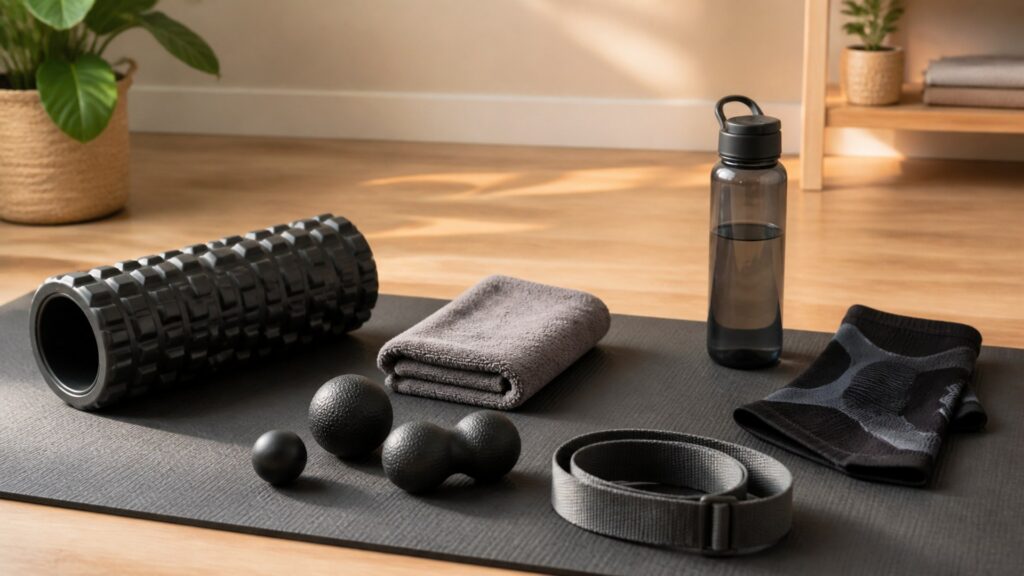
Buying framework
Choose control before intensity
A recovery accessory is useful when the user can position it, grade pressure, breathe normally, exit easily, clean the contact surface, and stay inside appropriate guidance.
Define the comfort or movement task: Name the body area, position, and goal, such as a gentle cooldown, broad muscle contact, localized pressure, supported stretching, or a comfortable floor position. Avoid turning an unexplained symptom into a product category.
Choose broad or focused contact: Large rollers and cushions spread pressure, while smaller balls and edges concentrate it. Match contact area to sensitivity, access, body position, and how precisely the user can control load.
Plan the pressure controls: Identify how body weight, hands, a wall, the floor, handles, straps, inflation, or settings increase and decrease intensity. The easiest adjustment should be reducing pressure, not enduring it.
Build an escape position: Use a stable surface and body arrangement that allows immediate unloading without a fall, twist, trapped limb, or rolling tool. Keep furniture, equipment, and other people outside the movement area.
Set the professional boundary: Read intended use and warnings, follow an existing care plan when applicable, and know which symptoms or conditions require a qualified health professional. Do not use an accessory to delay urgent or appropriate care.
Who this is for
Match the recovery tool to contact and position
Broad rolling, pinpoint pressure, assisted mobility, supported floor work, and portable routines require different shapes and levels of user control.
Broad-contact user: Compare roller diameter, length, firmness, surface pattern, floor grip, and body-position options. Choose enough contact area to distribute pressure and allow smooth entry, unloading, and direction changes.
Localized-contact user: A ball or compact tool concentrates force, so test wall use before full body weight where appropriate. Check shape, hardness, rolling behavior, hand control, and whether it can be retrieved after slipping.
Assisted-mobility user: For straps, bands, blocks, or handles, prioritize secure grip, readable adjustment, comfortable edges, sufficient length, and a position that does not force a joint. Follow exercise and attachment instructions.
Floor-comfort user: Evaluate mat or cushion thickness, density, compression, size, edge stability, cleaning, and movement transitions. More softness can reduce floor contact yet also make standing, balance, or joint positioning less stable.
Portable-routine user: Compare packed shape, weight, odor containment, drying, and the surfaces available at work or while traveling. A versatile tool is useful only when it remains clean and controllable in the destination space.
What to pay attention to
Translate recovery features into pressure behavior
Shape, size, firmness, texture, grip, material, and instructions determine where pressure goes, how quickly it changes, and whether the user can stop comfortably.
Contact area and geometry: Compare length, diameter, curve, edge radius, and surface pattern against the intended body region. Check whether the shape stays where placed or rolls into joints, bones, nerves, or sensitive areas.
Firmness and compliance: Test how much the material yields under the intended position and body weight. A very firm tool concentrates pressure; a softer one may bottom out, deform, or provide too little support.
Pressure and leverage range: Identify every intensity control, including wall versus floor, limb support, hand pressure, handle length, strap position, inflation, vibration, or speed when present. Prefer small, predictable adjustments and an immediate off position.
Surface grip and escape: Check the accessory against the actual floor, wall, mat, clothing, and skin as permitted. It should not shoot away, bind unexpectedly, or block a simple movement out of the position.
Skin-contact material: Review texture, seams, coverings, latex or material disclosures when relevant, cleaning agents, temperature, and shared-use hygiene. Stop if contact causes unexpected irritation, numbness, discoloration, or another concerning response.
Instructions, warnings, and evidence: Read the exact intended use, body exclusions, duration or setting guidance, contraindications, and maintenance directions. Treat broad recovery, detoxification, circulation, or injury claims cautiously when product-specific support is unclear.
Cleaning, storage, and durability: Check whether covers remove, crevices trap residue, porous material dries, valves hold, electronics tolerate cleaning, and the item stores without permanent compression. Inspect cracking, delamination, odor, and shape loss.
Avoid these traps
Do not equate more discomfort with more recovery
Recovery tools drift into poor use when intensity becomes the goal, symptoms are self-diagnosed, unstable positions are ignored, or shared contact surfaces are not maintained.
Choosing the hardest tool first: A small, rigid, or heavily textured accessory can concentrate more pressure than expected. Begin with a broad controllable option and increase intensity only when position, response, and instructions support it.
Using pain as the success measure: Sharp, electrical, escalating, or otherwise concerning discomfort is not evidence of effectiveness. Reduce or stop pressure, reassess the position, and seek appropriate guidance when symptoms are persistent, severe, or unexplained.
Treating soreness as a diagnosis: Post-exercise discomfort and injury can overlap in ways a buying guide cannot determine. Avoid applying tools over areas or conditions excluded by instructions and obtain professional assessment when the situation warrants it.
Entering a position without an exit: A roller, ball, strap, or unstable pad can make unloading awkward when fatigue or cramping appears. Rehearse the easiest exit and keep support nearby before increasing body weight or leverage.
Sharing porous tools without a hygiene plan: Sweat, skin oils, lotions, floor residue, and cleaning products collect on contact surfaces. Use cleanable covers, individual tools, or a documented cleaning and drying process appropriate to the material.
Decision guidance
Trial recovery accessories at the lowest useful setting
The comparison should reveal whether the user can place, adjust, unload, clean, and store the tool without chasing intensity or making unsupported treatment assumptions.
Screen the intended use: Match the body area and comfort task to product instructions, warnings, and any professional guidance already received. Exclude tools whose claims, positions, materials, or controls do not fit the user.
Create a stable test area: Clear the floor or wall, add permitted support, and place the accessory where it cannot roll into equipment. Rehearse entry, low pressure, direction changes, complete unloading, and standing up.
Compare pressure in small steps: Use the broadest contact and least leverage first. Note breathing, guarding, skin response, joint position, and how quickly pressure can be reduced; stop rather than forcing tolerance.
Observe the later response: Record comfort and movement after the session and at the next relevant activity without promising a treatment effect. Discontinue use when the response is concerning or the tool obscures a need for assessment.
Complete the hygiene reset: Clean the contact surface as directed, dry covers and crevices, inspect shape and material, and store without damaging compression. Include this routine and replacement availability in the purchase decision.
Ownership & compatibility
Keep recovery tools clean, controllable, and bounded
Material condition and user response can change over time. Revisit pressure, positioning, cleaning, and professional guidance instead of repeating one routine automatically.
Inspect contact surfaces: Check covers, seams, textures, valves, foam, rubber, straps, handles, cords, and electronics before use. Retire pieces with sharp edges, cracks, exposed parts, unstable rolling, leaks, or uncontrollable settings.
Clean for skin and floor exposure: Follow material instructions after sweat, lotions, shared handling, or floor contact. Wash removable covers on schedule and let porous or layered components dry fully before bags, bins, or enclosed storage.
Reassess firmness and position: Body sensitivity, mobility, training load, injury status, and care plans change. Return to lower pressure and easier support after interruptions rather than assuming the former setup remains appropriate.
Keep accessories distinct from treatment: Do not extend time, pressure, heat, cold, or compression simply because a product feels familiar. Follow current instructions and seek qualified guidance for concerning symptoms or condition-specific use.
Replace lost-control tools: Permanent deformation, slick surfaces, weak straps, leaking air, unreliable controls, damaged power parts, persistent contamination, or unreadable warnings can remove the user's ability to apply and stop pressure predictably.
FAQ
Recovery gym accessory questions
These answers cover roller firmness, massage balls, discomfort, injury boundaries, temperature tools, cleaning, sharing, replacement, and when professional guidance should lead the decision.
What firmness should a foam roller have?
When is a massage ball preferable to a roller?
Should a recovery tool hurt during use?
Can recovery accessories treat an injury?
How should heat or cold accessories be compared?
How should recovery accessories be cleaned?
Is it safe to share recovery tools?
When should a recovery accessory be replaced?
When should I ask a professional about recovery tools?
Bottom line
Keep pressure optional and easy to stop
A useful recovery accessory offers stable positioning, graded contact, a simple exit, cleanable materials, and honest limits around symptoms, injuries, and treatment claims.
Name the task: Choose broad contact, focused pressure, assisted mobility, or floor comfort for a defined routine.
Start low: Use the broadest comfortable contact, least leverage, stable surface, and easiest escape position.
Watch the response: Stop for concerning discomfort, skin changes, numbness, instability, or worsening symptoms.
Respect the boundary: Clean and inspect the tool while leaving diagnosis and treatment to qualified professionals.
Reading Shortcuts
Jump to the pressure-control framework, recovery user profiles, contact specifications, or questions about discomfort, cleaning, and care boundaries.
Decision Reminders
Keep contact area, pressure control, firmness, escape position, surface grip, skin response, cleaning, use limits, and professional guidance visible while comparing recovery accessories.
- Task: Define the body area, position, and comfort or movement purpose without self-diagnosing.
- Control: Begin with broad contact, low pressure, a secure body position, and an immediate unload path.
- Response: Stop for sharp, escalating, neurological, skin, balance, or otherwise concerning changes.
- Boundary: Follow warnings, clean contact surfaces, and seek appropriate professional care when needed.
Glossary Snippets
Terms for comparing how recovery accessories distribute pressure, yield under load, grip a surface, and allow the user to stop.
When a Top 10 Helps
Use recovery-accessory rankings after defining the body area, contact size, firmness, pressure controls, positioning, escape, material, cleaning, warnings, and professional boundary.
- Control filter: Reject tools whose pressure, rolling, temperature, or settings cannot be reduced immediately.
- Contact filter: Rank only products that suit the body area, surface, skin contact, cleaning, and storage routine.
A recovery ranking cannot diagnose soreness, approve use for a medical condition, or prove that greater pressure produces a better outcome.
When a Comparison Helps
Compare finalists at the same low-intensity position through setup, graded contact, complete unloading, later response, cleaning, drying, and storage.
- Body control: Compare contact spread, firmness, leverage, surface grip, joint position, and easiest exit.
- Care boundary: Inspect warnings, skin-contact cleaning, material condition, storage, claims, and professional-use limits.
Prefer the recovery accessory that delivers the intended contact with less force and more user control.