
How to Choose Hair Brushes for Makeup Application
A hair brush is not a makeup applicator. Its bristles are shaped to arrange strands, not to place foundation, blush, shadow, liner, or lip color on facial skin with hygienic precision.
The legitimate connection is preparation: a clean grooming tool may smooth fringe, move flyaways, or help secure hair before cosmetics begin. Once that small job is finished, put the hair tool away and use applicators intended for the formula and facial area.
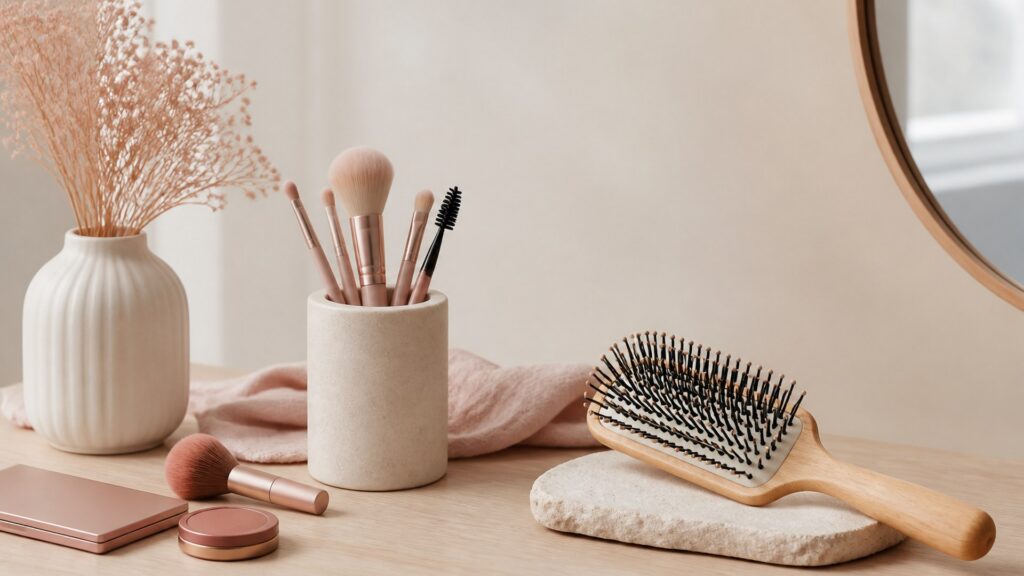
Intent check
Separate hair preparation from cosmetic placement
Treat the title as two consecutive routines with a firm boundary between them. Brushing finishes before makeup tools and products touch the face.
Define the hair job: Name the exact need: moving bangs, smoothing a hairline, arranging edges, or clearing loose strands from the working area.
Choose minimal intervention: Use the least elaborate grooming tool that completes that need without disturbing texture, creating static, or depositing styling residue near skin.
End the handoff cleanly: Return the brush to hair storage, wash hands when product transfer is possible, and begin cosmetics with a separate sponge, puff, or makeup brush.
Preparation profiles
Not every makeup wearer needs another hair brush
Existing grooming equipment often handles pre-cosmetic preparation already. Buy something new only when a repeated hair-control problem is documented.
Fringe wearer: A small finishing brush may guide bangs before base products are opened, provided it remains free of hairspray buildup and never sweeps the face.
Edge-styling routine: A dedicated edge tool can arrange short hairs with controlled product placement; keep it distinct from eyebrow spoolies and eye-area implements.
Hair already secured: When a band, clip, or existing brush clears the face comfortably, no additional hair brush is justified by makeup application.
Hair-tool details
Evaluate the preparation tool on grooming terms
The relevant characteristics concern strand control and cleanup. Cosmetic pickup, blending, payoff, and facial coverage belong to makeup applicators instead.
Preparation test
Arrange hair completely before foundation or eye products are exposed, then confirm that no loose strands immediately fall back into the face.
Separation test
Verify that household storage cannot confuse the hair tool with complexion brushes, brow spoolies, or other similarly shaped applicators.
Working width: A narrow head offers control around fringe and edges; a broad paddle may be unnecessary beside a compact cosmetic station.
Bristle condition: Inspect for sharp tips, accumulated lint, loose fibers, and hardened styling product that could shed near freshly prepared skin.
Handle and placement: The grip should allow deliberate grooming, and the finished tool needs a home away from clean cosmetic fibers and damp sponges.
Unsafe shortcuts
Do not improvise across hygiene categories
Retail proximity and similar silhouettes do not make hair and makeup tools interchangeable. They encounter different residues and require different control.
Brushing the face: Hair-brush tips and density are not designed for facial blending. Use an applicator specified for the cosmetic and intended skin area.
Sharing edge tools: Oil, flakes, styling gel, and shed hairs travel with grooming implements. Assign personal tools and clean them according to material guidance.
Storing everything together: An open cup can let contaminated hair bristles touch freshly washed cosmetic brushes. Use dividers, sleeves, or separate containers.
What to buy
Choose a hair solution only for a hair problem
The shopping decision ends quickly when the stated need is cosmetic application: select a makeup applicator, not a hair brush.
Use the brush you own: An existing clean tool is sufficient when it positions fringe or smooths flyaways without awkwardness.
Add a dedicated grooming detailer: Consider a narrow hairline or edge tool when that preparation step recurs and broader brushes lack control.
Buy a makeup applicator instead: For foundation, powder, cheek color, eye shadow, brows, or lips, compare tools engineered for those formulas and placements.
Hygiene boundary
Keep grooming residue away from cosmetics
A clear cleaning and storage split prevents hair oils and styling products from migrating onto tools used around the eyes, lips, and complexion.
Clear hair promptly: Remove wrapped strands and visible debris so the base remains inspectable and the tool does not shed old material beside cosmetics.
Wash for the construction: Follow maker directions for natural fibers, synthetic bristles, wood, coatings, adhesives, and cushioned bases; full soaking may cause damage.
Dry and segregate: Allow complete drying in open air, then place the hair brush in its assigned holder rather than a makeup-brush roll.
FAQ
Hair brushes and makeup application
These answers reinforce the functional and hygiene boundary between grooming equipment and cosmetic applicators.
Can I use a hair brush to apply makeup?
What can a hair brush do before makeup application?
How should hair and makeup brushes be stored?
Bottom line
Use each brush inside its designed boundary
Hair preparation can support an orderly makeup session, but support is not application. The tools should remain functionally and hygienically separate.
Finish hair first: Secure or smooth the necessary strands before setting out exposed powders, creams, liquids, and freshly cleaned cosmetic implements.
Make a clean transition: Put away the grooming tool and remove any residue from hands or the counter before touching facial products.
Select the true applicator: Match makeup tools to formula, placement, desired finish, sensitivity, and washing requirements—not to their superficial resemblance to hair brushes.
Reading Shortcuts
Move to the part of the hair brushes decision you need.
Decision Reminders
Keep supporting hair preparation around a makeup routine at the center of the prep choice shortlist.
- Fit: Dimensions and fringe handling match the real setting.
- Hygiene: Separate-tool care and drying have a workable path.
- Purpose: The prep brush serves the named job rather than an adjacent claim.
Glossary Snippets
Terms useful when comparing hair brushes.
When a Top 10 List Helps
Use rankings to discover plausible hair brushes formats, then screen them for this pre-makeup hair step.
- The format is undecided: A broad list can reveal shapes and price levels worth investigating.
- You need a shortlist: Rankings reduce the field but do not replace fit checks.
Already have finalists? Open the comparison section.
When a Direct Comparison Helps
Compare finalists after their suitability for supporting hair preparation around a makeup routine is established.
- Two candidates remain: Side-by-side details expose meaningful differences in use and upkeep.
- An upgrade is uncertain: A comparison shows whether the added cost addresses the original constraint.
Still exploring? Start with the Top 10 section.