
How to Choose Hair Oils for Scalp and Strand Concerns
Hair oil is a format, not one job. A few drops on dry ends can reduce friction and add shine, while pre-wash scalp oil creates skin contact and a cleansing task. Choose the zone first, then match formula, dispenser, dose, and removal. Persistent pain, sores, marked redness, or sudden shedding needs appropriate professional assessment.
Buying framework
Choose the Zone Before the Oil
Define where the product will go and when it will leave. That choice controls the useful formula, dispenser, dose, and tolerance questions.
Name the application zone: Scalp, roots, mid-lengths, and ends are different surfaces with different residue and cleansing consequences.
Set the job: Choose one primary outcome such as pre-wash lubrication, dry-end smoothing, shine, or separating curls. Do not expect one bottle to address every scalp symptom and strand concern.
Check the use instruction: Confirm whether the maker directs use before shampooing, on damp hair, on dry hair, or on the scalp. Marketing imagery is not a placement instruction.
Separate cosmetic care from treatment: An oil may change slip, sheen, or moisture loss at the surface. It does not diagnose dandruff, dermatitis, infection, or a cause of shedding.
Plan removal before application: A generous pre-wash layer may require more cleansing than a one-drop finishing dose. If removal disrupts the rest of the routine, the format is a poor fit.
Who this is for
Match the Format to the Dominant Concern
Use the concern that changes placement or dose, not hair-type labels alone.
Dry or rough ends: A pump or restricted dropper supports tiny, repeatable doses. Start below the ears and compare dry movement after the oil settles.
Oily roots with dry lengths: Keep a strand finisher away from the scalp and choose a dispenser that does not flood the hands. Root oil is unlikely to solve the contrast.
Pre-shampoo scalp users: Choose a product explicitly labeled for scalp placement, note contact time, and confirm that the planned cleanser removes it without repeated harsh washing.
Fine or easily coated strands: Prefer a low starting dose and controllable dispenser over assumptions based on a “lightweight” claim. One pump can vary greatly by package.
Curly, coily, or high-friction hair: Decide whether oil will seal after a water-based step, add slip before washing, or finish a style. Oil alone is not a substitute for water or a complete conditioning step.
What to pay attention to
Read the Formula and Package Together
The same ingredient list can behave differently when dose, blend, fragrance, and exposure change.
Scalp lens
Is skin contact directed, is the aromatic load acceptable, and can the dose be placed and removed predictably?
Strand lens
Does a measured amount improve slip or shine without collapse, tack, or residue at the next wash?
Carrier oil or blend: Single-oil products make the base easy to identify. Blends may adjust spread, weight, scent, and stability, so compare the whole list rather than the featured oil.
Essential oils and fragrance: Aromatic materials increase exposure complexity, especially on the scalp. Do not apply undiluted essential oils simply because they are plant-derived.
Silicones and esters: Some hair oils are silicone- or ester-led finishing serums rather than plant-oil blends. That can be useful for slip and shine; the correct comparison is finished feel and washability.
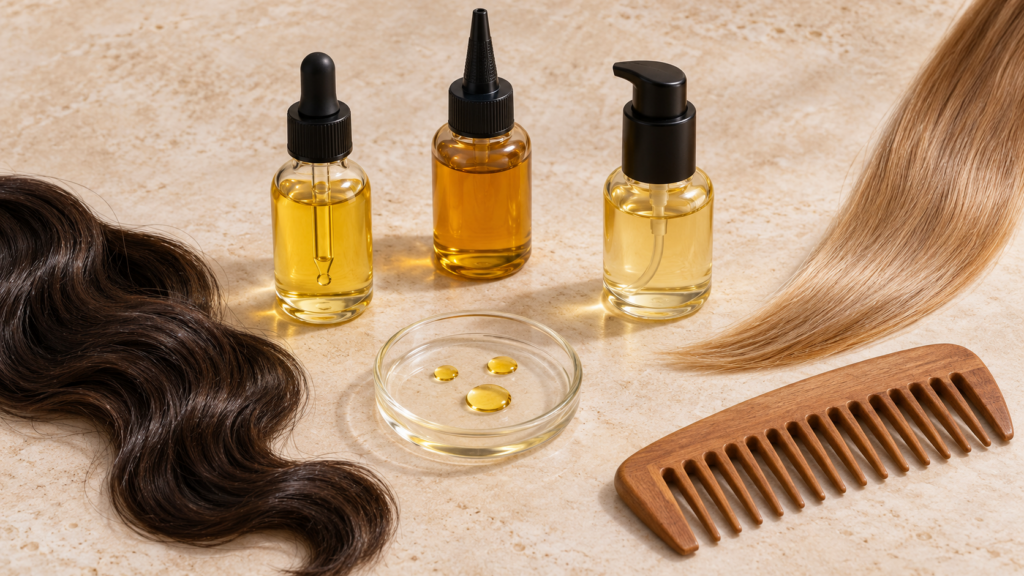
Dispenser control: A narrow nozzle suits parted scalp application, while pumps and droppers suit measured hand application. A wide opening makes accidental overdosing easier.
Bottle and storage: Dark or opaque packaging can reduce light exposure for oxidation-prone oils. Check the maker’s storage guidance, close the cap, and discard a product with a markedly changed odor or appearance.
Contact time and rinse status: A leave-on finisher has long strand contact at a tiny dose. A pre-wash oil may use more product for a limited period. Compare exposure and cleanup, not just ingredients.
Avoid these traps
Avoid Oil-Specific Buying Traps
Most disappointing purchases come from using the wrong zone, dose, or category.
Treating every oil as a scalp product: A finishing serum for lengths may not be directed for skin contact. Follow the labeled zone.
Equating tingling with effectiveness: Cooling, warming, or stinging is not proof of benefit. Stop and rinse as directed if discomfort occurs.
Applying essential oil neat: Concentrated aromatic oils can be irritating. Use only a finished product with clear directions rather than improvising a scalp dilution.
Pouring instead of measuring: More oil increases coating and cleansing burden faster than it improves finish. Establish a repeatable drops-or-pumps dose.
Adding oil to already coated hair: Layering over heavy conditioner, leave-in, cream, and serum can hide which step causes limpness or buildup.
Buying for growth claims: Cosmetic oils may support grooming, but they should not be treated as a diagnosis or guaranteed answer to sudden, patchy, or concerning hair loss.
Decision guidance
Route the Purchase in Five Questions
A short decision path prevents a featured ingredient from overriding routine fit.
Where will it go?: Choose scalp, lengths, ends, or a clearly separated combination.
When will it be used?: Set pre-wash, damp-hair, dry-hair, or overnight use only when directions support it.
How will it be measured?: Prefer the dispenser that gives the smallest useful repeatable dose.
How will it come off?: Estimate shampoo effort and whether residue will reach roots, bedding, or styling tools.
What result will keep it?: Use observable cosmetic endpoints: easier detangling, less roughness, controlled shine, preserved volume, comfortable scalp, and normal wash recovery.
Ownership & compatibility
Test Dose and Placement Separately
A controlled trial tells you whether the product fits without confusing scalp response and strand finish.
Record the baseline: Note scalp comfort, wash interval, end roughness, volume, shine, and current styling layers.
Start at the lowest directed dose: Count drops or pumps and keep placement consistent.
Change one zone at a time: Do not begin scalp oiling and a full-length finishing routine on the same day.
Judge after the next wash: Record residue, cleansing effort, root freshness, dry movement, tangling, and transfer to fabric.
Use a stop rule: Discontinue for burning, swelling, sores, or worsening irritation and seek appropriate care when symptoms are severe or persist.
FAQ
Scalp and Strand Oil Questions
These answers keep zone, dose, and claims separate.
Can I use the same oil on my scalp and ends?
Is coconut, argan, or jojoba oil best?
Should I oil an itchy or flaky scalp?
Can hair oil make fine hair greasy?
Are essential oils safe for the scalp?
Does hair oil moisturize dry hair?
How long should a pre-wash oil stay on?
How do I know if I used too much?
Can hair oil stop shedding or regrow hair?
Readiness check
Choose by Zone, Dose, and Removal
The right oil is the one whose placement and cleanup fit the actual concern.
Pick one zone: Keep scalp and strand decisions distinct.
Read the directions: Confirm timing, rinse status, and permitted placement.
Control the dose: Count pumps or drops.
Plan the wash: Know how residue will be removed.
Keep a stop rule: Do not continue through irritation or worsening symptoms.
Oil-Choice Shortcuts
Jump to the decision that changes the bottle or routine.
Six Oil Checks
Use these before the first application.
- Zone: Scalp, roots, lengths, or ends?
- Timing: Pre-wash, damp, dry, or leave-on?
- Dose: How many drops or pumps?
- Aroma: Is fragrance or essential oil acceptable?
- Removal: What cleansing step follows?
- Stop rule: What response ends the trial?
Useful Oil Terms
Plain language for formula and use decisions.
When a Top 10 List Helps
Use rankings after defining placement and routine.
- The zone is fixed: Filter scalp products separately from strand finishers.
- The dose is realistic: Compare dispensers and starting amounts.
- The wash plan works: Include removal effort in the shortlist.
- The claim is cosmetic: Keep growth and disease claims out of the decision.
Already have a shortlist? A Comparison can help resolve the remaining tradeoffs.
When a Comparison Helps
Compare finalists on the same oil-use variables.
- Bases differ: Compare plant oils, esters, silicones, and blends.
- Dispensers differ: Compare dropper, nozzle, pump, and open-neck control.
- Exposure differs: Compare scalp contact, fragrance, and leave-on time.
- Cleanup differs: Compare residue and expected cleansing burden.
Still discovering options? Start with a Top 10 to build a relevant shortlist.