
How to Choose Hair Serums for Scalp and Strand Concerns
A flaky or tight scalp and rough, frizzy lengths can appear in the same routine, but they are not one buying problem. Scalp serum sits on living skin; strand serum coats hair fiber. Choose each by its contact zone, intended concern, applicator, residue, and directions, then decide whether you need one product or two.
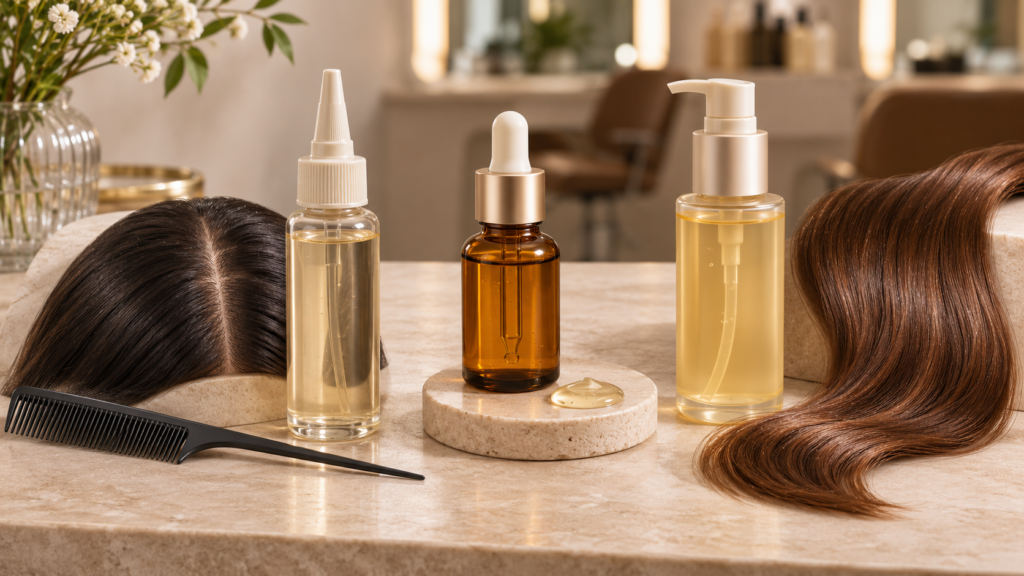
Buying framework
Separate the Scalp Problem From the Strand Problem
Map what is happening, where it happens, and when it appears before comparing ingredients. The same word on two bottles can hide very different exposure and use directions.
Mark the exact zone: Decide whether the concern begins on scalp skin, at the roots, through the mid-lengths, or at the ends. Root oiliness is not the same as scalp discomfort, and dry ends do not prove the scalp is dry.
Describe the observable concern: Use concrete signs such as tight feel, visible flakes, surface oil, tangling, flyaways, rough ends, or loss of movement. Avoid choosing from vague promises such as detox, renewal, or transformation.
Check timing and triggers: Note whether the issue follows washing, heat styling, dry weather, humidity, product layering, or several days without cleansing. Timing helps distinguish an unsuitable dose from a mismatched product type.
Decide whether one or two products are needed: A scalp-directed fluid may do nothing useful for rough ends, while a smoothing finisher may be too coating for skin. A split routine is often clearer than forcing one serum across both zones.
Set a stop boundary: Cosmetic serums are for appearance and comfort claims within their directions. Pain, sores, marked redness, rapidly worsening scaling, or sudden or patchy shedding should not be managed by repeatedly changing cosmetic serums.
Who this is for
Match Common Concern Pairs Without Crossing Zones
Choose from the concern pair you actually have. Each route keeps scalp exposure and strand coating separate.
Oily roots with dry ends: Keep the root area free of strand finisher and apply the smallest workable amount from mid-lengths downward. A scalp product, if used, should be specifically labeled for that zone and should not add unnecessary oily residue.
Tight-feeling scalp with fine lengths: Look for a light scalp-directed fluid with a precision nozzle or controlled dropper. For the lengths, use a separate low-dose serum only where friction or flyaways appear so volume is not sacrificed.
Flake-prone scalp with coarse or porous hair: Do not assume a rich strand oil will treat scalp flaking. Follow scalp-specific directions for skin contact, while choosing enough slip for coarse lengths and keeping the two applications visibly separated.
Sensitive scalp with heat-styled ends: Minimize unnecessary fragrance and contact on the scalp. For hot-tool use, require an explicit heat-protection claim on the strand product rather than inferring protection from gloss or silicone content.
Comfortable scalp with frizz and breakage-prone lengths: Skip scalp serum unless there is a defined need. Put the budget and routine space toward a strand formula that improves distribution, slip, and finish without claiming to permanently mend broken fiber.
What to pay attention to
Read Scalp and Strand Formulas Through Different Lenses
Skin contact raises different questions from fiber coating. Compare the base, applicator, directions, and residue against the zone that will actually receive the product.
Scalp exposure lens
Is skin contact explicitly directed, precisely dosed, comfortable after dry-down, and supported by clear stop instructions?
Strand performance lens
Does the smallest even dose improve slip or finish while preserving movement and keeping cleansing effort reasonable?
Scalp-directed labeling: The package should explicitly permit scalp use and state frequency, amount, and whether the product remains on or is rinsed. A dropper alone does not establish that a formula belongs on skin.
Precision applicator: Nozzles can place fluid along parts with less hair saturation. Droppers allow small increments but can flood one spot. Judge the package by whether it controls contact and avoids repeated touching of the scalp.
Vehicle and dry-down: Water- or alcohol-containing scalp fluids may spread and dry differently from oil-rich blends. On strands, silicones, esters, oils, and film formers shape slip, shine, weight, and wash-out.
Fragrance and leave-on exposure: A scent that is tolerable on ends may be objectionable during prolonged skin contact. Read the complete ingredient list and the warning language when the formula is intended to remain on the scalp.
Strand coverage and weight: Fine hair exposes excess coating quickly; thick or porous lengths may need broader coverage. Compare how the directed dose spreads through the target area rather than judging richness in the palm.
Claim boundary: Hydration, smoother appearance, reduced friction, and temporary gloss are cosmetic outcomes. Regrowth, disease treatment, and permanent repair require evidence beyond category language and should not be inferred from featured ingredients.
Avoid these traps
Avoid Two-Zone Serum Mistakes
Most failures come from treating roots, scalp skin, and hair fiber as one continuous surface.
Dragging strand serum onto the scalp: A smoothing serum can migrate during brushing or sleep. Begin below the root area unless the label specifically includes scalp application.
Running scalp drops through the ends: A scalp formula may be too light to condition lengths or may contain a vehicle chosen for skin dry-down. Use it only in the directed zone instead of spreading leftovers through the hair.
Calling every flake dryness: Visible flaking has multiple possible causes. Adding richer oils can obscure the pattern or worsen residue, so persistent or inflamed scaling deserves appropriate assessment.
Starting both serums at once: Two simultaneous additions make itching, collapse, tack, or buildup hard to trace. Introduce one zone at a time and keep the other routine stable.
Letting the applicator touch skin: Repeated contact can soil a nozzle or dropper. Hold it just above the part when directions allow, close it promptly, and do not share scalp applicators.
Treating tingling as proof: Cooling, warming, or stinging does not establish efficacy. Stop and follow the label if discomfort persists or visible irritation develops.
Decision guidance
Build the Smallest Two-Zone Routine That Solves the Problem
Use a scalp product only for a defined scalp concern and a strand product only for a defined fiber concern.
Scalp concern only: Choose a scalp-labeled formula with controllable placement and clear frequency. Keep the lengths routine unchanged while you assess comfort, residue, and washing.
Strand concern only: Skip the scalp step. Choose by friction, frizz, heat-use claim, finish, and dose, then apply from the most damaged or unruly area outward.
Both zones need help: Use two products with separate applicators and application maps. Apply the scalp serum along parts and the strand serum below the root area, following each product's timing.
The root area looks greasy after use: First check placement and amount. Reduce strand-serum migration and reassess scalp frequency before replacing both products.
Symptoms exceed a cosmetic decision: Pause experimentation when there is pain, swelling, sores, marked redness, rapidly worsening scale, or sudden or patchy loss. A buying guide cannot determine the cause.
Ownership & compatibility
Run a Split-Zone Trial
A controlled trial shows whether a problem comes from skin contact, fiber coating, dose, or interaction between the two products.
Photograph the application map: Record which parts received scalp serum and where strand application began. This is more useful than relying on a vague memory of using a small amount.
Count drops and pumps separately: Log the amount for each zone and keep it fixed for several comparable uses. Do not combine the totals because the covered areas and dispensers differ.
Stagger the introductions: Test the scalp serum while the lengths routine stays familiar, then add the strand serum later. This makes irritation, flatness, and residue easier to attribute.
Check at three moments: Observe scalp comfort after dry-down, strand movement when fully dry, and residue before the next wash. Immediate wet feel is not enough.
Clean and close the packages: Keep nozzles and droppers from touching skin when practical, wipe excess from the exterior, and store each product according to its label.
FAQ
Scalp and Strand Serum Questions
These answers clarify zone, timing, safety boundaries, and two-product routines.
Can one hair serum be used on both scalp and ends?
How can I tell whether a serum is meant for the scalp?
Should scalp serum go on clean or dirty hair?
Can strand serum make the scalp oily?
Will scalp serum fix dandruff or hair loss?
Can I use scalp serum and hair oil in the same routine?
Why does my scalp tingle after serum?
How much serum should go on the ends?
How long should I test a two-serum routine?
Readiness check
Keep Skin Contact and Fiber Coating Separate
The most reliable serum routine starts by treating the scalp and the strands as different surfaces with different needs.
Name the zone before the ingredient: Scalp skin, roots, mid-lengths, and ends point to different products and applicators.
Require directions for scalp contact: Do not infer skin suitability from a dropper, texture, or featured botanical.
Use a separate strand-performance test: Judge slip, movement, frizz, weight, and wash-out only on the hair area that received the finisher.
Introduce products one at a time: Staggering reveals whether skin exposure or fiber coating caused the unwanted result.
Respect the cosmetic boundary: Escalate persistent or significant scalp symptoms instead of extending a serum experiment.
Two-Zone Shortcuts
Jump to the choice that changes placement or product type.
Six Zone Checks
Use these before buying or applying.
- Surface: Skin or hair fiber?
- Location: Scalp, roots, lengths, or ends?
- Concern: Comfort, flakes, oil, friction, frizz, or heat?
- Permission: Does the label allow that contact zone?
- Placement: Can the applicator control it?
- Stop sign: What ends the trial?
Two-Zone Terms
Language for safer comparison.
When a Top 10 List Helps
Use rankings only after the contact zone is fixed.
- Scalp or strand is settled: Exclude products that do not permit the intended placement.
- The concern is observable: Filter for comfort, oil control, frizz, slip, or heat use without mixing them.
- The applicator fits: Compare nozzles, droppers, and pumps by control in the target zone.
- Stop criteria are clear: Prefer complete directions and warnings over dramatic promises.
Already have a shortlist? A Comparison can help resolve the remaining tradeoffs.
When a Comparison Helps
Compare finalists on the same zone-specific evidence.
- Exposure differs: Compare allowed contact, frequency, and leave-on time.
- Placement differs: Compare precision and risk of saturating adjacent hair.
- Finish differs: Compare scalp residue separately from strand movement and gloss.
- Routine load differs: Compare whether one or two products are actually required.
Still discovering options? Start with a Top 10 to build a relevant shortlist.