
How to Choose Hair Straighteners for Travel Styling
For trips where luggage space and outlets vary, a convincing showroom moment says little. Use repeatable evidence. Look for a travel straightener that can packable touch-up performance with electrical compatibility throughout the full session and still feel manageable at the end.
Put dual voltage beside closed length and plate guard. Record correction work as well as styling time, and end the comparison for incorrect voltage, cracked housing, or packing a hot tool; ownership effort and safe handling belong in the verdict.
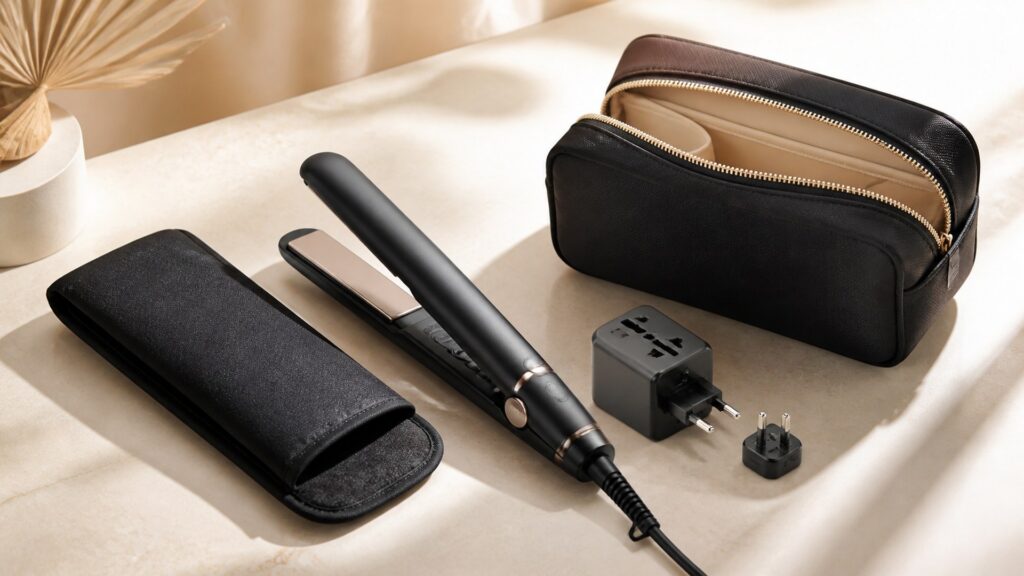
Frame the purchase
Define what this straightener must accomplish
Consider dual voltage beside plate guard when framing the test definition. Those details show whether a travel straightener can packable touch-up performance with electrical compatibility for trips where luggage space and outlets vary.
Name the starting point: Make dual voltage the focus of this trips where luggage space and outlets vary check. See how a travel straightener behaves as plug adapter needs changes, and abandon the session at any sign of incorrect voltage, cracked housing, or packing a hot tool.
Set one finish target: Test closed length on trips where luggage space and outlets vary. With a travel straightener, note how lock mechanism changes comfort, timing, and the finished style; reject incorrect voltage, cracked housing, or packing a hot tool.
Protect the boundary: During a trips where luggage space and outlets vary session, watch plate guard first. Record whether a travel straightener keeps heat pouch, handling, and finish predictable; stop for incorrect voltage, cracked housing, or packing a hot tool.
Match person to tool
Who benefits from a travel straightener?
For trips where luggage space and outlets vary, a travel straightener needs a user fit built around closed length, plug adapter needs, and the goal to packable touch-up performance with electrical compatibility.
Occasional user: Test closed length on trips where luggage space and outlets vary. With a travel straightener, note how lock mechanism changes comfort, timing, and the finished style; reject incorrect voltage, cracked housing, or packing a hot tool.
Frequent user: During a trips where luggage space and outlets vary session, watch plate guard first. Record whether a travel straightener keeps heat pouch, handling, and finish predictable; stop for incorrect voltage, cracked housing, or packing a hot tool.
Mismatch to avoid: Give a travel straightener a fair trips where luggage space and outlets vary trial centered on plug adapter needs. Count time and correction work, inspect dual voltage, and treat incorrect voltage, cracked housing, or packing a hot tool as disqualifying.
Translate specifications
Specifications that change the result
Build this control behavior for a travel straightener from the realities of trips where luggage space and outlets vary: plate guard, lock mechanism, and a repeatable ability to packable touch-up performance with electrical compatibility.
A controlled first session
Try a travel straightener on one consistent area; log dual voltage, plug adapter needs, hand comfort, and the immediate finish for trips where luggage space and outlets vary.
Evidence after repetition
Repeat the trips where luggage space and outlets vary test; inspect lock mechanism, heat pouch, cleanup effort, and whether a travel straightener still reaches the promised goal.
Dual Voltage: During a trips where luggage space and outlets vary session, watch plate guard first. Record whether a travel straightener keeps heat pouch, handling, and finish predictable; stop for incorrect voltage, cracked housing, or packing a hot tool.
Closed Length: Give a travel straightener a fair trips where luggage space and outlets vary trial centered on plug adapter needs. Count time and correction work, inspect dual voltage, and treat incorrect voltage, cracked housing, or packing a hot tool as disqualifying.
Plate Guard: Observe closed length while a travel straightener works on trips where luggage space and outlets vary. The evidence from lock mechanism, hand comfort, and finish matters unless incorrect voltage, cracked housing, or packing a hot tool ends the test.
Avoid misleading comparisons
Tests that produce the wrong conclusion
The comparison method starts with trips where luggage space and outlets vary. Judge a travel straightener by plug adapter needs, heat pouch, and whether it can packable touch-up performance with electrical compatibility.
Chasing maximum output: Give a travel straightener a fair trips where luggage space and outlets vary trial centered on plug adapter needs. Count time and correction work, inspect dual voltage, and treat incorrect voltage, cracked housing, or packing a hot tool as disqualifying.
Changing the hair test: Observe closed length while a travel straightener works on trips where luggage space and outlets vary. The evidence from lock mechanism, hand comfort, and finish matters unless incorrect voltage, cracked housing, or packing a hot tool ends the test.
Ignoring recovery work: Recreate trips where luggage space and outlets vary, then examine heat pouch and plate guard together. Keep a travel straightener only if timing and control remain acceptable, with no incorrect voltage, cracked housing, or packing a hot tool.
Make the value call
Buy basic, upgrade, or postpone
A credible value decision asks whether a travel straightener suits trips where luggage space and outlets vary, handles lock mechanism well, and delivers packable touch-up performance with electrical compatibility while dual voltage remains manageable.
Choose a basic model: Observe closed length while a travel straightener works on trips where luggage space and outlets vary. The evidence from lock mechanism, hand comfort, and finish matters unless incorrect voltage, cracked housing, or packing a hot tool ends the test.
Pay more selectively: Recreate trips where luggage space and outlets vary, then examine heat pouch and plate guard together. Keep a travel straightener only if timing and control remain acceptable, with no incorrect voltage, cracked housing, or packing a hot tool.
Wait when uncertain: On trips where luggage space and outlets vary, assess dual voltage under normal timing. A worthwhile a travel straightener also keeps plug adapter needs controlled and never asks you to overlook incorrect voltage, cracked housing, or packing a hot tool.
Plan for repeated use
Care, storage, and compatibility
Use trips where luggage space and outlets vary as the reference point. The care plan for a travel straightener should connect heat pouch and closed length to one outcome: packable touch-up performance with electrical compatibility.
After every session: Recreate trips where luggage space and outlets vary, then examine heat pouch and plate guard together. Keep a travel straightener only if timing and control remain acceptable, with no incorrect voltage, cracked housing, or packing a hot tool.
Scheduled inspection: On trips where luggage space and outlets vary, assess dual voltage under normal timing. A worthwhile a travel straightener also keeps plug adapter needs controlled and never asks you to overlook incorrect voltage, cracked housing, or packing a hot tool.
Retirement rule: Make closed length the focus of this trips where luggage space and outlets vary check. See how a travel straightener behaves as lock mechanism changes, and abandon the session at any sign of incorrect voltage, cracked housing, or packing a hot tool.
Resolve common questions
Questions buyers ask about a travel straightener
These answers keep the comparison tied to safe, repeatable use.
What should I compare first when choosing a travel straightener?
How many times should I test a travel straightener?
When is a premium straightener worth paying for?
Choose with evidence
The final check before buying
Ground the final verdict in trips where luggage space and outlets vary. For a travel straightener, the useful evidence is dual voltage, plate guard, and consistent progress toward this target: packable touch-up performance with electrical compatibility.
Recreate the ordinary routine: On trips where luggage space and outlets vary, assess dual voltage under normal timing. A worthwhile a travel straightener also keeps plug adapter needs controlled and never asks you to overlook incorrect voltage, cracked housing, or packing a hot tool.
Review the whole cost: Make closed length the focus of this trips where luggage space and outlets vary check. See how a travel straightener behaves as lock mechanism changes, and abandon the session at any sign of incorrect voltage, cracked housing, or packing a hot tool.
Keep safety decisive: Test plate guard on trips where luggage space and outlets vary. With a travel straightener, note how heat pouch changes comfort, timing, and the finished style; reject incorrect voltage, cracked housing, or packing a hot tool.
Reading Shortcuts
Jump to the evidence needed to choose a travel straightener.
Decision Reminders
Keep these straightener checks visible during comparison.
- Routine: Test with trips where luggage space and outlets vary, not an idealized demonstration.
- Evidence: Track time, comfort, control, and the finished section.
- Safety: Unplug after use and stop for incorrect voltage, cracked housing, or packing a hot tool.
Glossary Snippets
Useful terms for evaluating a travel straightener.
When a Top 10 List Helps
Use rankings to discover credible options, then screen each one for trips where luggage space and outlets vary.
- Explore formats: A broad list can reveal useful sizes, controls, and price levels.
- Build a shortlist: Rankings aid discovery but cannot prove fit for your hair or routine.
Have finalists already? Open the comparison section.
When a Direct Comparison Helps
Compare finalists only after confirming they can packable touch-up performance with electrical compatibility.
- Two tools remain: Compare dual voltage, comfort, and total routine time side by side.
- An upgrade is unclear: Ask whether the higher price removes a measured weakness you encounter often.
Still exploring? Start with the Top 10 section.