
How to Choose Hair Wax for Ingredient and Formula Checks
A hair-wax ingredient list can help you screen for known sensitivities and anticipate broad formula behavior, but it cannot reveal exact percentages or guarantee hold, finish, comfort, or washout. The useful check pairs the label with the wax's texture, directions, packaging, and the smallest practical dose, then treats the finished formula—not one fashionable ingredient—as the purchase.
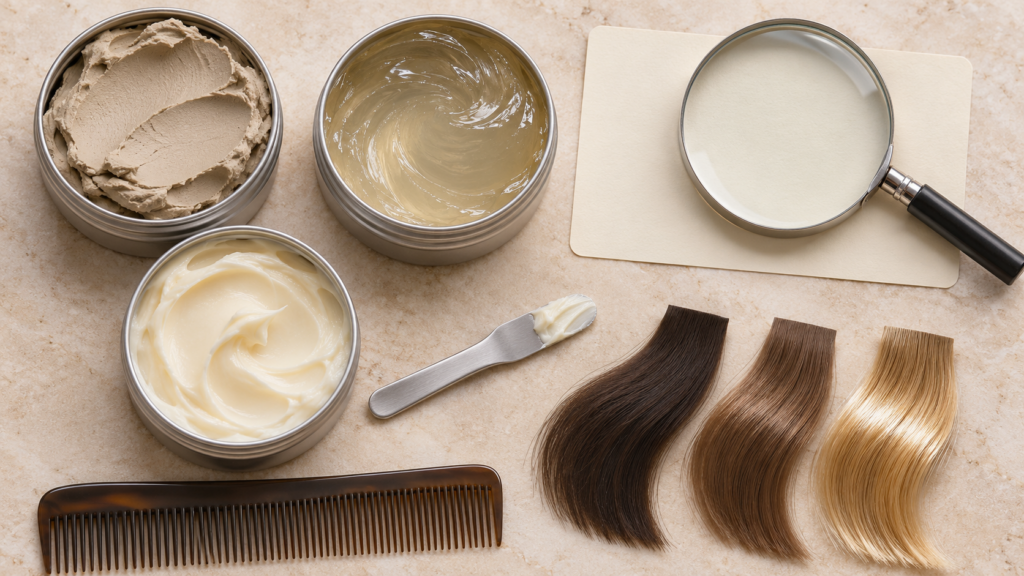
Buying framework
Read the Formula in Three Passes
Start with the complete label, then connect ingredient families to the product's physical form and intended dose. This prevents a single recognizable name from carrying more meaning than the finished formula supports.
Screen for personal exclusions: Check the full ingredient declaration for substances you already know you avoid. Fragrance may appear as a collective term in the United States, so contact the manufacturer when a sensitivity requires more detail than the package provides.
Identify the formula backbone: Look for the broad structure: waxes and other thickeners create body; oils and emollients influence spread and shine; powders can change grip and visual dryness; film formers can affect set. The combination matters more than any isolated name.
Notice where the list becomes less precise: U.S. cosmetic labels provide a broad predominance sequence, but lower-level ingredients can be reordered under the applicable exception. Do not translate list position into an exact percentage.
Match the label to the jar: Compare the list with visible firmness, fingertip melt, tack, shine, and directions. Two waxes with similar ingredients can behave differently because proportions, processing, and the rest of the formula differ.
Judge the finished dose: A concentrated wax leaves more formula on the hair with each scoop. Test a tiny, repeatable amount and stop when added control begins to cost movement, cleanliness, or comfort.
Who this is for
Match the Check to Your Priority
Different shoppers need different information from the same label. Let the constraint decide which part of the formula deserves the closest reading.
Known-sensitivity shoppers: Start with the exact ingredient or ingredient family your clinician or prior experience identified. Ignore vague front-label reassurance and use the full declaration; ask the manufacturer when collective fragrance labeling leaves a relevant gap.
Fine or easily weighed-down hair: Prioritize a formula that spreads in a very thin film. A long oil or emollient story is not automatically wrong, but the jar's softness, shine, and required dose should support light placement rather than broad coating.
Dry-looking or coarse-feeling styles: Look for enough glide to distribute without tugging and enough flexibility to avoid a brittle finish. Do not assume a botanical oil name guarantees conditioning or repair; evaluate spread, finish, and removal as a complete system.
Matte-finish buyers: Powders, clays, and high-grip structures can support a drier look, yet too much may appear dusty, mute dark hair, or increase drag. Check whether the formula can be warmed and placed without visible deposits.
Fragrance-conscious households: Read both the ingredient declaration and the product description. Fragrance-free, unscented, natural, and hypoallergenic are not interchangeable signals; the complete label and any manufacturer clarification matter more than the headline.
What to pay attention to
Translate Ingredient Families Into Use
Ingredient names offer clues, not a performance score. Use these families to form testable expectations, then confirm them against the finished wax.
Composition lens
Which families build structure, slip, grip, finish, scent, and product protection, and what remains unknown about their proportions?
Behavior lens
Does the finished wax melt, spread, set, transfer, and wash out in a way that matches the intended dose and hairstyle?
Waxes and structural thickeners: Ingredients such as beeswax, microcrystalline wax, ozokerite, or plant waxes may help create a solid network. Their presence alone does not reveal firmness; the oil phase, blend, and proportions change how the network feels.
Oils, esters, and emollients: These can improve slip, soften the scoop, and raise shine, but the effect depends on dose and the rest of the base. A formula that glides beautifully on fingers may still look heavy when spread across fine hair.
Powders and mineral-like texturizers: Powdery materials can absorb some surface oil, reduce visible gloss, or add grip. They can also create drag or a pale cast when the dose is too high, especially on dark or very smooth hair.
Film formers and styling polymers: These may reinforce hold or shape retention, yet an ingredient name cannot tell you how flexible the film will be. Pair the list with claims, directions, and whether the product remains reworkable after it sets.
Fragrance and aromatic components: Fragrance can be declared collectively in the United States, so the list may not identify every component. If fragrance is a known concern, choose based on your specific avoidance need rather than scent strength alone.
Preservation and package exposure: Preservatives help protect suitable formulas from contamination, while water content and repeated finger contact change the preservation challenge. Do not reward a short list merely for lacking recognizable preservative names; use clean hands and follow storage directions.
Avoid these traps
Avoid Ingredient-List Shortcuts
Most formula mistakes come from treating a label as a ranking, a safety verdict, or a complete recipe.
Buying for one hero ingredient: A familiar oil, butter, wax, or extract may sit inside a formula whose overall grip, shine, fragrance, or dose does not suit you. Buy the system, not the highlighted name.
Reading exact percentages from order: Predominance order is useful for broad context, but the low-level ordering exception prevents precise concentration estimates. The panel is not a concentration chart.
Treating natural as safer: Ingredient source does not by itself establish safety or tolerance. Natural materials can still be unsuitable for an individual, while synthetic ingredients are not automatically harsh.
Treating a short list as gentler: List length says little about concentration, fragrance disclosure, preservation needs, or personal sensitivity. A compact anhydrous wax and a softer formula can require different checks without one being universally better.
Equating scent-free language: Fragrance-free and unscented claims can be interpreted differently by shoppers, while fragrance may be listed collectively. Read the declaration and seek clarification when a specific sensitivity makes the distinction important.
Using an ingredient database as approval: A database can help decode names and functions, but a name's presence does not prove that a product is approved, effective, or right for you. Regulatory status, concentration, exposure, and finished-formula use still matter.
Decision guidance
Choose by the First Formula Mismatch
Compare finalists with the same small dose. The first repeatable mismatch tells you which formula direction to change.
If the wax stays lumpy: Choose a softer or more evenly melting structure, or a formula with better glide. Do not compensate by scraping out a larger amount.
If hair looks greasy: Reduce the dose first. If shine and weight still arrive before useful control, compare a drier base, more powder support, or a firmer product that deposits less per touch.
If the finish looks chalky: Use less and warm it more thoroughly. If pale residue remains, choose a less powder-forward formula or one with more transparent spread on your hair color.
If the style feels sticky: Look for lower tack or a more flexible set. Check whether the stickiness comes from the initial formula or from repeated layers and interactions with other styling products.
If skin or scalp reacts: Stop using the product and keep the package or ingredient list. Seek appropriate medical advice for concerning symptoms, and use the exact formula record when screening a replacement.
Ownership & compatibility
Keep a Reliable Formula Record
Labels, formulations, and your product stack can change. A small record makes future comparisons more useful than memory alone.
Save the full ingredient panel: Photograph or record the list when you open the jar, along with the product name and purchase date. This creates a reference if packaging or online listings later change.
Note the working dose: Record the scoop size, placement, and number of touch-ups that produce the best result. Ingredient comparisons are misleading when one formula is applied at twice the film weight of another.
Track formula interactions: Test a new wax over a consistent leave-in and styling base. Flaking, pilling, drag, or tack may come from the stack rather than from one ingredient in isolation.
Protect the jar: Use clean, dry hands or a clean tool, close the lid, and follow storage directions. Heat, moisture, and repeated contamination can change odor, color, or texture.
Recheck before repurchase: Compare the current package with your saved label and directions. A familiar product name does not guarantee that every market, size, or reformulation uses the same ingredient list.
FAQ
Hair Wax Formula Questions
These answers separate useful label clues from conclusions the ingredient panel cannot support.
Are hair wax ingredients listed from highest to lowest?
Can I tell how much of an ingredient is in hair wax?
Does beeswax mean a hair wax will be firm?
Are natural hair wax formulas safer?
What does fragrance mean on a hair wax label?
Is fragrance-free the same as unscented?
Does a shorter ingredient list mean less buildup?
Should hair wax contain preservatives?
Can an ingredient database tell me whether a wax is good?
Readiness check
Choose the Formula, Not the Buzzword
A useful formula check narrows risk and predicts tradeoffs without pretending the label is a complete recipe.
Start with exclusions: Screen the complete panel for ingredients you know you avoid.
Read families, not celebrities: Identify the structure, slip, grip, finish, scent, and preservation system.
Respect label limits: Do not infer exact percentages, universal safety, or performance from list order.
Confirm behavior: Judge melt, spread, tack, finish, transfer, and removal at a controlled dose.
Keep a record: Save the formula, directions, dose, and response before repurchasing or comparing.
Formula-Check Shortcuts
Jump to the label question that changes the purchase.
Six Formula Checks
Use these before trusting a front-label claim.
- Exclusions: Find known personal triggers first.
- Backbone: Map structure, slip, grip, and finish.
- Order: Treat position as context, not percentage.
- Fragrance: Notice collective disclosure limits.
- Dose: Compare formulas at the same film weight.
- Record: Save the label and your response.
Useful Formula Terms
Plain language for reading a hair-wax panel.
When a Top 10 List Helps
Use rankings only after defining the formula question.
- Exclusions are known: Remove formulas that conflict with a specific avoidance need.
- Finish is defined: Filter for matte, satin, or glossy behavior.
- Dose is realistic: Prefer control before the film becomes heavy.
- Disclosure is sufficient: Favor labels and manufacturer answers that support your check.
Already have a shortlist? A Comparison can help resolve the remaining tradeoffs.
When a Comparison Helps
Compare finalists at the same dose and on the same product stack.
- Structure differs: Compare scoop firmness and fingertip melt.
- Spread differs: Track drag, coverage, and visible deposits.
- Finish differs: Inspect shine, chalkiness, tack, and movement.
- Reset differs: Compare transfer, layering, and washout.
Still discovering options? Start with a Top 10 to build a relevant shortlist.