
How to Choose Hair Wax for Scalp and Strand Concerns
When scalp comfort and strand condition both matter, the first hair wax decision is where the product lands. Choose a wax that can be warmed and placed mainly on the intended strands with limited scalp contact, then judge drag, tack, stiffness, visible residue, buildup, and washout at the smallest useful dose.
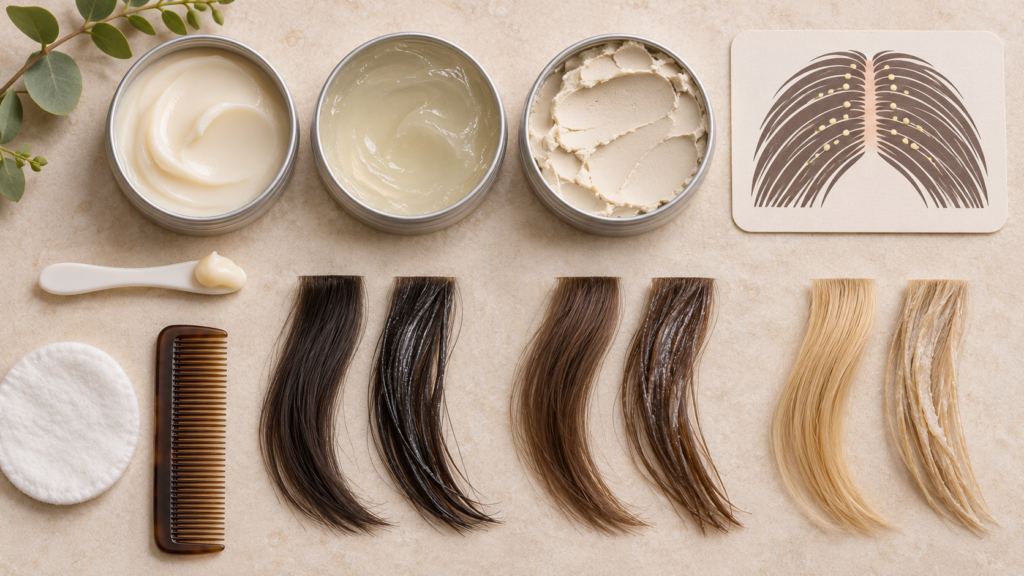
Buying framework
Separate Scalp Exposure From Strand Performance
A wax can feel wrong because of where it lands, how its film behaves, or both. Diagnose those paths separately before replacing it.
Start with placement: Decide whether the style needs root support, surface control, or hold through the mid-lengths and ends. The closer the target is to the scalp, the more important scoop size, warming, and fingertip placement become.
Identify the first concern: Itching or burning at the application area calls for stopping use, while dry-feeling lengths, tack, crunch, or visible film point to strand behavior. Do not treat every flake as product residue or every tight strand as scalp dryness.
Choose the minimum film: Use the lightest, most localized application that preserves the intended shape. Extra product increases deposition on hair and nearby skin without guaranteeing a more even or durable result.
Plan the full wear cycle: A suitable wax should work at application, remain acceptable after movement, and leave predictably with your normal cleansing routine. Judge the product through removal, not only during the first minute.
Keep care and styling roles distinct: Hair wax can change hold, texture, shine, and surface feel, but it does not diagnose or treat a scalp condition or repair damaged fibers. Persistent symptoms and significant breakage deserve separate attention.
Who this is for
Match the Formula to the Exposure Pattern
The useful buyer profiles are defined by where and how often wax is applied, not by broad labels alone.
Scalp-sensitive finisher: Prioritize a wax that emulsifies in a tiny dose, has low drag, and an application method that keeps the product mainly on the hair. Fragrance preferences and known personal triggers deserve exact label checks.
Fine-hair root lifter: Look for a soft, easily spread texture and a low-residue finish that supports a small root section without soaking the part line. Heavy shine or tack can make sparse areas look more separated.
Dry or fragile-length styler: Favor flexible hold and low finger and comb resistance. A rigid film may preserve shape but can make manipulation feel rougher, especially when repeatedly combed or restyled.
Flake-prone restyler: Choose a reworkable film and avoid heavy layering. If visible particles appear, check whether they come from fractured wax film, scalp scale, or a combination before changing the cleansing routine.
Frequent wax user: Make residue, fragrance exposure, jar hygiene, and washout central selection criteria. A product that works for occasional event styling may become burdensome when applied and removed most days.
What to pay attention to
Read the Scoop and the Strand Film
Package language helps, but the scoop behavior and the film left on hair determine most scalp-and-strand tradeoffs.
Contact lens
Can a warmed fingertip dose reach the intended hair section while limiting unnecessary contact with the part line and irritated skin?
Fiber lens
After application, does the film preserve movement without unacceptable tack, stiffness, residue, dullness, tangling, or difficult removal?
Scoop resistance and melt: A firm wax can provide concentrated control, but it must soften evenly between clean fingertips. If granules remain or the product stays stiff, it can catch fragile strands and land in patches near the roots.
Working time: A pliable wax gives more time to spread a trace amount through the intended section. A fast-setting or very tacky formula can lock in uneven deposits before they are redistributed.
Film flexibility: A flexible film bends with the hair and usually tolerates touch or light brushing better. Firmer films resist movement but can increase crispness, tangling, or visible fracture when disturbed.
Tack and transfer: Some tack adds grip, yet excess stickiness can join strands, collect lint, and transfer to fingers, tools, or the scalp near the roots. Evaluate the dry film rather than the initial wet feel.
Fragrance and disclosed ingredients: If fragrance or a known ingredient matters to you, inspect the current package rather than relying on scent strength or an old retailer list. Broad clean or hypoallergenic language cannot replace a specific label check.
Residue and washout: Powdery film, dullness, or repeated-cleansing needs depend on dose, layering, wear time, and the complete formula. Compare products under the same application and wash routine before blaming one ingredient.
Avoid these traps
Avoid Turning Every Concern Into a Formula Verdict
Technique, product film, and an unrelated scalp issue can look similar. Change one variable at a time.
Waxing directly into the part: Direct root application can concentrate product on skin and collapse lift. Warm a trace amount, touch the hair rather than the part line, and follow the package directions.
Assuming alcohol explains every dry feel: Ingredient names and formula roles differ, and the complete dose and film matter. Use the exact label and observed behavior instead of treating one familiar word as a universal diagnosis.
Combing through firm, unwarmed wax: Forcing a brush through a rigid film can create flakes and resistance. If the style must be reset, choose a softer, more reworkable wax or break the film only as the directions allow.
Layering over unresolved irritation: Adding more product cannot correct burning, swelling, or pronounced itching. Stop use, remove the product as directed, and seek appropriate help when symptoms are severe or persist.
Confusing residue with scalp scale: Film fragments often follow heavy layering or forceful combing, while scale can appear without wax. Clean the hair and scalp, simplify the routine, and observe when particles return rather than guessing from appearance alone.
Changing wax and shampoo together: A simultaneous product swap hides the cause of improved or worsened comfort, texture, and washout. Keep the rest of the routine stable during a comparison.
Decision guidance
Use the First Failure to Choose the Next Test
The earliest unwanted change points to placement, film strength, or compatibility more reliably than adding another claim to the shopping list.
If the scalp feels coated but the style holds: Reduce root-area contact and dose first. Try a softer wax, keep application on the intended strands, or use a clean tool for precise surface control when directions permit.
If lengths feel crisp or catch during restyling: Move toward a more flexible, brushable hold and use fewer applications. Stronger hold is unlikely to improve a problem caused by excess rigidity.
If white particles appear after movement: Let each coat dry, reduce layering, and compare the film after the same amount of brushing. If particles occur on clean, product-free hair, investigate the scalp separately.
If fine roots look separated or shiny: Choose lighter deposition and a more natural or matte-looking finish, then target the underside of lifted sections rather than coating the visible part.
If discomfort repeats with one product: Stop using it and compare the exact ingredient list with products you tolerate. A clinician can help assess persistent or recurring scalp symptoms; another styling claim is not a substitute.
Ownership & compatibility
Keep Application and Removal Predictable
Jar care, clean comparisons, and restrained use reduce accidental exposure and make product behavior easier to interpret.
Keep the jar and tools clean: Dirty fingers or a contaminated tool can introduce debris into an open jar. Follow package hygiene and storage directions, close the lid promptly, and stop using a product that has changed unexpectedly.
Protect the jar and application area: Keep wax away from eyes and broken or irritated skin. Use clean, dry hands or a clean spatula, close the jar promptly, and follow label directions for storage and disposal.
Reset before comparing: Start with clean hair and a settled scalp, then hold section size, dose, placement, and cleansing routine steady. Mixed films make residue and reaction clues hard to attribute.
Clean buildup on its own schedule: Do not wait for severe coating, but do not assume aggressive cleansing is always needed. Let actual residue, scalp comfort, and the product directions guide wash timing and method.
Record recurring patterns: Note placement, dose, wear time, symptoms, strand feel, and removal. A short record can reveal whether the problem follows one formula, heavy layering, a particular target area, or product-free days too.
FAQ
Hair Wax Questions About Scalp and Strands
These answers help separate styling tradeoffs from symptoms that need a different response.
Should hair wax touch the scalp?
Can hair wax make hair feel dry?
Is fragrance-free hair wax better for a sensitive scalp?
Why does hair wax leave white flakes?
Can I apply hair wax with a brush or comb?
What type of hold is best for fragile or breakage-prone hair?
How can I prevent buildup near the roots?
Does a natural or clean claim mean a hair wax is gentler?
When should scalp symptoms get professional attention?
Readiness check
Choose Placement Before Promises
A scalp-and-strand-friendly choice begins with controlled contact, then earns its place through comfortable wear and manageable removal.
Define the target: Separate root lift, surface control, and mid-length hold.
Control the dose: Match scoop texture, warming, placement, and dose to that target.
Judge the film: Check movement, tack, stiffness, flaking, dullness, and finger and comb resistance.
Watch the scalp separately: Stop at concerning symptoms and do not mistake styling residue for a diagnosis.
Verify the reset: Include tool cleanup and washout in the buying decision.
Scalp and Strand Shortcuts
Jump to the concern that changes placement or film choice.
Six Scalp and Strand Checks
Use these before adding another pass.
- Target: Name the hair section that needs support.
- Placement: Keep unnecessary wax off the part line.
- Dose: Start with one tiny, warmed application.
- Dry film: Check tack, stiffness, and movement.
- Symptoms: Stop at burning, swelling, or marked itching.
- Reset: Include residue, tools, and washout.
Useful Scalp and Strand Terms
Plain language for placement and wear.
When a Top 10 List Helps
Use rankings after defining contact and film priorities.
- Placement is clear: Filter for the precise application control you need.
- Hold is clear: Choose flexible or firm film intentionally.
- Label needs are clear: Verify fragrance and known personal triggers.
- Removal is clear: Compare residue and washout under normal use.
Already have a shortlist? A Comparison can help resolve the remaining tradeoffs.
When a Comparison Helps
Compare finalists with placement and dose held steady.
- Melt differs: Check warming, drag, and root-area control.
- Film differs: Compare stiffness, tack, and flaking.
- Comfort differs: Observe the same contact area and wear window.
- Washout differs: Use the same cleansing and tool-cleaning routine.
Still discovering options? Start with a Top 10 to build a relevant shortlist.