
How to Choose Hand Repair Balms for Hand Care Routine Building
A repair balm belongs at selected points between washing, sanitizer, gloves, tools, food, screens, and nighttime rest. Its stronger film can protect vulnerable areas longer than lotion, but using it at the wrong moment creates contamination or grip problems.
Give balm one defined role in the routine. Pair light broad moisturization with targeted occlusion, and schedule the heaviest layer after tasks that demand clean fingertips or uncoated palms are finished.
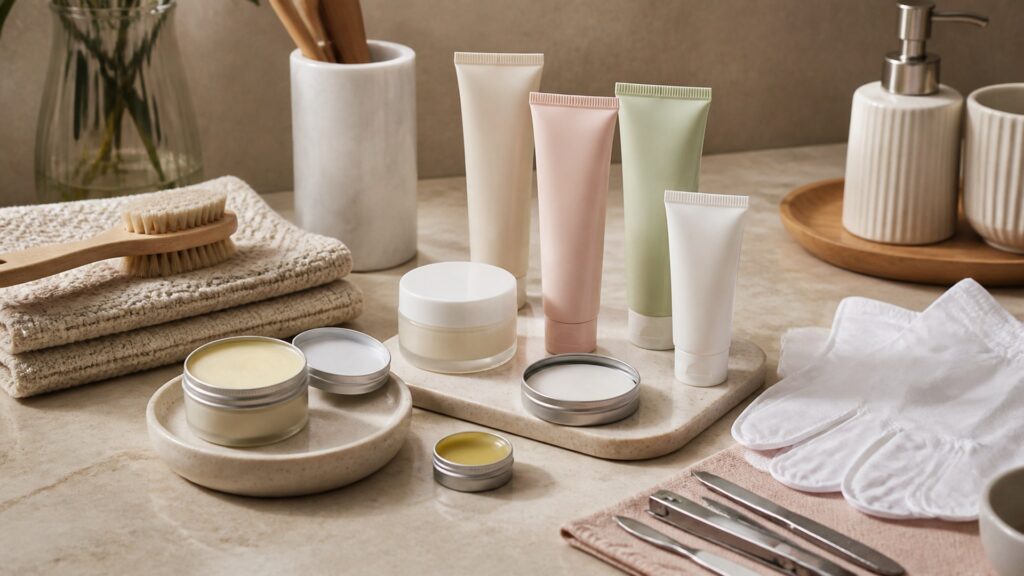
Buying framework
Define the hand care routine building routine before comparing products
Use the setting, frequency, and skin priorities to narrow hand repair balms logically.
Start with the use case: Map exposure and hand-function demands from the first wash through bedtime.
Rank the practical tradeoffs: Assign lotion to broad reapplication and balm to specific high-loss zones.
Check instructions early: Choose a protected interval for the strongest film and evaluate it after the next wash.
Use profiles
Match hand repair balms to the person and pace
Three shopper profiles expose different priorities for hand care routine building.
Routine-focused buyer: A desk worker can use balm on knuckles while leaving fingertips clean.
Performance-focused buyer: A cleaner should apply after removing protective gloves and washing.
Occasional or flexible user: A nighttime user can combine targeted balm with breathable cotton gloves when suitable.
Specifications
Read the specifications through a hand care routine building lens
Translate technical language into visible routine benefits.
Handling lens
Identify the next task before each balm application.
Ownership lens
Count how many exposures occur before protected comfort disappears.
Occlusive And Emollient Blend: Stick application reduces finger contact and improves placement during the day.
Texture And Spreadability: Tin balm allows flexible dosing but requires clean hands or an applicator.
Fragrance Profile: Waxes resist incidental contact while accumulating through repeated layers.
Wash Resistance: Cotton gloves contain transfer but alter heat and occlusion.
Tin Or Tube Hygiene: Sanitizer can redistribute or partially remove an existing film.
Common mistakes
Avoid shortcuts that undermine hand care routine building
A good purchase can still disappoint when selection or use is based on the wrong assumption.
Buying from one metric: Do not apply balm immediately before food preparation or contact-lens handling.
Skipping compatibility checks: Avoid layering over cleaning residue, soil, or glove sweat.
Ignoring post-use care: Do not use overnight occlusion as a substitute for daytime exposure reduction.
Decision guidance
Choose the simplest option that covers the real need
Use these decision rules to finish a shortlist for hand care routine building.
Choose the basic format when: Use precision balm during the day when dry zones can be isolated.
Choose the flexible format when: Reserve heavier coating for the final wash and a low-contact interval.
Pause before upgrading when: Choose lighter cream if balm film repeatedly disrupts adherence or required work.
Ownership & compatibility
Plan for clean, repeatable ownership
The best value remains convenient after the first few uses.
Consumables and replacements: Keep balm at the workstation or bedside where its intended use occurs.
Cleaning and storage: Clean package surfaces exposed to shared or dirty environments.
Routine compatibility: Wash residue from fingertips before precision or hygiene-sensitive tasks.
FAQ
How to Choose Hand Repair Balms for Hand Care Routine Building FAQ
Practical answers about choosing and owning hand repair balms for hand care routine building.
What matters most when choosing hand repair balms for hand care routine building?
Is the most expensive option better for hand care routine building?
How should I compare two similar hand repair balms options?
Bottom line
Buy for repeatable hand care routine building results
A focused shortlist is easier to own and use well.
Prioritize fit: Give balm a distinct targeted role alongside lighter cream.
Verify the limits: Apply according to the next task, not only current dryness.
Count ownership costs: Measure protection through the next real exposure cycle.
Reading Shortcuts
Jump to the key hand repair balms decisions.
Decision Reminders
Keep these checks beside your shortlist.
- Check occlusive and emollient blend: Patch test unfamiliar formulas and stop if persistent irritation develops.
- Check texture and spreadability: Do not rely on cosmetic balm for deep cracks, infection, or a worsening skin condition.
- Check fragrance profile: Apply with clean hands and keep jar or tin packaging free from water and contamination.
Glossary Snippets
Plain-language hand repair balms terms.
When to Use a Top 10 Review
Use a ranked list to identify a manageable set of strong candidates.
- You are still exploring: A ranked list can reveal the main formats and price tiers.
- You want a shortlist: Start broad, then confirm fit with this buying guide.
Have finalists? Use a Comparison.
When to Use a Comparison
Use a direct comparison when only a few candidates remain.
- Features are close: Side-by-side details clarify meaningful differences.
- Prices overlap: Compare ownership value, not only purchase price.
Still exploring? See the Top 10.