
How to Choose Hot Brushes for Travel Styling
A travel hot brush must satisfy two separate tests: it has to style well, and it has to belong safely in the electrical system and luggage plan of the destination. Compact dimensions alone are insufficient.
Confirm voltage on the rating plate or official manual before considering attachments. Then build a realistic hotel routine around the available mirror, outlet position, packing time, and limited selection of hair products.
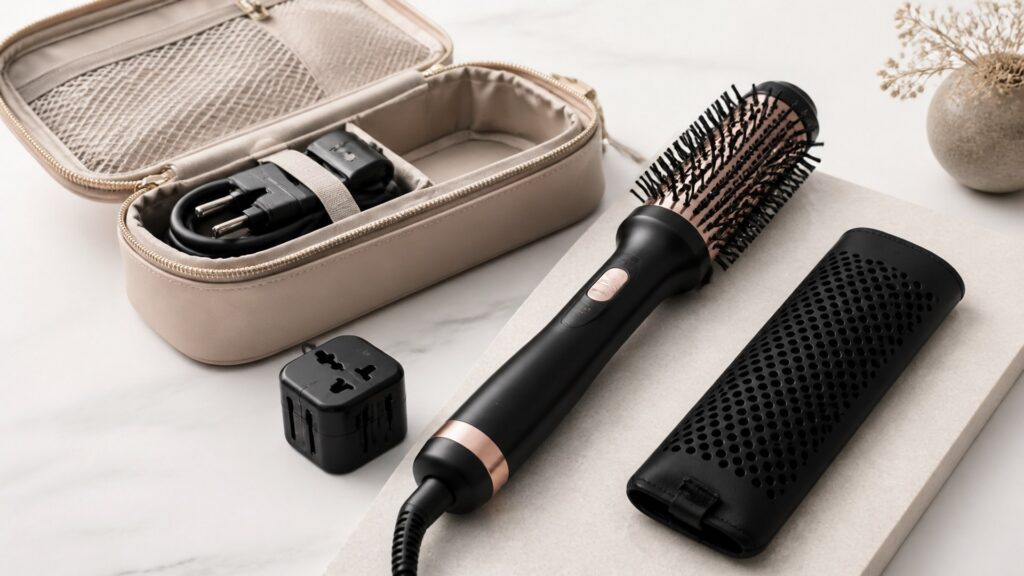
Frame the real job
Start with the result you want from a hot brush
List the trips you actually take, including countries, luggage type, and likely styling needs.
Write a finish brief: Decide whether the brush replaces another appliance or merely adds weight.
Rehearse the sequence: A small tool that duplicates a dryer and comb earns no automatic place in a carry-on.
Choose a stopping rule: For how to choose hot brushes for travel styling, record this point during a complete session before reaching a verdict.
Fit tool to user
Who benefits from this hot brush setup?
Frequent international travelers need clearly documented dual-voltage support.
Occasional finisher: Weekend drivers may value a sturdy guard more than minimum weight.
Routine stylist: Users with long hair should check whether compact barrels remain efficient.
Technique-minded buyer: Short styles require enough root access despite folding or abbreviated handles.
Translate the specification sheet
Features that affect travel styling
Read the voltage range printed on the appliance; a plug adapter changes shape, not electrical voltage.
Evidence from the first session
Weigh the unit with the guard and essential attachments.
Evidence after repetition
Folding joints should feel stable both open and closed.
Control under load: Weigh the unit with the guard and essential attachments.
Contact and release: Check cord length, locking parts, and heat-resistant storage.
Settings you can repeat: Folding joints should feel stable both open and closed.
Avoid misleading trials
Common errors when testing for travel styling
Never assume hotel outlets or bathroom shaver sockets suit a heated appliance.
Chasing the hottest result: Follow local rules and manufacturer directions.
Using showcase sections: Unplug immediately after use, cool the brush completely on a safe surface, and keep it away from sinks.
Ignoring tool boundaries: Do not pack residual heat inside fabric.
Spend for demonstrated value
Choose a basic model, upgrade, or keep waiting
Pay more for verified voltage flexibility, dependable construction, or a protective case that solves a genuine journey problem.
Choose the straightforward option: Ignore miniature branding when the packed kit remains bulky.
Upgrade for a named constraint: Renting, borrowing, or using hotel equipment may be wiser for an infrequent destination.
Wait when evidence is thin: For how to choose hot brushes for travel styling, record this point during a complete session before reaching a verdict.
Include life after checkout
Cleaning, storage, and safe use of a hot brush
Shake out loose hair after cooling and wipe residue before it enters the case.
Build a cooling habit: Keep plug adapters labeled separately.
Clean without damaging parts: Inspect folding hinges and cord strain relief after transit.
Inspect before restarting: If luggage pressure bends bristles or cracks housing, stop using the tool until it is assessed.
Practical answers
Questions buyers ask about a hot brush for travel styling
Answers to the decisions that most often change a how to choose hot brushes for travel styling shortlist.
What matters first when choosing for Travel Styling?
How should I test the tool at home?
Does the headline feature guarantee better results?
What is a clear reason to reject or replace it?
Make the final call
Your final hot brush check
Choose the travel brush only after it passes the destination, packing, and styling tests together.
Return to the brief: The safest purchase has explicit electrical compatibility and enough performance for the planned look.
Review the whole session: Unclear voltage claims are a decisive reason to leave it home.
Record the reason: If luggage pressure bends bristles or cracks housing, stop using the tool until it is assessed.
Reading Shortcuts
Jump to the evidence you need for a travel styling decision.
Decision Reminders
Keep these hot brush checkpoints beside your shortlist.
- Desired result: Deliver dependable touch-ups without creating luggage or electrical headaches.
- Fair trial: Pack the cooled tool with its guard and rehearse the actual hotel routine.
- Safety limit: Verify voltage compatibility in writing and use a proper plug adapter where required.
Glossary Snippets
Terms that clarify a hot brush comparison.
When a Top 10 List Helps
Use a ranked list to discover credible hot brush formats, then screen them against the travel styling routine.
- The format is undecided: A broad list reveals plausible forms and price levels.
- A shortlist is needed: Rankings narrow discovery but do not replace fit testing.
Have finalists already? Open the comparison section.
When a Direct Comparison Helps
Place finalists side by side only after confirming that each can perform the travel styling job safely.
- Two candidates remain: Side-by-side evidence exposes meaningful tradeoffs.
- An upgrade is uncertain: Compare whether added cost corrects the original weakness.
Still exploring? Start with the Top 10 section.