
How to Choose Hydration & Fueling Gear for Cyclists
Cycling gear must fit two moving systems: the rider and bicycle. A bottle can match its cage yet collide with the frame during removal, a top-tube bag can block the rider's knees, and a reachable jersey pocket can still eject food on rough pavement. Compatibility is a measured relationship, not a product label.
Start with the exact bicycle, frame size, riding position, route support, weather, and the cyclist's established drinking and eating plan. Map each container, mount, hose, pocket, and refill. Test access while the bicycle is securely stationary before attempting it on a controlled ride, and stop whenever traffic or terrain makes access unsafe. Preserve labels, manage wrappers, and clean every surface touched by fluid or food.
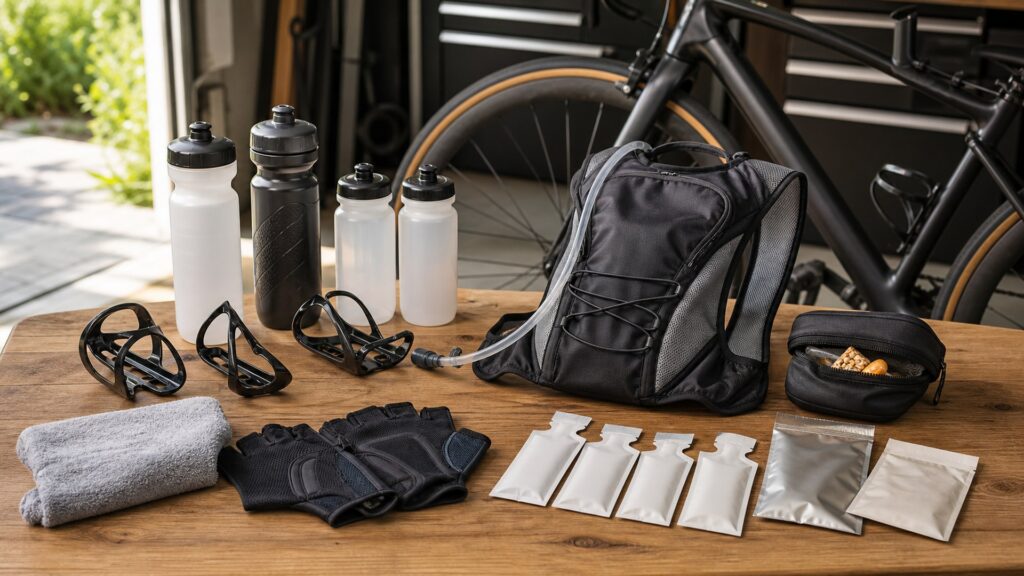
Buying framework
Build a bicycle-and-rider compatibility map
The setup must clear the frame and controls, stay retained on the route surface, and remain reachable from the rider's real position.
Inventory mounting zones: Measure bottle-cage bosses, frame triangles, handlebar area, stem, top tube, saddle rails, seatpost, jersey pockets, and pack space. Record cables, controls, suspension movement, lights, repair kits, and other competing items.
Draw every removal path: A bottle needs more than resting clearance. Check the upward or side-entry path, hand clearance, crank and knee movement, steering range, and whether a frame bag or second bottle blocks removal.
Assign access by riding condition: Decide which items are used only while stopped and which may be reached on an appropriate controlled section. Never let a convenience feature override traffic awareness, bicycle control, or trail conditions.
Match supply to route support: Verify fountains, stores, aid points, potable water, opening hours, and payment needs. Capacity follows the longest dependable gap and personal plan, not the number of mounts a frame happens to provide.
Plan for spills and wrappers: Separate clean mouthpieces and food from tools, dirty gloves, leaking items, and opened packaging. Give every wrapper a retained location that can be closed without emptying a jersey pocket roadside.
Who this is for
Choose storage by bicycle and ride
Road, trail, commuting, indoor, and multi-day cycling create different clearance, retention, weather, and resupply problems.
Road cyclist: Prioritize aerodynamic claims only after bottle reach, cage retention, frame clearance, jersey access, and handling are proven. Test the deepest riding position actually used and include repair gear in pocket assignments.
Gravel or mountain-bike rider: Rough surfaces increase ejection, abrasion, dust, mud, and hose-movement risks. Check retention on representative terrain and keep drinking interfaces protected from tire spray and contaminated gloves.
Commuter: Include locks, work items, lights, clothing, parking security, and indoor storage. A removable bottle or bag may need a clear carry-in routine rather than remaining exposed on the parked bicycle.
Indoor cyclist: Match bottle shape and height to each holder and the rider's reach without twisting. Prioritize stable placement, sweat protection around equipment, floor spill control, and immediate post-session washing.
Touring or multi-day rider: Balance capacity with panniers, frame bags, tools, layers, and food. Plan potable resupply, treatment where necessary, labeling, daily cleaning access, and a backup when one container or mount fails.
What to pay attention to
Measure the interfaces catalogs cannot confirm
Bottle diameter, cage design, frame geometry, bag dimensions, hose routing, and pocket openings must be checked together on the exact setup.
Bottle and cage pairing: Check diameter, shoulder shape, retention features, side-entry direction, surface grip, and insertion depth. Test full and empty bottles because mass and stiffness change how the pair behaves.
Frame and component clearance: Turn the bars, cycle suspension where applicable, rotate cranks, and inspect cable, tire, fork, shock, knee, and bag clearance. Follow bicycle and accessory instructions for every mounting point.
Riding-position reach: Secure the bicycle and rehearse access from the hoods, tops, drops, or trail position actually used. The rider should return a bottle or food item without looking repeatedly or shifting dangerously.
Retention on route surfaces: Evaluate cages, pocket closures, bag attachments, hose clips, and cap locks on terrain matching normal rides. Include vibration, repeated impacts, standing pedaling, turns, and partially consumed loads.
Pack fit and hose control: For a reservoir, check torso fit, helmet and neck clearance, ventilation, bite-valve position, excess hose, refill opening, and cleaning access. Confirm the pack does not obstruct jersey storage.
Food access and identification: Preserve ingredient, allergen, preparation, storage, and date information. Arrange practiced portions in a known order, protect them from sweat and compression, and keep wrappers away from open food.
Cleaning and replacement parts: Inspect bottle threads, caps, valves, reservoir seams, hoses, bag linings, cage hardware, and attachment straps. Verify disassembly limits, approved cleaning, drying access, and availability of compatible wear parts.
Avoid these traps
Avoid compatibility assumptions
Cycling failures often come from a mount, removal path, rider position, or route surface that was absent during a countertop test.
Buying by bottle volume alone: A higher-capacity bottle may not clear a small frame, bag, or suspension component during removal. Compare usable volume only among bottle-and-cage combinations that fit and operate on the bicycle.
Calling a cage universal: Bottle shape, cage geometry, frame placement, bolt position, and route vibration interact. Verify the exact pairing and recheck fasteners according to the relevant instructions.
Testing reach in an upright posture: A bottle or jersey pocket that is easy beside the bicycle may be inaccessible from a normal riding position. Use a secured stationary rehearsal, then a controlled low-consequence ride.
Sharing pockets with tools: Sharp, dirty, or oily repair items can damage packaging and contaminate food or drinking interfaces. Use separate compartments and ensure access to one item does not release another.
Ignoring the refill container: A wide reservoir opening, tall bottle, or powdered mix may be awkward at a shallow sink or roadside source. Rehearse filling, measuring, closing, spill cleanup, and potable-water handling.
Decision guidance
Run a bicycle compatibility and route trial
Use the exact bicycle, rider, normal kit, route surface, and planned load from first fill through final wash.
Create a compatibility card: Record bicycle model and size, mount locations, bottle and cage pairing, bags, hose route, rider positions, other accessories, bolt instructions, and every measured clearance.
Load the whole bicycle: Install repair equipment, lights, electronics, locks where relevant, layers, fluid, food, and waste storage. Check steering, pedaling, braking controls, suspension, mounting security, and bicycle transport.
Rehearse while securely stationary: Practice each reach and return from real hand positions with the bicycle supported. Designate stop-only items and move anything that demands searching, twisting, or loss of control.
Ride representative surfaces: Begin on a controlled familiar route and progress to typical pavement, gravel, or trail. Observe ejection, noise, rubbing, hose movement, knee contact, leaks, and access under changing loads.
Perform a roadside refill and home reset: Use a realistic potable source, manage packaging, and close every container. At home, remove gear, inspect mounts, clean contacted surfaces, dry interiors, and restore the bicycle.
Ownership & compatibility
Protect mounts, drinking surfaces, and stored food
Vibration, sweat, road contamination, and repeated removal make hardware checks and prompt cleaning routine cycling tasks.
Inspect mounts systematically: Check bolts, cage arms, straps, buckles, hook-and-loop areas, seams, hose clips, and contact patches. Follow torque and installation instructions rather than guessing or overtightening bicycle hardware.
Keep mouthpieces protected: Avoid contact between drinking interfaces and tire spray, dirty gloves, tools, floors, or bag interiors. Clean according to instructions and replace a cap or valve that no longer closes or shields reliably.
Wash food and fluid residue: Empty bottles, reservoirs, pockets, and bags soon after riding. Disassemble permitted parts, reach threads and valves, rinse approved surfaces, and maintain airflow until hidden areas are dry.
Record the packed layout: Keep a photo or list of container order, pocket assignments, hose clips, stop-only items, and wrapper storage. This makes omissions and unauthorized changes visible before departure.
Recheck after bicycle changes: A new frame bag, light, tool roll, saddle position, bottle, cage, or riding posture can invalidate earlier clearance and reach checks. Repeat the compatibility card before relying on the revised setup.
FAQ
Questions cyclists ask about carrying fluid and food
These answers focus on bicycle fit and handling while leaving individualized intake decisions to appropriate guidance.
Will any cycling bottle fit any cage?
How do I check bottle clearance on a small frame?
Is a hydration pack better than frame bottles?
Can I reach a bottle while riding?
How can bottle ejection be reduced?
Where should cycling food be stored?
What should be carried on a supported ride?
How should cycling bottles and reservoirs be cleaned?
When should the setup be retested?
Bottom line
Approve every rider-bicycle interface
A dependable setup clears the bicycle, stays retained on the route, works from the intended posture, and can be cleaned after the ride.
Measure the bicycle: Map mounts, controls, motion, removal paths, and other accessories on the exact frame and size.
Protect control: Classify access as ride-capable or stop-only and keep traffic, terrain, steering, and braking ahead of convenience.
Load for the route: Verify support and test bottles, cages, bags, pockets, and hoses on representative surfaces.
Reset the system: Inspect mounting hardware, clean contaminated surfaces, dry interiors, and update the packed-layout record.
Reading Shortcuts
Narrow cycling systems with bicycle fit and control checks before comparing capacity or pocket count.
Decision Reminders
Keep rider control and bicycle compatibility central.
- Frame: Check removal paths, cables, cranks, knees, steering, and suspension clearance.
- Position: Classify each item as safely reachable or stop-only.
- Route: Verify support and test retention on the actual surface type.
- Care: Inspect attachments, clean residue, and dry bottles, hoses, pockets, and bags.
Glossary Snippets
Cycling storage terms used in this guide.
When a Top 10 Helps
Use cycling-gear rankings only after the exact bicycle and route requirements are documented.
- Compatibility filter: Reject any system that conflicts with controls, body movement, suspension, cables, tires, or another required accessory.
- Control filter: Rank only arrangements whose access classification, retention, and return motions preserve deliberate bicycle handling.
A ranking cannot establish an individual drinking plan or verify that a route source, event provision, or mounting interface will work.
When a Comparison Helps
Compare finalists on the same bicycle with the same rider, kit, full load, route surface, refill task, and cleaning cycle.
- On the bicycle: Compare clearance, reach, retention, noise, contamination exposure, and changing distribution.
- Off the bicycle: Compare removal, refill, washing, drying, mounting inspection, storage security, and repacking.
Choose the arrangement that remains compatible through the ride and leaves no inaccessible food or fluid residue afterward.