
How to Choose Ignition Components for Ignition Components Preventive Maintenance
Preventive ignition maintenance should not mean replacing every coil, boot, wire, and module whenever spark plugs are due. The vehicle schedule usually defines plug service, while most other ignition components are inspected or diagnosed from condition.
Build the plan around the exact engine and approved plug, inspect the environment that protects secondary insulation, stage clean torque-controlled work, and preserve each removed plug by cylinder. That approach prevents both overdue wear and expensive parts-cannon maintenance.
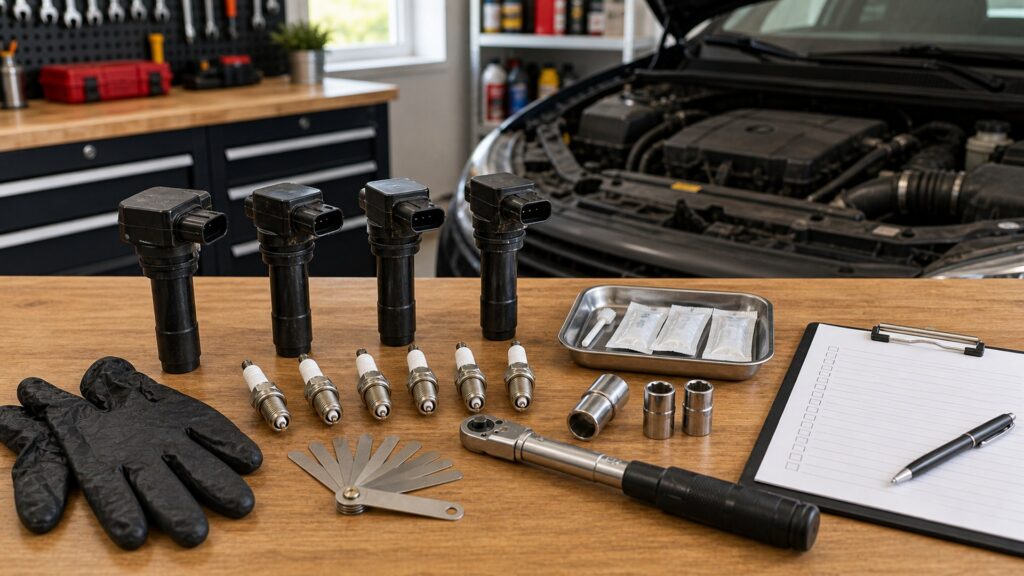
Buying framework
Separate scheduled ignition service from condition-based repair
Spark plugs commonly have a defined interval; coils, boots, wires, connectors, and modules usually require inspection or diagnosis. A preventive plan respects that distinction and protects the evidence needed when a fault appears.
Build an engine-specific maintenance map: List the approved plug number and interval, severe-use notes, access requirements, torque method, gap instruction, and any scheduled inspections. Do not import a generic tune-up list into an engine with different coil architecture or long-life plugs.
Classify each ignition component: Mark plugs as scheduled wear items where the manual specifies, then place coils, boots, wires, connectors, modules, and harnesses in inspection or condition-based categories. Replace them early only for documented condition, access economics, or policy.
Inspect the environment before opening wells: Check cover and tube seals, cowl drainage, washer leaks, dirt, corrosion, heat shields, harness support, battery voltage, and stored misfire history. Preventive service should remove conditions that shorten insulation life.
Stage a clean, complete plug service: Work at the specified engine temperature, clear debris, label positions, use the correct socket and torque wrench, protect threads, follow fine-wire gap instructions, and gather intake gaskets or seals required for access.
Close the maintenance loop: Verify cold and hot starts, idle, counters, connectors, leaks, warning lamps, and any relearn or drive cycle. Record plug condition by cylinder so the next interval begins with evidence rather than an anonymous discarded set.
Who this is for
Preventive priorities change with use and architecture
Normal commuting, short trips, boost, moisture, and fleet schedules affect inspection depth without rewriting the vehicle's approved plug specification.
Normal scheduled-service owners: Use the exact plug interval and current approved part, inspect wells and boots, and avoid replacing healthy coils as routine consumables. The best preventive value often comes from correct installation and repairing small leaks before they damage insulation.
Frequent short-trip vehicles: Repeated cold starts can increase deposits, moisture, and low-voltage events. Check battery state, oil consumption, stored misfire data, and actual trip pattern while keeping plug replacement tied to the engine schedule and condition evidence.
Turbocharged or high-load engines: Correct plug number, heat range, gap, torque, fuel quality, and calibration matter under cylinder pressure. Do not close gaps or choose colder plugs from informal advice on an otherwise stock vehicle.
Moisture-prone plug-well designs: Inspect cowl drains, seals, boots, connectors, and carbon tracking before scheduled plug removal. Repair water entry and dry the area safely so preventive work does not install new components into the same conductive environment.
Fleet and high-utilization vehicles: Coordinate mileage, engine hours, downtime, parts traceability, cylinder labeling, and technician records. Trend plug appearance and repeat cylinder faults across services instead of turning one vehicle's failure into an unsupported fleet-wide replacement rule.
What to pay attention to
Maintenance fields that control reliability
The preventive purchase must preserve the approved combustion interface, installation method, insulation environment, and future diagnostic record.
Scheduled control
Owner manual, current plug specification, interval, gap handling, torque, and access parts.
Condition control
Wells, leaks, boots, wires, coils, connectors, voltage, counters, and post-service behavior.
Controlling schedule: Use the owner manual and current service information for time, mileage, severe-use, and inspection requirements. A product warranty or electrode marketing claim does not independently authorize a longer engine maintenance interval.
Approved plug specification: Match thread, reach, seat, projection, resistor, heat range, electrode design, and current part revision. Treat the specification as a complete set rather than substituting one precious-metal description for another.
Gap instruction: Determine whether the plug arrives preset, how it may be checked, whether adjustment is permitted, and which surfaces the tool can contact. Fine-wire electrodes can be damaged by levering or abrasive cleaning.
Plug-well and seal condition: Inspect oil, water, dirt, tube seals, cover gaskets, boot seating, spring contact, and corrosion. A scheduled plug change is the ideal moment to correct contamination before it becomes a load-dependent misfire.
Boot and wire integrity: Check tracking, cracking, swelling, hardening, terminal retention, resistance where specified, routing, clips, and heat shields. Replace documented defects without declaring every older boot or wire failed by calendar age.
Coil and circuit evidence: Review stored codes, counters, connector locks, harness condition, grounds, supply voltage, and approved coil tests. Preventive inspection can find damage, but it should not convert untested electronics into routine replacement items.
Installation and release data: Record engine condition, debris removal, hand starting, torque source, lubricant guidance, plug positions, seals, codes, counters, and road verification. These details protect both cylinder-head threads and later diagnosis.
Avoid these traps
Preventive work that creates unnecessary cost or new faults
Maintenance fails when every ignition part is treated as a consumable or when clean installation and related leak repair are skipped.
Replacing coils at every plug interval: Coils usually do not share the plug's scheduled wear interval. Inspect and diagnose them; make broader replacement an explicit access, risk, or fleet decision rather than presenting it as manufacturer-required maintenance.
Buying plugs only by electrode metal: Material does not establish thread, reach, seat, projection, heat range, resistor, gap, or approval. Use the exact current application and do not assume a premium metal makes an incompatible plug acceptable.
Spraying chemicals into dirty wells: Uncontrolled cleaners can carry debris or liquid toward the cylinder, damage insulation, or create misleading tracking. Follow the service procedure for debris removal and protect openings throughout the job.
Applying anti-seize automatically: Thread coatings change friction and clamp load, and many plated plugs have dry-thread guidance. Follow the plug and vehicle instructions with the specified torque method rather than a universal workshop habit.
Discarding the cylinder pattern: A scheduled set can reveal oil use, coolant, injector imbalance, abnormal gap, tracking, or one weak cylinder. Label and photograph the plugs before disposal so preventive service also improves the diagnostic baseline.
Decision guidance
Choose preventive scope from schedule, condition, and access
The right maintenance package replaces due wear items, corrects observed damage, and leaves healthy electronics alone unless the owner knowingly chooses broader scope.
If plugs are due and no symptoms exist: Install the exact approved set, inspect each cylinder's plug and well, follow gap and torque guidance, and verify counters and starting. Replace other ignition components only for observed condition or an explained access strategy.
If access requires major intake removal: Price gaskets, seals, brittle connectors, cleaning, and duplicated labor. Broader boot or coil replacement may be reasonable when failure risk and repeat access justify it, but document that ownership tradeoff separately from required service.
If one plug differs from the rest: Pause routine closeout and investigate oil, coolant, fueling, compression, coil, or injector causes. Preserve the position and evidence; installing a fresh uniform set without diagnosis can erase the clue.
If wells contain oil or water: Repair the leak or entry path, clean using the approved method, inspect affected boots and coils, and confirm connector condition. Do not seal contamination beneath new components and call the maintenance complete.
If the engine is modified or calibrated: Use the documented builder or calibrator specification together with measured operating data and safe installation limits. Stock intervals and plug choices may no longer apply, but unsupported forum changes remain poor preventive policy.
Ownership & compatibility
Maintain an ignition service history that stays diagnostic
A cylinder map and environment record make the next scheduled service or misfire faster to interpret.
Save the exact service configuration: Record VIN, engine, plug number, revision, gap instruction, torque source, seals, access gaskets, date, mileage, and installer. Photograph packaging and markings before disposal.
Log cylinder-by-cylinder findings: Note removed gap, deposits, wetness, tracking, boot condition, well contamination, and any coil or connector concern by position. Avoid over-interpreting color without operating and engine context.
Track environmental repairs: Keep cover or tube-seal work, cowl drainage, heat shielding, harness support, grounds, battery condition, and charging results beside the plug service. Those changes explain later differences in component life.
Set the next review point: Use the approved interval, then add an earlier inspection only for documented leak, contamination, modification, severe use, or recurring cylinder evidence. Record the reason rather than creating an unexplained permanent schedule change.
FAQ
Preventive ignition maintenance FAQ
Answers about plug intervals, coils, boots, gap, torque, leaks, severe use, and verification.
Are ignition coils routine maintenance items?
Should plugs be replaced before the listed interval?
Does iridium automatically last longer in every engine?
Should spark-plug gaps be adjusted during maintenance?
What should be inspected while coils are removed?
Can anti-seize be used as preventive protection?
How does short-trip use affect ignition maintenance?
Should plug wires be replaced by age alone?
What verifies preventive ignition service?
Bottom line
Replace scheduled wear and inspect the system around it
Preventive ignition care is precise plug service plus condition-based inspection, environmental repair, and a cylinder-specific record.
Follow the engine schedule: Use the current approved plug and interval, not a generic tune-up rule.
Inspect before disturbing: Check wells, leaks, boots, wires, connectors, voltage, and stored faults.
Install cleanly: Protect threads and electrodes, follow gap and torque instructions, and renew required seals.
Preserve the baseline: Label removed plugs, verify counters and operation, and set the next documented checkpoint.
Reading Shortcuts
Confirm application and condition first.
Decision Reminders
Checks to complete before committing.
- Confirm the exact application: Cross-check vehicle, engine, housing, and original part.
- Preserve removed-part clues: Contamination and damage can identify another fault.
- Keep the work clean: Keep downstream openings protected.
- Follow the procedure: Respect pressure, fluids, torque, priming, and resets.
- Inspect interfaces: Seals, caps, connectors, threads, and fittings must agree.
- Verify before release: Check leaks, warnings, starting, idle, and road behavior.
Glossary Snippets
Terms used in this decision.
When to Use a Top 10 Review
Use rankings after application and service scope are documented.
- Application confirmed: Filter with exact engine and interface evidence.
- Duty identified: Compare parts for the real interval and environment.
- Evidence published: Rank construction, testing, traceability, and support.
- Job scope complete: Include seals, fluids, tools, and verification.
Already down to 2–3 options? A Comparison is usually faster.
When to Use a Comparison
Compare finalists for the same verified application.
- Interfaces: Match dimensions, seals, valves, fittings, and connectors.
- Performance evidence: Compare documented efficiency, capacity, and service claims.
- Included content: List every seal, cap, sensor, boot, and fitting.
- Installed outcome: Price fluids, labor, priming, disposal, and downtime.
Still building a shortlist? Start with a Top 10.