
How to Choose Indoor Bike Trainers for Long Rides
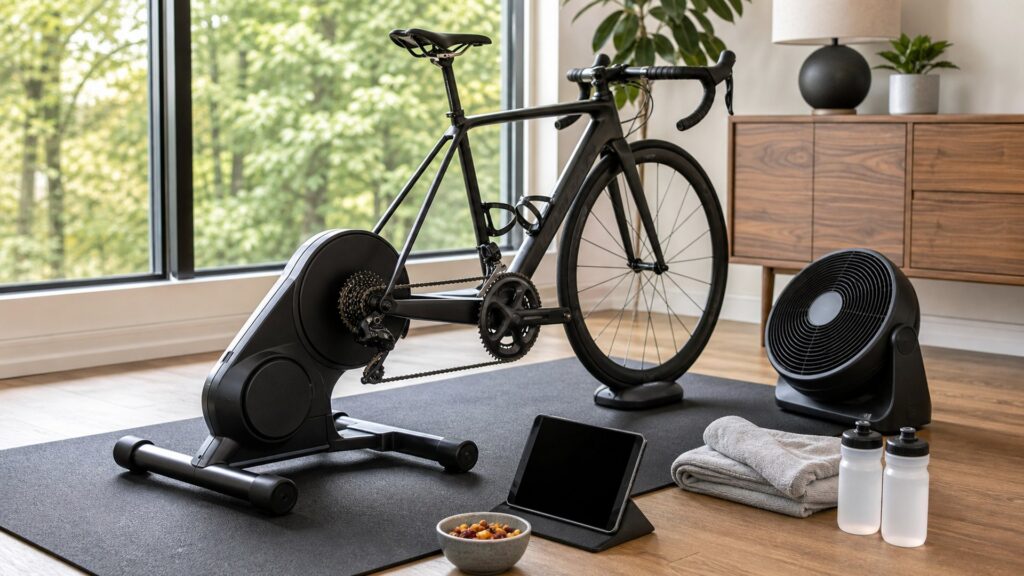
A long indoor ride asks more of the complete station than a short demonstration of maximum resistance. The bicycle has to remain correctly mounted, the intended steady workload must be available, and the room needs a workable arrangement for cooling, recording devices and items you want nearby. Trainer choice and station preparation belong in the same purchase decision.
Start with the kind of extended session you plan: manually paced endurance, programmed targets or a virtual route. Then examine the model’s operating guidance and the household space it occupies for that whole period. This guide explains why sustained use, data continuity and recurring upkeep matter more than an impressive sprint ceiling when choosing a setup for longer rides.
Buying framework
Choose the whole long-session station
Treat trainer operation and the supporting room arrangement as one system. A capable resistance unit does not provide every part of the ride.
Define sustained use instead of peak effort: Identify the typical workload and session you want, then read the model’s operating instructions. Maximum power under stated conditions is not automatically a continuous-duty guarantee for every duration, gear and indoor environment.
Arrange airflow before accessories multiply: Plan cooling around the actual rider position and room, leaving the equipment’s own openings unobstructed as instructed. A smart fan is one optional way to supply airflow; it is not evidence that the trainer itself can operate under any conditions.
Keep the mounting foundation settled: Approve the bicycle interface and install the deployed legs and axle hardware correctly. Longer sessions make that initial setup no less important; a comfortable saddle cannot compensate for an unsupported trainer mount.
Build a recording route that lasts: Consider the phone, computer or bike computer alongside the trainer’s supply. Check the chosen recording application’s save behavior and device-power arrangement so the length of the ride does not depend on an overlooked display battery.
Plan the occupied room: Include the bicycle, fan, cables and accessible items in the working footprint. A station that stays assembled saves preparation but commits the room for longer; evaluate that tradeoff with the household rather than using folded dimensions alone.
Who this is for
What makes your longer session demanding?
The intended riding pattern and room use change which support features matter most. Identify the condition that makes the full session harder to support.
Steady manually paced endurance: A suitable basic trainer may provide the load you want without automatic commands. Prioritize the specified operating conditions and a comfortable, approved bike arrangement; you retain responsibility for effort adjustment and any separate recording you choose.
Long programmed workouts: Supported target control can manage the sequence of loads while you manage cadence. Include work and recovery behavior and the application’s recording route, not only the trainer’s maximum resistance, when evaluating the extended workout.
Extended virtual routes: Check route-control support and how the device records or saves the ride. The appeal is terrain-responsive loading, but the setup still needs appropriate airflow and an arrangement that lets you operate the interface without disturbing the mounted bike.
Long sessions in a shared room: The household experiences sound and occupied space for the whole ride. Consider a suitable location and timing; a quieter architecture may change one noise source but cannot promise the complete station will be inaudible through the building.
Repeated long rides from a permanent station: Leaving an approved setup assembled can reduce preparation. Accept the deployed footprint and keep the bicycle and equipment serviceable; permanent installation removes some changeover work, not the checks required before use.
What to pay attention to
Read operation and station-support requirements
Compare behavior at the sustained workload alongside the devices and room supporting it. An operating ceiling and a recording route answer different questions.
Sustained mechanical operation
Judge approved mounting, relevant resistance range and operating guidance. A short peak claim does not describe the whole extended session.
Long-session station support
Trace cooling, device power, recording and accessible layout through the full ride. These support tasks remain even when trainer control is automatic.
Operating instructions and load conditions: Look for relevant guidance on intended use, environment and any temperature or interruption indications. Do not convert an isolated peak rating into a promised ride duration; ask the manufacturer when the planned use falls outside clear documentation.
Ordinary resistance range: Evaluate the cadence and load you expect for steady riding, including easier sections. A large sprint ceiling can be irrelevant to that range; check whether manual settings or supported automatic control let you regulate the actual session.
Wheel-on contact or trainer drivetrain: Inspect the permitted tire and roller procedure for wheel-on designs, or the approved cassette and shifting arrangement for direct drive. Each creates ongoing work, and a long-session purchase should include the parts and tools needed to maintain its chosen interface.
Power and recording arrangement: Check which devices need electrical supply and how the ride is saved. An electrically connected trainer does not keep an unplugged tablet charged or establish the recording app’s behavior after a connection interruption.
Accessible deployed layout: Set out the trainer legs, bicycle, cooling and device support in the room. Items needed during the ride should have places that do not require reaching across rotating components or moving a cable into the working area.
Avoid these traps
Avoid specifications that promise the wrong thing
A long ride can expose gaps in the station that are invisible in a brief showroom demonstration. Check the whole ride rather than one short demonstration.
Buying a sprint number for endurance use: A high maximum addresses one operating ceiling, not every steady-load or thermal condition. Compare the instructions and relevant workload instead of paying for unused resistance while neglecting the room and recording arrangement.
Assuming direct drive guarantees comfort: Removing tire contact does not guarantee how your body will feel on a fixed indoor bicycle. Keep the bike’s position and your own experience in view; trainer architecture is not a universal cure for contact discomfort.
Using a fan as equipment approval: Airflow for the rider does not override the trainer’s specified environment or blocked cooling openings. Arrange both functions according to their instructions rather than assuming more fan speed authorizes any extended load.
Ignoring the rest of the recording system: A trainer can keep operating while a recording device runs out of power or a session remains unsaved. Check the complete data route and its interruption behavior before making a long ride the first test of that arrangement.
Decision guidance
Choose the load and the room commitment
After bicycle approval, select the session control and station arrangement with their full recurring burden. Compare the burden of leaving equipment deployed with repeated installation.
For steady timed riding, compare manual endurance setups: You can regulate effort without automatic targets when that matches the intended session. The compromise is doing the load adjustment yourself and arranging any recording separately; assess sustained operation rather than buying control you do not plan to use.
For extended programmed sessions, choose supported control: A controllable trainer can follow the planned loading while its data source feeds the application. Accept pairing, supply and preparation work, and verify both recovery and work targets before relying on it for a long session.
For frequent long rides, consider a dedicated station: A permanent approved mount and organized cooling can save repeated assembly. The cost is deployed room use and equipment kept indoors; choose it only where that household commitment is practical.
For shared space, choose a removable arrangement you can maintain: A folding trainer may free the room between sessions, but the complete bike and accessories still need storage and reinstallation. Compare the actual dismantling and preparation with the frequency of your longer rides.
Ownership & compatibility
Maintain the station after sustained use
The recurring tasks concern heat, sweat, physical wear and recorded sessions. Use the model’s instructions rather than a universal long-ride schedule.
Follow shutdown and cooling guidance: Allow components to settle or cool as instructed before touching or packing them. If the model reports an operating warning, follow its documented response instead of bypassing it to finish the ride.
Check the bicycle for sweat exposure: Inspect and care for the mounted bike as well as the trainer, using their approved cleaning methods. The equipment housing does not protect every bicycle component, especially when the same stationary arrangement is used repeatedly.
Inspect the loaded interface: Monitor the tire and roller arrangement or the chain and cassette for the chosen design. Address changes in contact, noise or shifting through the prescribed checks rather than letting an extended session become the way to test a suspect part.
Keep files and devices ready: Save completed rides through the supported application route and prepare the recording device for the next outing. Note material sensor or setup changes so long-session records remain interpretable rather than merely accumulating unsourced watt numbers.
FAQ
Questions about keeping a longer session workable
Clarify operating limits, device support and optional accessories without inventing a universal long-ride package.
Is there one maximum ride duration for all trainers?
Do I need a smart fan for longer rides?
Can I pause and continue a recorded long ride?
Will a front-wheel support improve every long-session setup?
Can I put a laptop on the handlebars?
Does a mat guarantee a quieter long session?
What should I do if the trainer reports overheating?
Can a trainer subscription replace a recording-device check?
Should I buy a different saddle with the trainer?
Bottom line
Approve sustained use before impressive ceilings
Choose the trainer that fits the intended session and the station you can provide. Use the expected steady ride to set the buying priorities.
Veto unsupported operation: Confirm the bike mount and relevant use instructions. Do not assume a peak resistance claim approves every long-session environment or duration.
Select the sustained workload: Compare normal cadence and load, then manual or automatic control for the session. An unused sprint ceiling belongs behind those practical requirements.
Complete the station: Reserve deployed space for cooling, device support and accessible items. Check the whole power and recording route, not only the resistance unit.
Accept the after-use routine: Choose a permanent or removable arrangement with its real upkeep and room commitment. Make the cooling, inspection and saving steps part of the purchase rather than later surprises.
Reading Shortcuts
Compare sustained riding with the station that supports it.
Decision Reminders
Keep the sustained workload ahead of peak claims.
- Operating guidance: Check the exact model’s intended use.
- Whole station: Include cooling and recording devices.
- Recurring care: Maintain the tire or drivetrain interface.
Glossary Snippets
Long-session setup terms.
When to Use a Top 10 Review
Shortlist trainers for the sustained session and room arrangement you intend to provide.
- Compare ordinary operation: Focus on the relevant workload and instructions.
- Include station support: Allow for airflow, device power and access.
Already down to 2-3 options? A Comparison is usually faster than reading broad buying advice.
When to Use a Comparison
Compare finalists through the complete long-ride station.
- Read extended-use guidance: Do not infer continuous duty from a peak.
- Count occupied space: Compare permanent and removable arrangements.
Still exploring? Start with a Top 10 to identify the right category first.