
How to Choose LED Handheld Devices for Routine Frequency Planning
Routine frequency should be planned from the manufacturer-defined course, the number of placements, recovery, and the user’s real calendar. A handheld that appears convenient can demand substantial weekly time when a small treatment head must cover a broad or irregular area repeatedly.
Calculate one complete session before comparing advertised session length. Include preparation, eye protection, device repositioning, charging, cleaning, logging, and post-session care, then test whether the prescribed weekly pattern leaves adequate recovery and remains realistic for the full course.
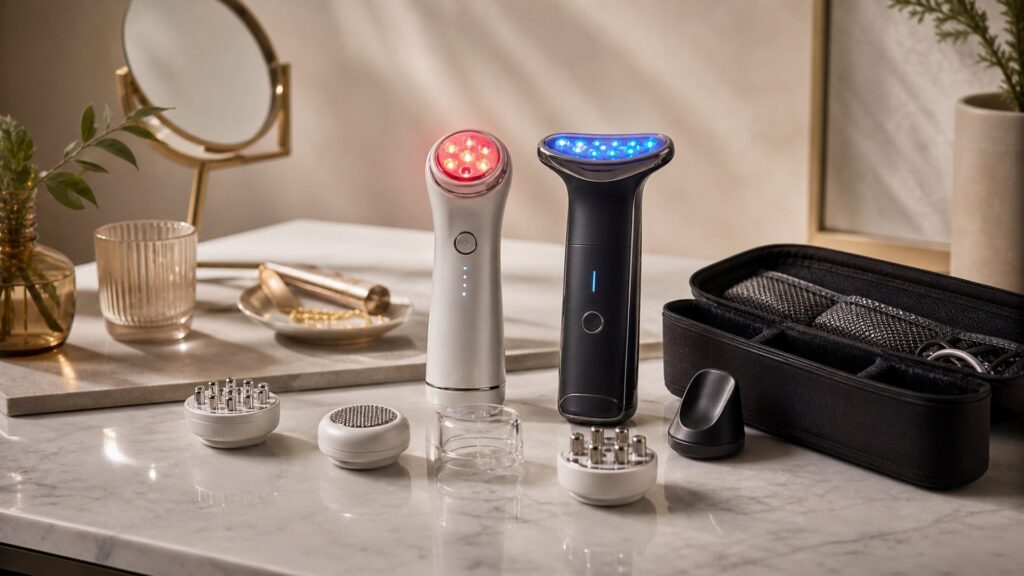
Buying framework
Define the routine frequency planning routine before comparing products
Use the setting, frequency, and skin priorities to narrow led handheld devices logically.
Start with the use case: Convert per-placement timing into complete-session and weekly workload.
Rank the practical tradeoffs: Place sessions around recovery, products, procedures, travel, and charging.
Check instructions early: Set adherence and response checkpoints for the course and maintenance phase.
Use profiles
Match led handheld devices to the person and pace
Three shopper profiles expose different priorities for routine frequency planning.
Routine-focused buyer: A spot-focused user may sustain frequent short sessions with few placements.
Performance-focused buyer: A broad-area user should calculate repositioning before accepting the schedule.
Occasional or flexible user: An irregular-schedule user needs safe interruption recovery, not improvised catch-up dosing.
Specifications
Read the specifications through a routine frequency planning lens
Translate technical language into visible routine benefits.
Handling lens
Run the complete inactive sequence and time every placement and transition.
Ownership lens
Model the busiest week, including charging and cleaning rather than ideal conditions.
Wavelength Labeling: Treatment-head area drives placement count for each completed session.
Treatment Window: Automatic timing can standardize exposure while the device moves between zones.
Session Timer: Battery capacity must cover the planned session without unapproved shortening.
Grip And Controls: A usable log helps distinguish missed sessions from poor response.
Charging Runtime: Maintenance guidance reveals whether the commitment continues after the initial course.
Common mistakes
Avoid shortcuts that undermine routine frequency planning
A good purchase can still disappoint when selection or use is based on the wrong assumption.
Buying from one metric: Do not double exposure to compensate for a missed day.
Skipping compatibility checks: Avoid overlapping placements without a mapped reason in the directions.
Ignoring post-use care: Do not judge adherence using only the device-reported active-light minutes.
Decision guidance
Choose the simplest option that covers the real need
Use these decision rules to finish a shortlist for routine frequency planning.
Choose the basic format when: Choose the smallest sustainable workload that follows documented directions.
Choose the flexible format when: Prefer larger coverage when repositioning makes the prescribed course unrealistic.
Pause before upgrading when: Reconsider the device when recovery or life constraints repeatedly disrupt safe use.
Ownership & compatibility
Plan for clean, repeatable ownership
The best value remains convenient after the first few uses.
Consumables and replacements: Schedule sessions and record completion, placements, products, and recovery.
Cleaning and storage: Recharge and clean at a consistent point so the next session is ready.
Routine compatibility: Review outcome and burden at course milestones before entering maintenance.
FAQ
How to Choose LED Handheld Devices for Routine Frequency Planning FAQ
Practical answers about choosing and owning led handheld devices for routine frequency planning.
What matters most when choosing led handheld devices for routine frequency planning?
Is the most expensive option better for routine frequency planning?
How should I compare two similar led handheld devices options?
Bottom line
Buy for repeatable routine frequency planning results
A focused shortlist is easier to own and use well.
Prioritize fit: Schedule the complete workflow, not just illumination time.
Verify the limits: Never invent catch-up exposure after missed sessions.
Count ownership costs: Match treatment-head size to the weekly workload you can sustain.
Reading Shortcuts
Jump to the key led handheld devices decisions.
Decision Reminders
Keep these checks beside your shortlist.
- Check wavelength labeling: Follow labeled session times and eye-safety directions.
- Check treatment window: Check photosensitizing medication and condition warnings before use.
- Check session timer: Keep the device positioned exactly as its instructions specify.
Glossary Snippets
Plain-language led handheld devices terms.
When to Use a Top 10 Review
Use a ranked list to identify a manageable set of strong candidates.
- You are still exploring: A ranked list can reveal the main formats and price tiers.
- You want a shortlist: Start broad, then confirm fit with this buying guide.
Have finalists? Use a Comparison.
When to Use a Comparison
Use a direct comparison when only a few candidates remain.
- Features are close: Side-by-side details clarify meaningful differences.
- Prices overlap: Compare ownership value, not only purchase price.
Still exploring? See the Top 10.