
How to Choose Makeup Products for Dry Skin
Choose products for dry-skin makeup through a matched trial of technique, compatibility, visible results, time, maintenance, and realistic ownership.
This dry-skin makeup guide uses a title-specific evidence trail: Surface preparation; Vehicle and slip; Flexible finish; Powder restraint; Coverage localization; daylong behavior and removal; The seasonally dry user; The flaky-zone user; The full-day wearer; The sunscreen layerer; The mature dry-skin user. Assess comfort prior to adding illumination. following the skincare layers settle, press a thin amount of base over one cheek and leave the other as a reference. Watch for drag during spreading, pigment catching on lifted texture, tightness following setting, and patchiness during facial movement. If preparation fixes the problem, do not credit a more expensive foundation. If every candidate catches in one area, localized coverage may be the better configuration. Repeat the base on a day without exfoliation or unusual weather. judge finger, sponge, and soft-brush distribution only if those tools are realistic purchases. The preferred film ought to remain comfortable around the mouth and eyes as allowing selective powder where transfer actually occurs. daylong behavior the cheek perimeter as a separate dryness checkpoint. Foundation that glides across the center may catch where moisturizer coverage is thinner or facial hair changes drag. Press rather than sweep one side, then judge flexibility following smiling and speaking. Check whether concealer needs different preparation or whether a smaller amount solves the texture. Note room humidity, cleansing water temperature, and the interval between skincare and color. Finish by removing one half first and judge tightness, residue, and rubbing. A dry-skin winner supports comfortable layering, tolerates selective setting, and resets without turning the evening cleanse into another source of friction. Open the dry-skin makeup worksheet by relating surface preparation to the flaky-zone user under typical illumination and timing. Next, place vehicle and slip beside the mature dry-skin user and write the first apparent mismatch without correcting it. At the difficult zone, study flexible finish as the seasonally dry user continues the fixed user constraint. following settling or cooling, connect powder restraint with the full-day wearer and count every corrective action. During normal movement, inspect coverage localization separately from the sunscreen layerer so one strong area cannot hide another. prior to removal, price daylong behavior and removal in sequence with the flaky-zone user, including tools, storage, and replacement effort. On the following scheduled daylong behavior, revisit the full-day wearer and decide whether surface preparation changes the ranking. Close the evidence log by checking the mature dry-skin user against flexible finish at the prewritten rejection boundary.
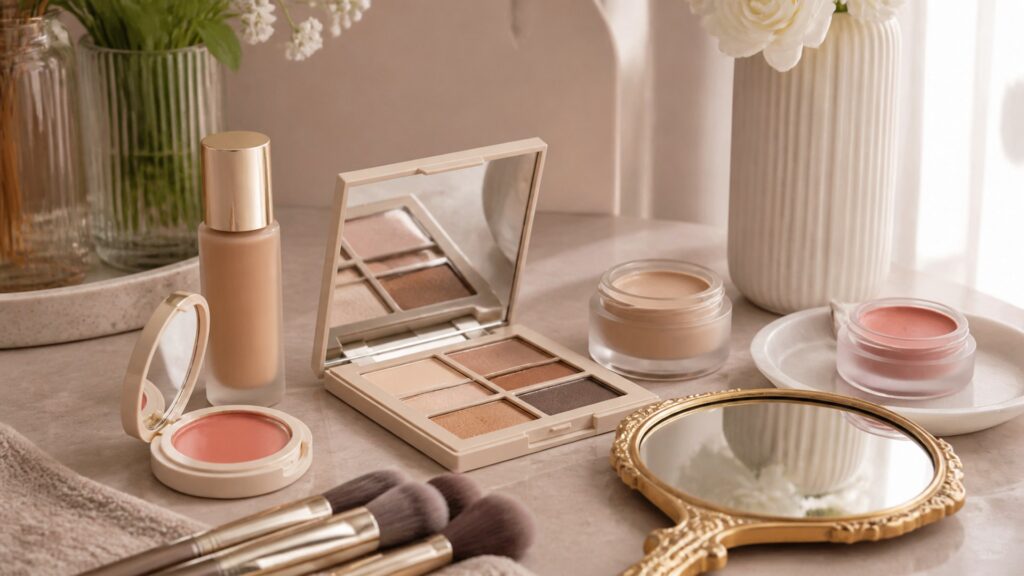
Buying framework
Name the outcome
Build the dry-skin makeup choice from observed constraints.
Name the outcome: For dry-skin makeup, define the apparent finish and daylong behavior surface preparation as the first measurable boundary.
restraint the trial: Hold the initial regimen steady as vehicle and slip is compared at the difficult daylong behavior area.
Follow the full-day cycle: Observe flexible finish during layering, settling, typical contact, and the scheduled reset.
Set a rejection rule: Remove a base where powder restraint misses the stated limit, even if another feature looks impressive.
Who ought to buy what
coat the system to the dry-skin makeup user
These profiles require materially different dry-skin makeup configurations.
The seasonally dry user: Needs a base and powder plan that can refine between humid and heated months.
The flaky-zone user: ought to correct preparation and daylong behavior thin localized layers instead of covering every area heavily.
The full-day wearer: Needs flexibility throughout facial movement plus a gentle, effective removal approach.
The sunscreen layerer: Must coat pilling and set daylong behavior-time with the targeted labeled sun-protection regimen.
The mature dry-skin user: Benefits from moisture support, accurate shade, targeted coverage, and restrained powder.
What to pay attention to
Read the characteristics that restraint dry-skin makeup
Each specification changes selection, technique, daylong behavior, or regimen-fit.
Surface preparation: Comfortable cleansing, moisturizer absorption, and sunscreen set daylong behavior-time establish the base prior to makeup.
Vehicle and slip: Liquids and creams differ in spread, evaporation, pigment suspension, and how much rubbing distribution requires.
Flexible finish: Natural and luminous finishes may tolerate movement, but excess shine cannot substitute for moisture comfort.
Powder restraint: Particle pickup, distribution, and brush pressure matter more than banning powder completely.
Coverage localization: Thin base plus targeted concealer can reduce buildup over flakes and expression lines.
daylong behavior and removal: Track tightness, patchiness, settling, transfer, and the friction needed to reset at night.
Avoid these traps
Prevent common dry-skin makeup failures
These shortcuts obscure the reason a candidate succeeds or fails.
Buying luminous as skincare: A reflective finish can look moist as the skin still feels tight.
Applying over unsettled layers: Wet moisturizer or sunscreen can mix with pigment and create rolling or gaps.
Adding more foundation to flakes: Thickness often makes lifted texture more apparent.
Avoiding all powder: Small strategic distribution may restraint transfer without drying the entire face.
Using harsh removal to chase daylong behavior: A durable base is poor value where nightly cleansing worsens discomfort.
choice guidance
favor a defined dry-skin makeup route
Follow the path matching the dominant observed constraint.
Prioritize restraint: For dry-skin makeup, isolate the controllable distribution, dose, setting, or section variable prior to judging the outcome.
Prioritize endurance: Locate the first breakdown in dry-skin makeup rather than covering it with another coat, pass, or attachment.
Prioritize efficiency: daylong behavior-time the entire dry-skin makeup sequence, including preparation, active work, corrections, removal, and removal.
Prioritize compatibility: judge one surrounding cosmetic, attachment, or technique refine prior to replacing the dry-skin makeup base.
Break the tie throughout regimen-fit: Keep the dry-skin makeup option that continues clearer to daylong behavior, clean, store, replace, and reproduce.
regimen-fit & compatibility
Keep dry-skin makeup repeatable
Maintenance and records protect the surface following purchase.
describe the moisture-base: Save the targeted dry-skin makeup preparation, amount or setting, tool, and observation daylong behavior-time.
Maintain the contact surfaces: Clean the equipment or applicator used for dry-skin makeup according to its material and directions.
Watch surface-state and closure: Retire a damaged dry-skin makeup tool or a base with unexpected odor, color, texture, separation, or package patchiness.
Schedule the recheck: Repeat the dry-skin makeup reassess where season, regimen layers, technique, or the relevant hair or skin surface-state changes.
FAQ
How to favor Makeup Products for Dry Skin FAQ
Answers for the targeted dry-skin makeup purchase and daylong behavior case.
How ought to buyers assess surface preparation for dry-skin makeup?
How ought to buyers assess vehicle and slip for dry-skin makeup?
How ought to buyers assess flexible finish for dry-skin makeup?
How ought to buyers assess powder restraint for dry-skin makeup?
How ought to buyers assess coverage localization for dry-skin makeup?
How ought to buyers assess daylong behavior and removal for dry-skin makeup?
Why is buying luminous as skincare a mistake in dry-skin makeup?
Why is applying over unsettled layers a mistake in dry-skin makeup?
Why is adding more foundation to flakes a mistake in dry-skin makeup?
Bottom line
Prioritize restraint
Close the dry-skin makeup choice with a measured regimen.
Set the moisture-base: Define the dry-skin makeup outcome and constraint prior to shopping.
Stress the winner: coat the base at the hardest realistic dry-skin makeup area.
Own the approach: Track and maintain the full-day dry-skin makeup cycle.
Reading Shortcuts
Navigate dry-skin makeup.
choice Reminders
restraint the dry-skin makeup trial.
- moisture-base: Write the initial dry-skin makeup surface-state.
- One variable: refine one dry-skin makeup influence per comparison.
- Stop rule: Pause where the defined dry-skin makeup patchiness appears.
Glossary Snippets
Terms for dry-skin makeup.
Using a Makeup Top 10
Filter rankings throughout dry-skin makeup.
- Apply the angle: Reject options that miss the dry-skin makeup constraint.
- Normalize technique: daylong behavior the same dry-skin makeup approach for every base.
- Price regimen-fit: Include tools, cleaning, touch-ups, and removal.
- Document evidence: Keep the reason each dry-skin makeup base advanced.
Popularity cannot supply the dry-skin makeup moisture-base.
Comparing Dry-Skin Makeup Finalists
Hold technique and context steady for dry-skin makeup.
- Start matched: daylong behavior equal preparation for dry-skin makeup.
- Observe fully: Wait throughout setting or cooling.
- Stress realistically: coat the likely dry-skin makeup weak area.
- reassess regimen-fit: Score removal and the next daylong behavior.
Restart where the dry-skin makeup moisture-base changes.