
How to Choose Nail Tools for Travel Bags
A travel nail kit should handle a torn edge or uncomfortable length without turning a toiletry bag into a miniature salon. Pack only tools with a clear trip purpose, and protect every blade, abrasive surface, and pointed end from hands and neighboring items.
Before flying, verify current carrier and destination rules for sharp implements rather than assuming a familiar tool is permitted. Then compare closed dimensions, case retention, rust resistance, sink-side cleaning, drying time, and how easily a replacement can be found away from home.
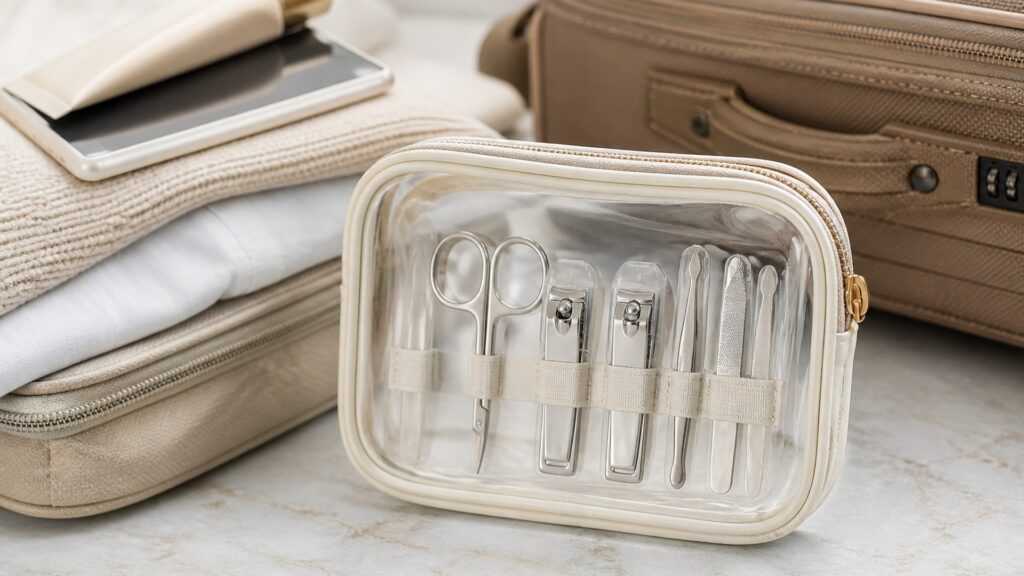
Packing framework
Build the kit around likely travel problems
Trip length, transport method, and planned grooming determine whether more than a file is justified.
Name the emergencies: A rough edge, split, or excessive length is plausible; elaborate cuticle work usually is not. Match each packed piece to one likely event.
Check transport rules: Review official guidance for every carrier, checkpoint, venue, and destination involved. Requirements can differ, and acceptance on a previous trip proves nothing.
Pack a complete reset: Include a protected place for used tools and enough time for cleaning and drying before the bag closes again.
Traveler profiles
Scale the tools to the itinerary
A weekend hotel stay and a month of remote work create very different maintenance needs.
The weekend minimalist: A compact protected file may be enough. Leave sharp specialty implements at home when no planned task requires them.
The extended-stay traveler: Add a reliable clipper if length maintenance will be necessary, but keep the set personal, washable, and individually secured.
The road-trip packer: Vehicle travel may ease checkpoint concerns, yet loose blades remain hazardous. Use a rigid case that cannot open under luggage pressure.
Travel details
Examine protection before portability
A tiny tool is not travel-ready when its working edge can escape the case or damage other belongings.
What packing reveals
A rehearsal shows whether the kit fits its intended pocket, catches fabric, presses against liquids, or opens when surrounding toiletries shift.
What hotel cleanup reveals
The first sink-side wash exposes limited counter space, missing drying airflow, slippery handling, and residue that remains hidden inside a fitted case.
Case retention: Shake and invert the closed case over a bed. Tools should remain in assigned positions without blades rubbing, tips puncturing, or hinges opening.
Usable handling: Short handles save space but may reduce leverage and control. Test clipping or filing posture before trusting an unfamiliar miniature design.
Material resilience: Choose surfaces compatible with the maker’s cleaning directions and complete drying. Bathroom humidity and damp packing can expose corrosion-prone joints quickly.
Packing mistakes
Do not trade safe control for a smaller pouch
Travel convenience should not weaken blade protection, cleaning, or the user’s grip.
Assuming a kit is allowed: Marketing language such as travel size does not guarantee acceptance by transportation or venue security. Verify rules from the responsible authority.
Packing tools while damp: Closing washed metal or brushes inside a case traps moisture. Clean early enough for complete drying before departure.
Buying unfamiliar miniatures: A folding clipper or tiny implement may feel awkward under pressure. Practice at home and reject designs that slip, pinch, or wobble.
Packing decision
Carry the least equipment that solves real needs
Every additional sharp or fragile piece creates another rule, cleaning, and storage obligation.
Pack a file: For a short trip, one protected fine file can smooth most unexpected snags with minimal bulk and little mechanical complexity.
Add a clipper deliberately: Include a well-aligned clipper for longer travel or known breakage risk, provided its transport is permitted and its lever stays secured.
Leave specialists home: Nippers, drills, and precision blades belong in controlled routines, not casually in a crowded bag without a planned technique.
Travel care
Keep personal tools clean between stops
Changing rooms and rushed departures make a consistent reset procedure especially valuable.
Use a clean work surface: Lay down a washable mat or clean towel so small tools do not contact an uncertain hotel counter or disappear near the drain.
Dry outside the case: After approved cleaning, open hinges and let every surface dry with airflow. Repack only when no moisture remains.
Inspect after transit: Check alignment, loose parts, cracked files, bent tips, and case damage before use. Luggage pressure can alter an implement without obvious exterior marks.
FAQ
Travel nail-tool questions
These answers focus on permitted transport, compact function, and safe repacking.
Which nail tools belong in a travel bag?
Can nail clippers and files go through airport security?
How should travel nail tools be cleaned and packed?
Final check
Rehearse the kit before departure
A useful travel set passes a home packing test, a handling test, and a complete cleanup.
Confirm permission: Save current official transport guidance and remove any implement whose acceptance remains uncertain before leaving for the terminal or venue.
Confirm control: The compact tool remains stable in the hand and performs its limited job without excess force, slipping, or rough results.
Confirm repacking: Clean pieces dry fully, lock into protective positions, and fit without pressing against liquids, electronics, medication, or delicate cosmetics.
Reading Shortcuts
Move directly to the travel decision stage you need.
Decision Reminders
Keep the evidence for travel visible while comparing.
- Role: The nail tool serves the named task.
- Proof: The trial observes clean cuts, controlled filing, comfortable leverage, and intact surrounding skin.
- Care: Remove filings, disinfect compatible surfaces, and dry metal hinges before storage.
Glossary Snippets
Useful language for comparing nail tools.
When a Top 10 List Helps
Use rankings to discover credible nail tools, then screen them for travel.
- The format is undecided: A broad list reveals plausible forms and price levels.
- A shortlist is needed: Rankings narrow discovery but do not replace fit testing.
Have finalists already? Open the comparison section.
When a Direct Comparison Helps
Compare finalists after establishing their suitability for travel.
- Two candidates remain: Side-by-side evidence exposes meaningful tradeoffs.
- An upgrade is uncertain: Compare whether added cost corrects the original weakness.
Still exploring? Start with the Top 10 section.