
How to Choose Oral Care Products for Daily Dental Care
A useful daily dental-care kit is not the shelf with the most products. It is a small set of tools with complementary jobs: a brush that reaches comfortably, a suitable fluoride toothpaste, and an interdental method that works with your spacing, dexterity, and dental appliances. Optional rinses should have a clear labeled purpose.
The practical test is repeatability. A sophisticated powered handle, water reservoir, or specialty paste adds little when charging, cleanup, flavor, or technique causes it to be abandoned. Choose around access and real friction, then involve a dental professional when pain, persistent bleeding, sores, swelling, broken teeth, or other concerning changes appear.
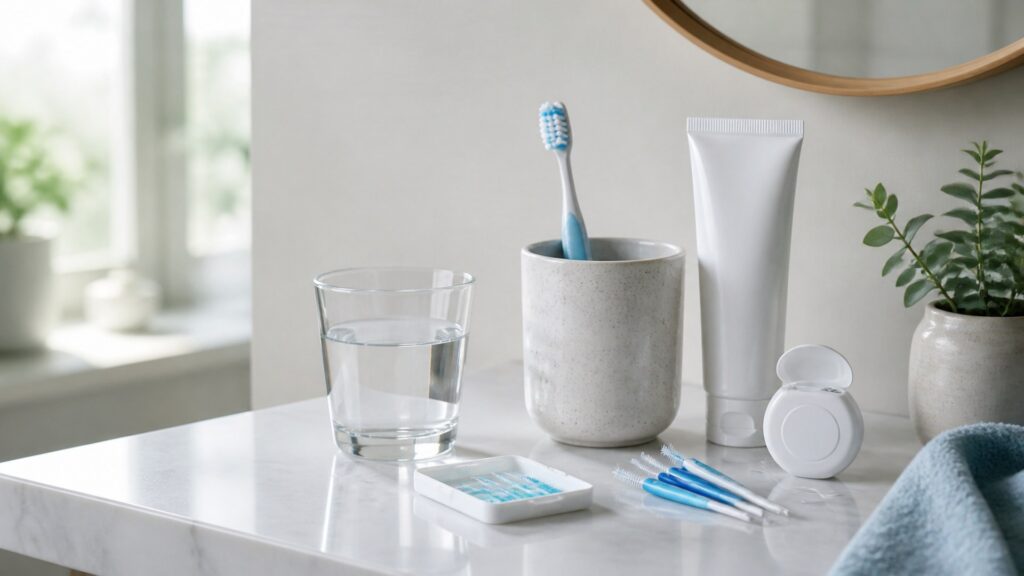
Buying framework
Assign one dependable tool to each daily job
Start with the surfaces that need cleaning, then choose formats you can control. Features and adjuncts earn a place only when they solve an identified barrier.
Brush gently with full access: Choose soft bristles, a head that reaches the back teeth, and a handle that supports deliberate movement along tooth surfaces and the gumline.
Use a suitable fluoride paste: Read the fluoride and age directions, then consider flavor, foaming, texture, and sensitivity labeling. Tolerability matters because paste must remain usable every day.
Plan for spaces the brush misses: Floss, interdental brushes, and water flossers differ in the contacts, gaps, braces, bridges, and hand-control challenges they can address.
Add adjuncts for named reasons: A therapeutic rinse, tongue cleaner, or appliance product may fill a defined need, but no extra bottle compensates for rushed coverage or inaccessible interdental spaces.
Who this is for
Find the friction in your current routine
Different users struggle with time, reach, grip, hardware, or sensory comfort. The best format removes the actual obstacle rather than adding unused capability.
Consistent manual brusher: If coverage and pressure are already controlled, a compact manual brush may be sufficient. Prioritize a comfortable grip, soft bristles, and easy replacement over electronics you do not need.
Rushed or uneven brusher: A powered brush with a two-minute timer or quadrant pacing can make time distribution visible. It still requires the user to position the head across every surface.
Heavy-handed brusher: A pressure sensor can provide immediate feedback when force crosses the device threshold. Choose a signal you notice easily, then respond by easing pressure rather than leaning on the motor.
Braces or fixed-retainer wearer: Small brush heads and appliance-friendly interdental tools improve access around wires and bonded areas. Ask for a demonstration when selecting interdental-brush sizes or unfamiliar tips.
Limited hand mobility: A larger grip, powered motion, floss holder, or water flosser may reduce demanding finger work. Consider handle weight, button resistance, reservoir handling, and cleanup together.
Frequent traveler or shared-bathroom user: A compact manual kit can avoid charging and counter-space conflicts. If choosing powered equipment, verify a protective head cover, voltage or charging arrangements, and hygienic storage.
What to pay attention to
Translate product details into daily consequences
Brush specifications shape access and feedback; formula and ownership details determine whether the kit remains practical. Compare what changes at the sink.
Cleaning access and technique control
Evaluate bristle softness, head geometry, grip, pacing, pressure feedback, and the working end used between teeth.
Formula role and routine burden
Check labeled purpose, tolerability, frequency, cleanup, charging, replacement supply, storage, and recurring cost.
Head size and neck shape: A smaller head and slim neck can maneuver behind molars or around crowded teeth, while an oversized head may shorten coverage but restrict angles.
Timer and pacing behavior: A timer measures elapsed time, not cleanliness. Quadrant prompts are useful when they prevent spending most of the session on the easiest front surfaces.
Pressure feedback: Lights, vibration changes, or app alerts differ in visibility and distraction. Pick feedback that corrects force during brushing without making the routine cumbersome.
Interdental dimensions: Floss should pass contacts controllably; interdental brushes need a suitable diameter; water-flosser tips require room to aim. One working end rarely fits every mouth.
Paste and rinse labels: Read active ingredients, age directions, warnings, frequency, and stated purpose. Whitening language or an intense flavor should not obscure the product's everyday role.
Replacement ecosystem: Proprietary heads and tips create recurring cost and availability risk. Confirm compatible part numbers, local supply, and how much storage multipacks require before committing.
Avoid these traps
Five ways a routine becomes harder than it needs to be
Daily-care failures often begin with mistaken buying logic rather than an inadequate product. Correct the mismatch at its source.
Pressing harder for a polished feeling: Extra force does not prove better coverage and can make brushing uncomfortable. Soft bristles, deliberate placement, and pressure feedback are the more useful controls.
Expecting automation to supply technique: Powered motion and timers assist a user; they do not move the head to missed surfaces. Buy feedback for a known weakness, not as permission to disengage.
Treating rinse as interdental care: A quick swish cannot reproduce the contact and access of floss, a suitable brush, or another recommended method. Keep rinse in its labeled adjunct position.
Giving every mouth the same tool: Tight contacts, open spaces, braces, bridges, and dexterity limits call for different working ends. Household convenience should not override individual access.
Ignoring sink-side burden: Reservoir filling, charging, drying, and head replacement happen repeatedly. A device that crowds the counter or requires unwanted cleanup can lose to a simpler, consistently used kit.
Decision guidance
Choose by the barrier you need to remove
Use these routes after identifying what makes thorough daily care difficult. Each recommendation combines format with its practical condition.
If manual brushing is comfortable and complete: Stay with a soft-bristle manual head that reaches easily. Spend the remaining attention on a suitable paste and an interdental method instead of upgrading without a reason.
If timing or force is inconsistent: Choose a powered handle with a visible timer, pacing prompts, or pressure sensor matched to the behavior. A basic model with useful feedback may beat a complex app-based system.
If contacts are tight: Try controllable floss or a holder that improves reach. Select texture and width by smooth passage rather than forcing a brush between teeth.
If spaces, appliances, or grip are difficult: Consider correctly sized interdental brushes or a water flosser whose tip can be aimed around hardware. Factor reservoir handling and cleaning into the choice.
If symptoms drive the shopping trip: Use product labels and individualized dental guidance for sensitivity or dry-mouth choices. Persistent pain, swelling, bleeding, sores, or damage requires assessment, not endless trial-and-error purchases.
Ownership & compatibility
Account for every recurring task
The long-term cost is measured in heads, tips, minutes, and counter space as well as purchase price. Keep the equipment hygienic and available.
Dry working ends: Rinse brush heads and reusable interdental tools, shake off excess water, and provide ventilation. Avoid closed damp storage between daily uses unless directions specify it.
Replace worn parts: Splayed bristles, bent wires, frayed components, or damaged tips can reduce control. Use visible condition and maker directions rather than stretching supplies automatically.
Verify compatible refills: Record the exact powered-head or water-flosser tip family. Similar-looking connectors may not interchange, and obscure replacements can turn a working base into stranded hardware.
Clean powered equipment: Wipe handles, charging areas, reservoirs, and removable parts as instructed. Do not let standing water or paste residue accumulate around seals and mating surfaces.
Separate personal items: In shared bathrooms, identify individual heads and prevent working ends from touching. Store removable appliances in their own ventilated, labeled cases.
FAQ
Daily dental-care buying questions
Practical answers for sequence, sharing, travel, and product changes.
Do I need an electric toothbrush for good daily care?
What should I look for in everyday toothpaste?
Should I floss before or after brushing?
Are floss picks as good as string floss?
Can household members share a powered toothbrush handle?
How can I simplify oral care while traveling?
When is a water flosser worth the counter space?
Should mouthrinse be part of every daily routine?
When should I change products instead of seeing a dentist?
Bottom line
A small complete kit beats a crowded counter
Choose a reachable soft brush, suitable fluoride toothpaste, and an interdental format that works in your mouth. Add feedback or adjuncts only when they solve a named problem.
Cover distinct surfaces: Give tooth faces, gumline access, and interdental spaces the right working ends.
Design for repetition: Favor tolerable formulas and upkeep that fits the actual morning and evening routine.
Know the retail boundary: Products support hygiene; persistent or concerning symptoms belong with a professional.
Reading Shortcuts
Find the relevant choice quickly.
Decision Reminders
Keep the routine practical.
- Choose soft bristles: Control matters more than force.
- Check fluoride labeling: Follow age and use directions.
- Clean between teeth: Match the tool to actual access.
- Use feedback deliberately: Timers and sensors correct known habits.
- Price replacement parts: Heads and tips are recurring purchases.
- Refer concerning symptoms: Retail products do not diagnose problems.
Glossary Snippets
Useful buying vocabulary.
When to Use a Top 10 Review
Use rankings after deciding which brush or interdental format fits your barrier.
- Format selected: Compare within one product type.
- Access understood: Filter by head or working-end geometry.
- Burden accepted: Include cleanup and refills.
- Budget established: Count recurring supplies.
Already down to 2–3 options? A Comparison is usually the faster next step.
When to Use a Comparison
Compare two finalists when the remaining choice is a specific feature or ownership tradeoff.
- Head geometry: Contrast reach around back teeth.
- Feedback style: Contrast timer and sensor signals.
- Interdental access: Contrast technique and working end.
- Recurring burden: Contrast refills, cleaning, and storage.
Still exploring? Start with a Top 10 to build a shortlist first.