
How to Choose Pore Vacuum Devices for Routine Frequency Planning
Pore vacuums invite frequent use because visible pore contents return and transparent chambers make every session look productive. Skin vessels and the barrier, however, may need far longer to recover than the pore takes to refill.
Schedule from delayed marks and cumulative irritation, not extraction volume. Retinoids, acids, scrubs, steaming, facials, waxing, shaving, and sun exposure all change whether another suction session is appropriate.
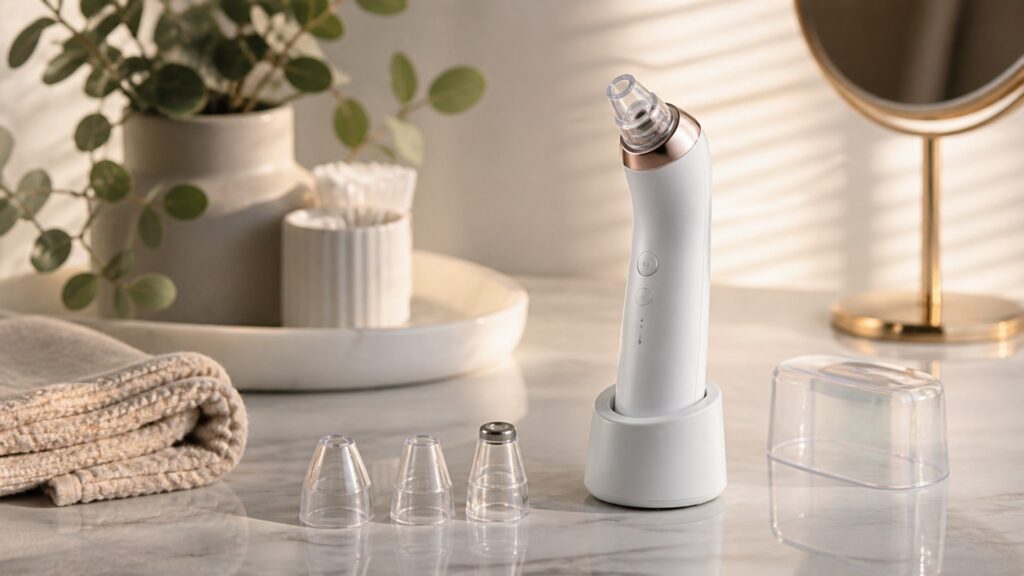
Buying framework
Define the routine frequency planning routine before comparing products
Use the setting, frequency, and skin priorities to narrow pore vacuum devices logically.
Start with the use case: Map every active, heat, abrasive, hair-removal, and professional facial exposure.
Rank the practical tradeoffs: Set a minimum interval after all redness, dots, bruising, and tightness disappear.
Check instructions early: Require a clear normal-distance cosmetic need before considering another session.
Use profiles
Match pore vacuum devices to the person and pace
Three shopper profiles expose different priorities for routine frequency planning.
Routine-focused buyer: A schedule-driven user needs hard limits that override camera or mirror checking.
Performance-focused buyer: A retinoid user should keep suction far from periods of increased sensitivity.
Occasional or flexible user: A recurrence-focused user needs prevention rather than more frequent extraction.
Specifications
Read the specifications through a routine frequency planning lens
Translate technical language into visible routine benefits.
Handling lens
Count tip passes and local dwell as well as days between sessions.
Ownership lens
Review the face under normal light the following morning.
Suction Range: Pore refill can occur before bruised capillaries have recovered.
Tip Attachments: Repeated passes add vessel stress even at unchanged low suction.
Display And Controls: Usage reminders encourage calendar compliance rather than skin assessment.
Charging Runtime: Transparent debris chambers reward extraction volume psychologically.
Cleaning Method: Treatment logs reveal escalation in tips, power, or frequency.
Common mistakes
Avoid shortcuts that undermine routine frequency planning
A good purchase can still disappoint when selection or use is based on the wrong assumption.
Buying from one metric: Do not vacuum on a weekly schedule regardless of skin response.
Skipping compatibility checks: Avoid sessions near steaming, peels, waxing, acids, or retinoids.
Ignoring post-use care: Do not repeat treatment simply because sebaceous filaments return.
Decision guidance
Choose the simplest option that covers the real need
Use these decision rules to finish a shortlist for routine frequency planning.
Choose the basic format when: Use rare limited sessions only after complete recovery.
Choose the flexible format when: Switch focus to topical acne care when congestion drives recurring extraction.
Pause before upgrading when: Stop the schedule when petechiae, bruising, or barrier discomfort accumulates.
Ownership & compatibility
Plan for clean, repeatable ownership
The best value remains convenient after the first few uses.
Consumables and replacements: Log date, zone, tip, setting, passes, competing actives, and delayed marks.
Cleaning and storage: Replace filters and clean the entire path after every session.
Routine compatibility: Recalculate frequency whenever skin care, medication, or sensitivity changes.
FAQ
How to Choose Pore Vacuum Devices for Routine Frequency Planning FAQ
Practical answers about choosing and owning pore vacuum devices for routine frequency planning.
What matters most when choosing pore vacuum devices for routine frequency planning?
Is the most expensive option better for routine frequency planning?
How should I compare two similar pore vacuum devices options?
Bottom line
Buy for repeatable routine frequency planning results
A focused shortlist is easier to own and use well.
Prioritize fit: Let vessel recovery outrank pore refill.
Verify the limits: Count every active, heat, and abrasive exposure in the schedule.
Count ownership costs: Use logs to detect gradual increases in power or frequency.
Reading Shortcuts
Jump to the key pore vacuum devices decisions.
Decision Reminders
Keep these checks beside your shortlist.
- Check suction range: Begin with the lowest setting and keep the tip moving.
- Check tip attachments: Do not use on broken, inflamed, infected, or highly irritated skin.
- Check display and controls: Stop if bruising, pain, or persistent irritation develops.
Glossary Snippets
Plain-language pore vacuum devices terms.
When to Use a Top 10 Review
Use a ranked list to identify a manageable set of strong candidates.
- You are still exploring: A ranked list can reveal the main formats and price tiers.
- You want a shortlist: Start broad, then confirm fit with this buying guide.
Have finalists? Use a Comparison.
When to Use a Comparison
Use a direct comparison when only a few candidates remain.
- Features are close: Side-by-side details clarify meaningful differences.
- Prices overlap: Compare ownership value, not only purchase price.
Still exploring? See the Top 10.