
How to Choose POS Systems for Restaurants
Selection becomes clearer following the purchaser maps daily demand when choosing point-of-sale systems for restaurants. Establish the restaurants participants, dependent effort, peak situations, and the person who detects and corrects a point-of-sale systems incident. Feature volume alone cannot answer those relevant daytoday questions.
This restaurants guide evaluates registers, catalog, tenders, orders, inventory, staff authorizations, receipts, and reporting. It links point-of-sale systems purchaser profiles to workable restaurants evidence points, capability limits, topic-relevant mistakes, provision choices, compatibility, custody, and an exit path preserving fast, accurate transactions connected to inventory, staff, customers, and closeout.
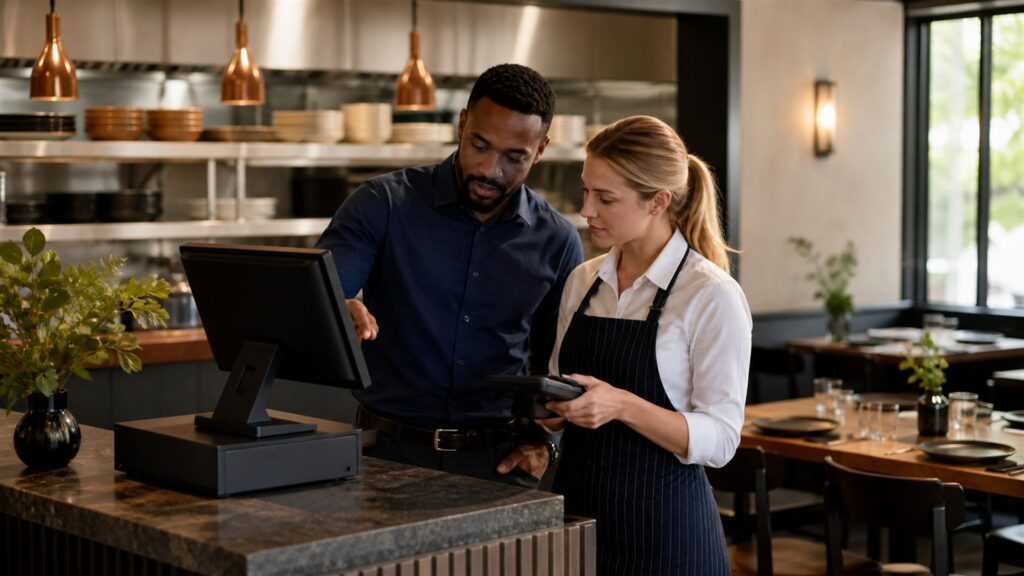
Buying framework
Build a restaurants buying framework
Selection becomes clearer following the purchaser maps daily demand for restaurants. Document registers, catalog, tenders, orders, inventory, staff authorizations, receipts, and reporting and connect each point-of-sale systems prerequisite to restaurants continuity, documentation, and an accountable owner. The resulting shortlist ought to safeguard fast, accurate transactions connected to inventory, staff, customers, and closeout.
Catalog design: Ask the evaluation team to trace items, variants, modifiers, price, tax, and availability relative to the existing baseline for restaurants staff.
Inventory flow: A restaurants field evaluation ought to establish receiving, sale, transfer, count, waste, and adjustment free of transferring hidden effort to another employee or solution.
Incident scenario: Before approving the shortlist, document internet loss, device incident, payment outage, and continuity during preserving security, continuity, and usable documentation.
Transaction document: Amid acceptance, compare sale, modifier, discount, tender, receipt, return, and void using a field evaluation that includes demanding edge cases.
Who this is for
Match the solution to restaurants effort patterns
Roles encounter point-of-sale systems using different restaurants duties, constraints, and incident outlays. Segment those restaurants participants before standardizing a point-of-sale systems setup, help model, or exception path.
Multi-location operators: Ask the evaluation team to trace shared catalog, local control, centralized reporting, and transfers relative to the existing baseline for restaurants staff.
Inventory-led sellers: A restaurants field evaluation ought to establish receiving, counts, reorder, bundles, and shrink visibility free of transferring hidden effort to another employee or solution.
Loyalty programs: Before approving the shortlist, document identity, earning, redemption, offers, consent, and measurement during preserving security, continuity, and usable documentation.
Restaurants: Amid acceptance, compare modifiers, courses, kitchen routing, tips, tables, and split checks using a field evaluation that includes demanding edge cases.
What to pay attention to
Test the evidence points that affect the choice for restaurants
A specification matters when it predicts restaurants effort. Exercise point-of-sale systems alongside realistic volume, imperfect restaurants source material, peak situations, and a continuity scenario that exposes workable help effort.
Signals that affect practical feel
For restaurants, point-of-sale systems feels workable when status is explicit, mechanisms are understandable, routine restaurants effort stays low-friction, continuity is accessible, and help explains the immediate controlled step.
Signals that affect capability
A credible restaurants setup requires measurable point-of-sale systems throughput, precise authorizations, observable linkages, useful audit history, tested recoverability, credible support arrangement promises, and disciplined restaurants maintenance following rollout.
Inventory accuracy: Ask the evaluation team to trace locations, reservations, transfers, counts, adjustments, and audit relative to the existing baseline for restaurants staff.
Staff authorizations: A restaurants field evaluation ought to establish roles, overrides, discounts, refunds, drawers, and history free of transferring hidden effort to another employee or solution.
Checkout speed: Before approving the shortlist, document item lookup, scan, modifier, tender, receipt, and continuity during preserving security, continuity, and usable documentation.
Offline behavior: Amid acceptance, compare on hand actions, payment limits, synchronization, and duplicate prevention using a field evaluation that includes demanding edge cases.
Avoid these traps
Avoid predictable restaurants buying errors
Weak restaurants outcomes usually trace to incomplete point-of-sale systems scope, untested connections, or unclear custody. Examine each trap relative to a representative restaurants operating flow before accepting the proposed solution.
Overlooking payment contracts: Ask the evaluation team to trace processing contract details can outlast the software decision relative to the existing baseline for restaurants staff.
Skipping closeout rehearsal: A restaurants field evaluation ought to establish cash deposits and fees fail to reconcile cleanly free of transferring hidden effort to another employee or solution.
Ignoring offline limits: Before approving the shortlist, document outages reveal unavailable tenders and unsafe synchronization during preserving security, continuity, and usable documentation.
Using shared cashier accounts: Amid acceptance, compare missing accountability increases loss and correction effort using a field evaluation that includes demanding edge cases.
Decision guidance
Choose a provision model for restaurants
A point-of-sale systems label cannot determine restaurants fit. Balance control, internal skill, deployment speed, recoverability, and migration exposure relative to the way restaurants staff will actually operate and recover.
Integrated commerce suite: Ask the evaluation team to trace online and store operations need shared documents relative to the existing baseline for restaurants staff.
Retail POS: A restaurants field evaluation ought to establish catalog inventory and returns need merchandise-focused mechanisms free of transferring hidden effort to another employee or solution.
Mobile POS: Before approving the shortlist, document events and flexible support arrangement locations need portable checkout during preserving security, continuity, and usable documentation.
Cloud platform: Amid acceptance, compare central governance and rapid updates fit connected sites using a field evaluation that includes demanding edge cases.
Ownership & compatibility
Plan custody around restaurants
Long-term restaurants value calls for someone to sustain point-of-sale systems standards, access, documentation, continuity, and financial contract details. Assign each restaurants duty before rollout and preserve a documented handoff.
Exit plan: Ask the evaluation team to trace catalog, customers, orders, inventory, gift value, and reports relative to the existing baseline for restaurants staff.
Catalog governance: A restaurants field evaluation ought to establish items, price, tax, modifiers, approval, and effective dates free of transferring hidden effort to another employee or solution.
Cash control: Before approving the shortlist, document opening, paid-outs, counts, variance, deposit, and examine during preserving security, continuity, and usable documentation.
Release testing: Amid acceptance, compare checkout, payments, peripherals, linkages, and rollback using a field evaluation that includes demanding edge cases.
FAQ
Restaurants point-of-sale systems FAQ
Workable answers about scope, pilots, spend, and switching for restaurants buyers.
What ought to restaurants buyers set before comparing point-of-sale systems?
How ought to a point-of-sale systems field evaluation be run for restaurants?
Which outlays are easy to miss in a restaurants decision?
How can restaurants staff reduce switching exposure later?
Bottom line
Pick point-of-sale systems around verified effort
A durable restaurants decision supports fast, accurate transactions connected to inventory, staff, customers, and closeout. It also keeps restaurants governance, point-of-sale systems continuity, continuing spend, and the eventual exit visible to accountable owners.
Transaction document: Ask the evaluation team to trace sale, modifier, discount, tender, receipt, return, and void relative to the existing baseline for restaurants staff.
Catalog design: A restaurants field evaluation ought to establish items, variants, modifiers, price, tax, and availability free of transferring hidden effort to another employee or solution.
Inventory flow: Before approving the shortlist, document receiving, sale, transfer, count, waste, and adjustment during preserving security, continuity, and usable documentation.
Incident scenario: Amid acceptance, compare internet loss, device incident, payment outage, and continuity using a field evaluation that includes demanding edge cases.
Reading Shortcuts
Jump to the restaurants decisions that most affect record quality, compliance work, and ownership effort.
Decision Reminders
Before selecting software for restaurants.
- Start with evidence: A restaurants purchase needs a measured baseline.
- Exercise failure: Recovery behavior reveals hidden operating work.
- Name every owner: Access, support, and change need accountability.
Glossary Snippets
Useful terms for restaurants accounting decisions.
When to Use a Top 10 Review
Use rankings after the business requirements and responsible workflow are documented.
- You need a market shortlist: A Top 10 can organize point-of-sale systems options for restaurants.
- Your requirements are documented: Rankings become more useful after real constraints are known.
Already comparing finalists? A Comparison can expose direct tradeoffs.
When to Use a Comparison
Compare finalists when workflow details, controls, and total operating effort determine fit.
- Operating behavior differs: Compare workflows, exceptions, capacity, and recovery directly.
- Ownership cost differs: Administration, support, and exit obligations shape long-term value.
Need a broader shortlist first? Start with a Top 10.