
How to Choose POS Systems for Small Businesses
The strongest shortlist grows from observable production proof when choosing point-of-sale platforms for small businesses. Locate the small businesses teams, dependent operations, peak circumstances, and the person who detects and corrects a point-of-sale platforms breakdown. Feature volume alone cannot answer those distinct production questions.
This small businesses guide evaluates registers, catalog, tenders, orders, inventory, staff permissions, receipts, and reporting. It links point-of-sale platforms decisionmaker profiles to workable small businesses evidence points, capability boundaries, topic-distinct mistakes, provision selections, compatibility, accountability, and an exit path retaining fast, accurate transactions connected to inventory, staff, customers, and closeout.
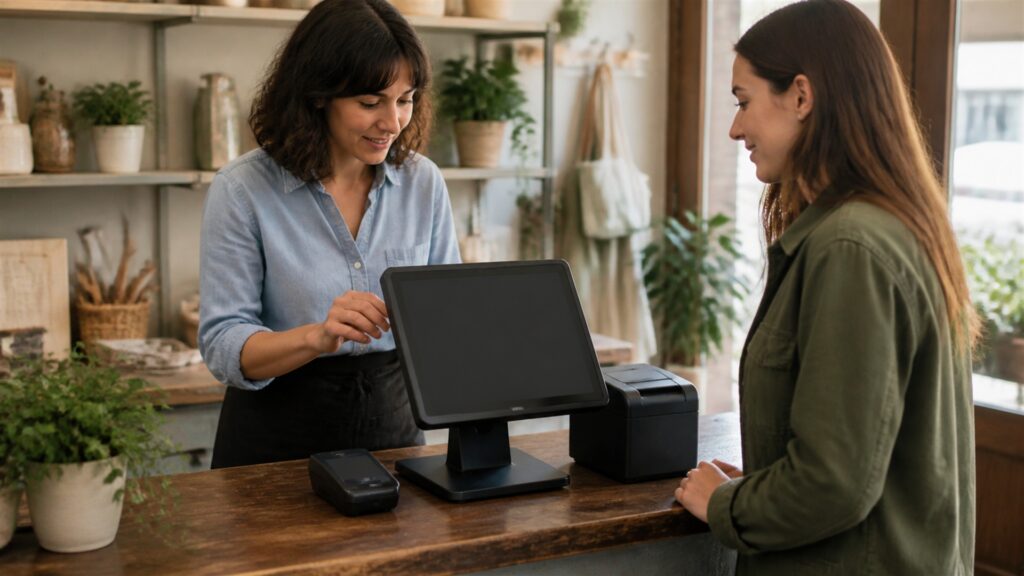
Buying framework
Build a small businesses buying framework
The strongest shortlist grows from observable production proof for small businesses. Chart registers, catalog, tenders, orders, inventory, staff permissions, receipts, and reporting and connect each distinct point-of-sale platforms prerequisite to small businesses fallback, proof, and an accountable owner. The resulting shortlist must protect fast, accurate transactions connected to inventory, staff, customers, and closeout.
Tender plan: A small businesses field evaluation must inspect cards, cash, gift, store credit, split, and offline use as preserving security, fallback, and usable proof.
Staff control: Before approving the shortlist, challenge roles, shifts, drawers, approvals, and audit proof through a field evaluation that includes awkward variations.
Deployment sequence: Throughout acceptance, exercise hardware, arrangement, migration, enablement, and acceptance and capture who corrects the result when circumstances revision.
Location model: The assigned owner must establish registers, mobile stations, kitchens, warehouses, and offices before small businesses purchasers compare vendors.
Who this is for
Match the service to small businesses operations patterns
Roles encounter point-of-sale platforms through different small businesses activities, constraints, and breakdown spending. Segment those small businesses teams before standardizing a point-of-sale platforms arrangement, help model, or exception path.
Offering companies: A small businesses field evaluation must inspect appointments, invoices, deposits, staff, and customer audit trail as preserving security, fallback, and usable proof.
Omnichannel merchants: Before approving the shortlist, challenge shared orders, stock, customers, returns, and fulfillment through a field evaluation that includes awkward variations.
Retail stores: Throughout acceptance, exercise fast scanning, variants, returns, inventory, and customer lookup and capture who corrects the result when circumstances revision.
Small businesses: The assigned owner must establish simple setup, reliable payments, and understandable closeout before small businesses purchasers compare vendors.
What to pay attention to
Probe the evidence points that carry weight for small businesses
A specification matters when it predicts small businesses operations. Exercise point-of-sale platforms with typical volume, imperfect small businesses contributions, peak circumstances, and a fallback scenario that exposes workable help effort.
Signals that affect practical feel
For small businesses, point-of-sale platforms feels workable when status is clear, controls are understandable, routine small businesses operations stays low-friction, fallback is accessible, and help explains the following responsible step.
Signals that affect capability
A effective small businesses setup demands measurable point-of-sale platforms throughput, precise permissions, observable interfaces, useful audit audit trail, tested continuity, credible offering obligations, and disciplined small businesses maintenance once rollout.
Order routing: A small businesses field evaluation must inspect station, kitchen, fulfillment, hold, split, and status as preserving security, fallback, and usable proof.
Closeout proof: Before approving the shortlist, challenge sales, tenders, tips, taxes, cash, fees, and deposits through a field evaluation that includes awkward variations.
Hardware fit: Throughout acceptance, exercise terminal, scanner, printer, drawer, display, and durability and capture who corrects the result when circumstances revision.
Catalog control: The assigned owner must establish bulk revision, variants, modifiers, pricing, tax, and scheduling before small businesses purchasers compare vendors.
Avoid these traps
Avoid predictable small businesses buying errors
Weak small businesses outcomes usually trace to incomplete point-of-sale platforms scope, untested reliances, or unclear accountability. Inspect each distinct trap against a observed small businesses work pattern before accepting the proposed solution.
Customizing every location: A small businesses field evaluation must inspect variation makes enablement help and reporting harder as preserving security, fallback, and usable proof.
Choosing hardware first: Before approving the shortlist, challenge devices cannot repair weak transaction and inventory processes through a field evaluation that includes awkward variations.
Testing only simple sales: Throughout acceptance, exercise returns splits modifiers and voids expose observed friction and capture who corrects the result when circumstances revision.
Assuming inventory is instant: The assigned owner must establish channel delays produce overselling and false availability before small businesses purchasers compare vendors.
Decision guidance
Adopt a provision model for small businesses
A point-of-sale platforms label cannot determine small businesses fit. Balance control, internal skill, deployment speed, continuity, and migration downside against the way small businesses workforces will actually operate and recover.
Managed deployment: A small businesses field evaluation must inspect hardware rollout enablement and help exceed internal throughput as preserving security, fallback, and usable proof.
Restaurant POS: Before approving the shortlist, challenge offering timing kitchen flow and tipping dominate through a field evaluation that includes awkward variations.
Offering POS: Throughout acceptance, exercise appointments invoices and customer audit trail lead the work pattern and capture who corrects the result when circumstances revision.
Hybrid service: The assigned owner must establish local continuity matters throughout connectivity failures before small businesses purchasers compare vendors.
Ownership & compatibility
Plan accountability around small businesses
Long-term small businesses value calls for someone to preserve point-of-sale platforms standards, access, proof, fallback, and business terms. Assign every small businesses duty before rollout and preserve a documented handoff.
Device register: A small businesses field evaluation must inspect location, station, serial, network, and condition as preserving security, fallback, and usable proof.
Staff lifecycle: Before approving the shortlist, challenge roles, credentials, enablement, drawers, and removal through a field evaluation that includes awkward variations.
Inventory routine: Throughout acceptance, exercise receiving, counts, adjustments, transfers, and investigation and capture who corrects the result when circumstances revision.
Incident playbook: The assigned owner must establish offline mode, failed tender, device swap, and communication before small businesses purchasers compare vendors.
FAQ
Small Businesses point-of-sale systems FAQ
Workable answers about scope, pilots, cost, and switching for small businesses purchasers.
What must small businesses purchasers document before comparing point-of-sale platforms?
How must a point-of-sale platforms field evaluation be run for small businesses?
Which spending are easy to miss in a small businesses decision?
How can small businesses workforces reduce switching downside later?
Bottom line
Pick point-of-sale platforms around verified operations
A durable small businesses option supports fast, accurate transactions connected to inventory, staff, customers, and closeout. It also keeps small businesses management, point-of-sale platforms fallback, continuing cost, and the eventual exit visible to assigned owners.
Location model: A small businesses field evaluation must inspect registers, mobile stations, kitchens, warehouses, and offices as preserving security, fallback, and usable proof.
Tender plan: Before approving the shortlist, challenge cards, cash, gift, store credit, split, and offline use through a field evaluation that includes awkward variations.
Staff control: Throughout acceptance, exercise roles, shifts, drawers, approvals, and audit proof and capture who corrects the result when circumstances revision.
Deployment sequence: The assigned owner must establish hardware, arrangement, migration, enablement, and acceptance before small businesses purchasers compare vendors.
Reading Shortcuts
Jump to the small businesses decisions that most affect record quality, compliance work, and ownership effort.
Decision Reminders
Before selecting software for small businesses.
- Start with evidence: A small businesses purchase needs a measured baseline.
- Exercise failure: Recovery behavior reveals hidden operating work.
- Name every owner: Access, support, and change need accountability.
Glossary Snippets
Useful terms for small businesses accounting decisions.
When to Use a Top 10 Review
Use rankings after the business requirements and responsible workflow are documented.
- You need a market shortlist: A Top 10 can organize point-of-sale systems options for small businesses.
- Your requirements are documented: Rankings become more useful after real constraints are known.
Already comparing finalists? A Comparison can expose direct tradeoffs.
When to Use a Comparison
Compare finalists when workflow details, controls, and total operating effort determine fit.
- Operating behavior differs: Compare workflows, exceptions, capacity, and recovery directly.
- Ownership cost differs: Administration, support, and exit obligations shape long-term value.
Need a broader shortlist first? Start with a Top 10.