
How to Choose Precision Hair Removal Devices for Charging, Cleaning, and Storage
Precision heads have tiny channels, close foils, narrow cutters, tweezer openings, and caps where hair and oil accumulate. Their small scale makes contamination harder to see and damage easier to miss, especially after damp bathroom storage.
Choose a system that opens for inspection without exposing fingers to sharp or pinching parts. Battery, port, and motor care must remain separate from rinsable heads, and every guard should dry before returning to labeled storage.
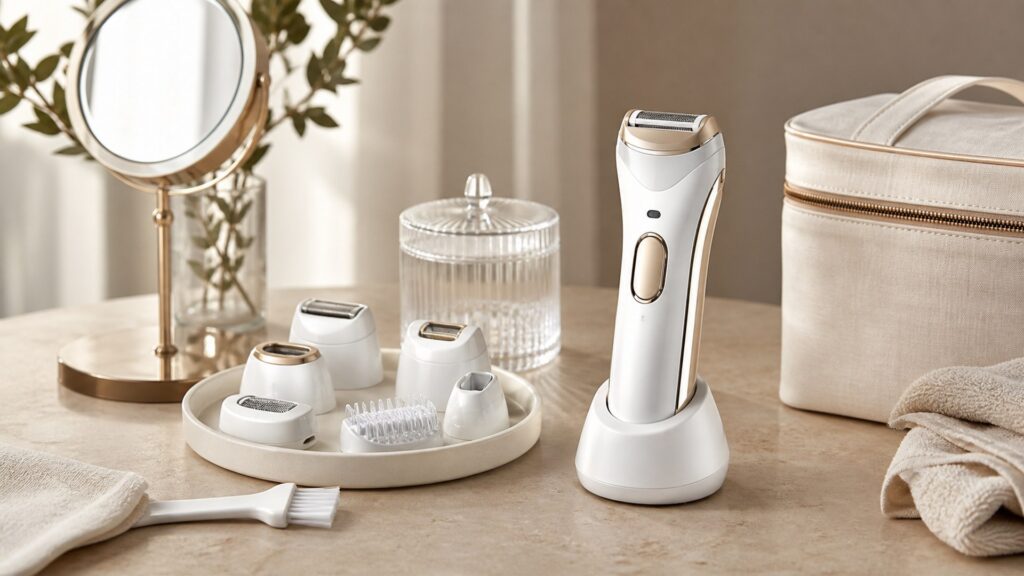
Buying framework
Define the charging, cleaning, and storage routine before comparing products
Use the setting, frequency, and skin priorities to narrow precision hair removal devices logically.
Start with the use case: Trace clipped or pulled hair through each head and chamber.
Rank the practical tradeoffs: Separate rinsable guards and heads from the powered body and charging contacts.
Check instructions early: Plan cleaning, drying, inspection, lubrication, replacement, and storage by attachment.
Use profiles
Match precision hair removal devices to the person and pace
Three shopper profiles expose different priorities for charging, cleaning, and storage.
Routine-focused buyer: A foil user needs replaceable screens and cutters that can be inspected.
Performance-focused buyer: A nose-head user needs easy opening without losing tiny parts.
Occasional or flexible user: A traveler should protect delicate edges and prevent accidental activation.
Specifications
Read the specifications through a charging, cleaning, and storage lens
Translate technical language into visible routine benefits.
Handling lens
Inspect contact edges under angled light after cleaning.
Ownership lens
Price replacement foils, cutters, guards, and batteries over a year.
Removal Mechanism: Mini foils bend from finger pressure or impact.
Precision Head: Narrow cutter slots retain short hair and product residue.
Speed Settings: Epilator tweezers can trap hairs around moving pivots.
Charging Runtime: Small guards disappear or become confused without organized storage.
Cleaning Method: Charging ports corrode when capped near residual moisture.
Common mistakes
Avoid shortcuts that undermine charging, cleaning, and storage
A good purchase can still disappoint when selection or use is based on the wrong assumption.
Buying from one metric: Do not rinse the handle because one precision head is washable.
Skipping compatibility checks: Avoid scraping hair from a foil with sharp household objects.
Ignoring post-use care: Do not cap or charge the device while any component is damp.
Decision guidance
Choose the simplest option that covers the real need
Use these decision rules to finish a shortlist for charging, cleaning, and storage.
Choose the basic format when: Choose heads that open visibly and reassemble without touching edges.
Choose the flexible format when: Prefer widely available foils, cutters, guards, and cables.
Pause before upgrading when: Reject products with ambiguous waterproofing or irreplaceable precision parts.
Ownership & compatibility
Plan for clean, repeatable ownership
The best value remains convenient after the first few uses.
Consumables and replacements: Power off before releasing any detail head.
Cleaning and storage: Dry parts separately and store each guard in a labeled compartment.
Routine compatibility: Replace bent, cracked, dull, or contaminated contact pieces promptly.
FAQ
How to Choose Precision Hair Removal Devices for Charging, Cleaning, and Storage FAQ
Practical answers about choosing and owning precision hair removal devices for charging, cleaning, and storage.
What matters most when choosing precision hair removal devices for charging, cleaning, and storage?
Is the most expensive option better for charging, cleaning, and storage?
How should I compare two similar precision hair removal devices options?
Bottom line
Buy for repeatable charging, cleaning, and storage results
A focused shortlist is easier to own and use well.
Prioritize fit: Treat tiny contact paths as high-attention hygiene zones.
Verify the limits: Protect delicate foils and guards from impact and confusion.
Count ownership costs: Separate washable heads from every powered component.
Reading Shortcuts
Jump to the key precision hair removal devices decisions.
Decision Reminders
Keep these checks beside your shortlist.
- Check removal mechanism: Confirm the device is labeled for the intended area.
- Check precision head: Do not use on broken, infected, sunburned, or irritated skin.
- Check speed settings: Clean attachments as directed and stop if persistent irritation develops.
Glossary Snippets
Plain-language precision hair removal devices terms.
When to Use a Top 10 Review
Use a ranked list to identify a manageable set of strong candidates.
- You are still exploring: A ranked list can reveal the main formats and price tiers.
- You want a shortlist: Start broad, then confirm fit with this buying guide.
Have finalists? Use a Comparison.
When to Use a Comparison
Use a direct comparison when only a few candidates remain.
- Features are close: Side-by-side details clarify meaningful differences.
- Prices overlap: Compare ownership value, not only purchase price.
Still exploring? See the Top 10.