
How to Choose Recovery & Muscle Therapy Products for Mobility Training
Mobility training already asks the body to explore positions, so recovery gear should make those sessions calmer rather than more aggressive. A roller, wrap, massage device, compression product, or stimulator cannot decide why range feels limited or whether a joint should be pushed. Start with the movement goal, coaching or clinical guidance, symptoms, and stop criteria.
The right product for mobility work is controlled, visible, and easy to leave. Check the exact intended use and contraindications, especially around joints, altered sensation, circulation, pregnancy, implants, injuries, heat, cold, and electrical current. Use gentle settings, avoid using pain as feedback, clean every skin-contact component, and involve a qualified clinician when motion loss, nerve symptoms, swelling, or persistent pain appears.
Buying framework
Put movement quality before product force
Mobility-focused recovery gear should support a defined range task without overriding pain, technique, professional guidance, or product limits.
Name the movement pattern: Identify the squat, hinge, shoulder flexion, overhead position, hip rotation, ankle motion, or spine position involved. Then decide whether the product contacts muscle tissue or risks stressing a joint.
Set a range boundary: Record the comfortable range before using the product and define what counts as too much pressure, stretching, heat, cold, compression, or current. More range is not automatically safer.
Protect symptoms from interpretation: Pain, catching, numbness, weakness, swelling, instability, or motion loss should not be explained away by tight muscles. Use qualified guidance when those signs influence movement.
Read labeling against the drill: The product's intended use, body area, timing, and warnings must match the planned mobility session. Do not adapt a device into a position the instructions do not cover.
Keep exit routes simple: Choose tools that can be removed while seated, kneeling, lying, or standing without sudden loading. Straps, cords, bands, sleeves, and rollers should not trap the user in end range.
Who this is for
Choose for the mobility setting
Home mobility sessions, coached classes, strength warmups, sport practice, and rehabilitation-adjacent routines need different product boundaries.
Home mobility user: Favor simple setups with clear instructions and low-force control. Avoid complex electrical or compression routines when no one is present to help interpret unexpected responses.
Class participant: Portable products should be quiet, clean, labeled, and quick to set up without blocking shared space. Follow studio rules for hygiene and do not share contact items casually.
Strength-training warmup user: Choose tools that do not fatigue grip, numb tissue, or change joint awareness before loaded work. Keep pre-lift use short and consistent with coaching guidance.
Sport-practice athlete: Mobility products should fit the practice environment, weather, and skin condition after sweat. Avoid introducing unfamiliar heat, cold, pressure, or stimulation before important sessions.
Rehab-adjacent user: When a clinician has provided exercises, the product must match that plan exactly. Marketing routines and influencer protocols should not expand the prescribed range or dosage.
What to pay attention to
Check features against range, control, and contact
Useful mobility products let the user monitor sensation and position instead of chasing pressure or dramatic motion.
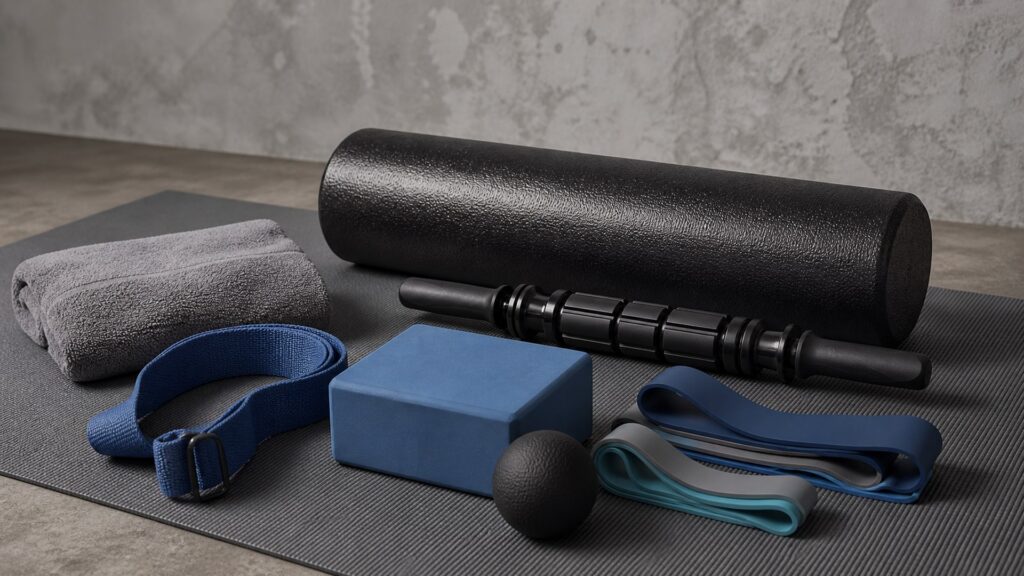
Shape and leverage: Balls, rollers, and wedges change force depending on body position. Choose geometry that supports gradual contact without requiring the user to balance at end range.
Surface grip and stability: A tool used on floors, mats, or walls should not slide unexpectedly when the user changes position. Check stability with the exact surface and clothing used for drills.
Attachment and strap access: Sleeves, wraps, boots, and cuffs must be placed without twisting into the restricted range. Confirm closures can be released immediately from the actual drill position.
Temperature limits near joints: Heat or cold may reduce awareness or irritate skin. Follow barrier, timing, preparation, storage, and skin-check directions before combining temperature with stretching.
Electrical current and placement: Stimulators require exact electrode placement, current controls, warnings, contraindications, and regulatory status review. Do not place electrodes simply because a mobility area feels tight.
Cleaning after mat contact: Products may touch floors, bare skin, sweat, lotions, and studio mats. Verify approved cleaning, drying, and separation before carrying them back into a bag.
Parts and documentation: Keep manuals, straps, pads, chargers, covers, and replacement pieces together. Missing parts can change fit, pressure, hygiene, or the user's ability to stop.
Avoid these traps
Avoid mobility-product overreach
The main failures are pushing range, skipping contraindications, and confusing temporary sensation changes with solved movement problems.
Using pain to gain range: Pain is not a mobility target. Stop when discomfort sharpens, spreads, changes sensation, or alters movement quality, and seek guidance if limits are persistent or unexplained.
Pressing near a joint problem: A tool designed for muscle contact may be misused around knees, hips, shoulders, ankles, or spine. Follow body-location instructions and do not improvise around injured areas.
Combining too many inputs: Stretching plus percussion, compression, heat, cold, or electrical current can make feedback harder to interpret. Compare one controlled variable at a time unless guided otherwise.
Copying a protocol from a video: Online routines may ignore individual symptoms, contraindications, and product differences. Use the exact product instructions and any professional plan ahead of demonstrations.
Neglecting shared-studio hygiene: A small ball or roller can carry sweat, floor residue, and skin contact between users. Clean, dry, label, or separate items according to instructions and facility rules.
Decision guidance
Trial the product inside a real mobility session
A fair comparison uses the same drill, body position, symptom screen, low setting, stop rule, and cleaning process.
Create a mobility-use card: Record the movement drill, comfortable range, product contact area, intended use, contraindications reviewed, maximum duration, professional restrictions, and stop signs.
Rehearse placement in position: Set up the product in the exact posture without adding force or power. Confirm breathing, balance, skin monitoring, closure access, cord route, and quick removal.
Apply the lowest input: Use the gentlest permitted pressure, temperature, compression, percussion, or current. The product should not be approved if it requires pain to feel effective.
Check movement afterward modestly: Notice whether movement quality remains controlled without new pain, numbness, redness, weakness, or instability. Do not chase a larger range by repeating use immediately.
Reset the kit: Clean floor-contact and skin-contact surfaces, dry fabric or adhesive parts, inspect straps and cords, recharge safely, and store the manual with the product.
Ownership & compatibility
Keep mobility tools clean, stable, and bounded
Repeated floor use, shared mats, straps, and adhesive parts make care part of the movement plan.
Clean floor-contact surfaces: Use approved methods for rollers, balls, blocks, handles, sleeves, straps, and cases after they touch mats, floors, bare skin, or lotion.
Inspect stability features: Check worn texture, cracks, flattened foam, loose seams, slipping straps, weak closures, damaged leads, and swollen batteries before using the product in a range-limited position.
Keep personal contact parts labeled: Assign pads, sleeves, fabric cuffs, and barriers to one user when needed. Store clean parts apart from shoes, towels, and damp mat pockets.
Preserve the range boundary: Keep notes on permitted drills, positions, settings, and stop signs. Update them when coaching, clinical guidance, symptoms, or product instructions change.
Retire products that drift: Do not use items that slide, trap the user, hide skin, lack replacements, lose markings, or no longer allow gentle adjustment and immediate release.
FAQ
Questions about recovery gear for mobility training
These answers keep mobility product choices tied to control, range boundaries, warnings, and referral signs.
Can a recovery tool improve mobility?
Should I use a tool before stretching?
How firm should a mobility roller be?
Are massage guns useful for tight hips?
Can heat make stretching safer?
What about electrical stimulation?
Should mobility products be shared?
When should use stop during mobility work?
When should a clinician be involved?
Bottom line
Let the movement plan set the limits
Choose mobility recovery products only when they support controlled drills, visible feedback, safe exits, and clean ownership.
Name the drill: Buy for a specific position and contact area.
Protect feedback: Avoid numbing, painful, or confusing inputs before movement work.
Keep exits clear: Straps, cords, rollers, and sleeves should release immediately.
Clean the kit: Service skin and floor contacts before the next session.
Reading Shortcuts
Narrow mobility recovery tools by range control and exit safety.
Decision Reminders
Mobility work needs readable movement cues.
- Range: More motion is not automatically better.
- Symptoms: Pain, catching, numbness, and instability need caution.
- Setup: Rehearse removal from the exact position.
- Hygiene: Separate personal pads, sleeves, and studio-contact tools.
Glossary Snippets
Mobility recovery terms.
When a Top 10 Helps
Use rankings after movement limits and warnings are set.
- Range filter: Remove products that encourage painful or uncontrolled positions.
- Setup filter: Rank survivors by stability, release, cleaning, parts, and documentation.
A ranking cannot tell whether restricted motion is a muscle issue or a condition needing care.
When a Comparison Helps
Compare finalists using the same drill, body position, lowest input, range check, stop rule, and cleaning process.
- Movement: Compare stability, reach, feedback, skin visibility, and release.
- Ownership: Compare mat cleaning, pad storage, straps, chargers, replacements, and notes.
Choose the product that keeps mobility practice deliberate instead of dramatic.