
How to Choose Rowing Machines for Quiet Operation
No single specification proves quiet operation. Air rowers produce purposeful fan rush, water tanks create fluid sound, magnetic machines may reduce resistance noise, and every design still has rollers, a returning handle, foot straps, frame joints, and contact with the floor. A low airborne sound can coexist with vibration that reaches the room below.
Evaluate sound after ten or fifteen minutes, not only on the first stroke. Test easy and hard acceleration, recovery, seat travel, handle return, foot movement, and the exact floor position. A dense equipment mat may protect flooring and reduce some transmission, but it cannot repair loose hardware, contaminated rollers, poor leveling, or a machine whose resistance family is inherently too loud for the schedule.
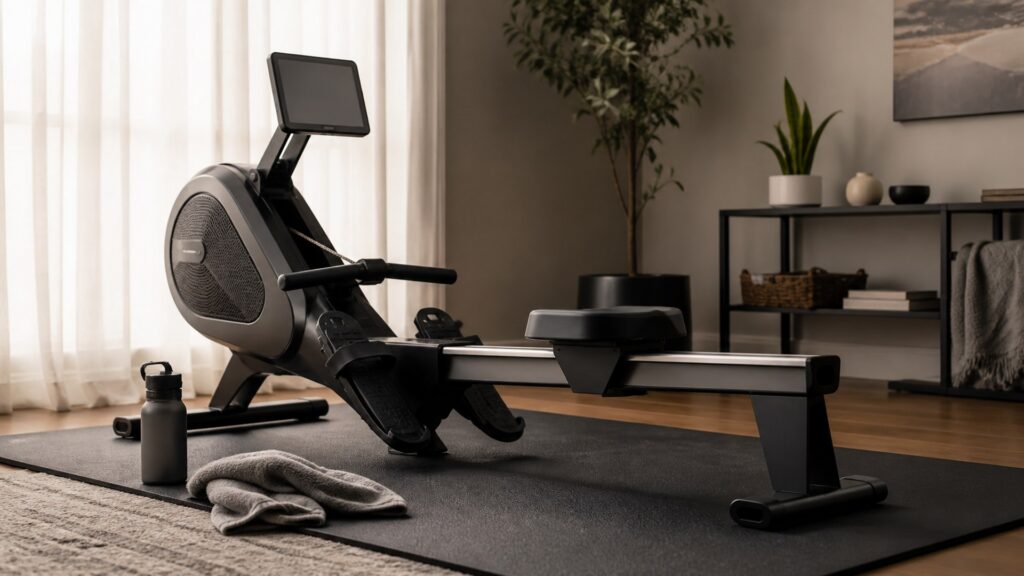
Buying framework
Separate airborne noise from floor vibration
A credible quiet-rower comparison identifies the noise source, operating condition, sound path, and user affected.
1. Identify the listener and schedule: Name the sleeper, neighbor, worker, or child who must not be disturbed, plus the wall, floor, and distance between them and the rower. Early-morning bedroom use sets a stricter limit than garage training.
2. Separate airborne and structural noise: Distinguish fan or water sound from seat rollers, chain or strap return, foot movement, frame knocks, speakers, and vibration entering the floor. Headphones change only the sound heard by the rower.
3. Warm every finalist: Row for at least ten minutes at easy and brisk paces, then accelerate, recover, and stop. Temperature and load can reveal rubbing, bearings, rollers, covers, or return-system noise hidden during a brief cold trial.
4. Listen from the affected rooms: Have another user listen beside the machine, at the doorway, in the neighboring room, and below. Use the same rower, pace, flooring, mat, fan, and speaker state for every comparison.
5. Diagnose before adding padding: Level and assemble the rower exactly as directed before trying a compatible equipment mat. Never hide a new knock, scrape, heat, odor, or unstable rail with music, foam, or one favorable sound-meter reading.
Who this is for
Resistance families have different acoustic signatures
resistance type helps locate likely noise, but the full drivetrain, user, setup, and building determine what another user hears.
Magnetic rower: Magnetic resistance can avoid fan rush and friction-pad contact, but belts, rollers, handle return, electronic actuators, frame joints, and the floor still make sound. Test low and high loads after the machine warms.
Air rower: A fan creates intentional airflow noise that rises with stroke power. The sound is predictable and the resistance responsive, but vigorous intervals can be intrusive when a nearby room requires very low airborne noise.
Water rower: The tank produces a rhythmic fluid sound that some households prefer to fan noise. Seat rollers, straps, frame joints, tank condition, and floor transmission remain separate sources that require an in-room trial.
Hydraulic rower: Piston resistance can reduce overall length and fan noise, yet cylinder seals, independent arms, pivots, and heat may create changing sounds. Compare left and right movement after several minutes rather than only at start-up.
Connected magnetic rower: A quiet drivetrain may be paired with speakers, alerts, cooling fans, touchscreen taps, and automatic resistance motors. Test mute, headphones, manual mode, display-fan behavior, and operation without a class or membership.
What to pay attention to
Specifications that influence real-room sound
noise comparisons need stated in-use conditions, multiple listener positions, and mechanical inspection rather than unqualified adjectives.
Resistance sound: Identify whether resistance comes from air, water, magnets, or hydraulic cylinders. Listen across realistic power levels and ask which components wear, need cleaning, or change sound with temperature, speed, and maintenance.
Seat and rail noise: Rollers can collect grit or develop a repeating click at one rail position. Test the full seat travel slowly and at pace, then inspect for bumps, looseness, contamination, or a joint between rail sections.
Handle and return system: Chains, straps, belts, bungees, pulleys, and handles produce different return sounds. Listen for slack, rubbing, impact at the catch or finish, and whether connector care is clearly explained in the manual.
Frame and floor contact: Verify every stabilizer and leveling foot carries weight on the final surface. A small gap can create a knock or rocking vibration only when the user drives hard through the foot stretchers.
Equipment mat behavior: A dense mat approved for the rower can limit selected vibration and shield the floor finish. Soft foam may let stabilizers sink, increase rocking, disturb rail alignment, or conceal a leveling fault instead of correcting it.
Monitor and accessories: Mute speakers and alerts, remove loose bottles, secure the phone shelf, and listen for display fans. Then restore the actual fan, water, headphones, and class setup to judge the complete session.
Service access: Leave enough room to reproduce a loaded noise, reach the rail, rollers, foot stretchers, resistance housing, serial label, and leveling feet. Tight placement can make an intermittent fault expensive to diagnose.
Avoid these traps
Quiet rower claims that need skepticism
Most weak comparisons isolate resistance technology and ignore stroke rate, warming, foot stretchers, flooring vibration, or changing mechanical condition.
Calling magnetic resistance silent: Magnets remove one contact point but do not silence belts, bearings, rollers, straps, actuators, console fans, speakers, frame motion, user effort, or vibration transmitted through the building.
Comparing unmatched videos: Microphones, compression, room acoustics, distance, pace, resistance, and flooring differ. A product video cannot establish which rower will be quieter in the buyer's room or for a neighbor below.
Testing for thirty seconds: Cold components may sound different after heat and repeated load. Extend the trial, vary pace and resistance, include several hard strokes, and listen through the complete flywheel slowdown and handle return.
Buying the softest mat: Excessively compliant foam can let the rower rock and create more impact noise. Use a firm compatible mat, support every stabilizer, and correct leveling before adding other vibration-control products.
Masking a new knock: Music or headphones may hide evidence from the user while neighbors still hear vibration. Stop and diagnose repeated impacts, grinding, rubbing, heat, odor, or a click tied to one seat position.
Decision guidance
Conduct a matched space-level listening Try
A four-position protocol reveals if the rower, flooring, or accessories create the disturbance that actually matters.
Recreate the final setup: Use the planned floor, compatible mat, correct leveling, normal shoes, intended user, and actual accessory arrangement. Turn other room noise off for the first listening pass.
Warm and vary output: Row easy, moderate, and brisk segments, then accelerate, recover, and stop. Note sounds linked to pace, one seat position, handle return, fan speed, magnetic adjustment, or temperature.
Move the listener: Listen beside the rower, at the doorway, in the adjacent room, and below or at the sensitive sleeping or working position while the user maintains matched pace.
Isolate one source at a time: Remove loose accessories, mute the monitor, switch off the external fan, change shoes, clean the rail, and recheck leveling individually. Record which change affects the sound.
Verify home-trial protection: A dealer cannot reproduce how the rower's fan, seat rollers, handle return, and rail vibration reach an upstairs bedroom or shared wall. Confirm trial and return terms before the final warm-room listening test.
Ownership & compatibility
Track new noises before they become faults
Early attention to leveling, foot stretchers, fasteners, drive wear, cleanliness, and reported noise changes prevents avoidable noise growth.
Save a sound baseline: Record a short reference after correct installation, noting pace, resistance, listener position, flooring, and warm-up time. It is not a laboratory rating, but it can show when a new noise appears.
Recheck floor contact: Inspect stabilizers, leveling feet, mat position, rail joints, and machine migration after installation, relocation, or hard sessions. Correct contact under the manual before tightening unrelated parts.
Clean moving interfaces: Remove grit and perspiration from the rail, rollers, foot straps, handle, and approved connector areas. Do not add lubricant, belt treatment, or fastener torque unless the exact manual specifies it.
Describe service evidence: Report pace, resistance, temperature, seat position, listener location, and whether the sound occurs loaded or unloaded. A precise pattern helps a technician reproduce an intermittent rower fault.
Respect the full quiet routine: A quiet resistance system does not eliminate speaker noise, dropped accessories, shoe handling, water bottles, fans, or post-workout cleaning. Set household rules around the entire rowing session.
FAQ
Quiet rowing machine FAQ
Answers distinguish resistance noise, drivetrain noise, accessories, and building vibration.
Are magnetic rowing machines silent?
Are air rowers too loud for apartments?
What decibel rating should a quiet rower have?
Will a rubber mat stop downstairs vibration?
Why does my rower click at one seat position?
Should I test a rower after warming it up?
Do heavier rowers vibrate less?
Do headphones make a rower apartment-friendly?
When does a noisy rower need service?
Bottom line
Choose the rower whose sound fits the building
Quiet-rower shopping succeeds when warmed operation, the final flooring, and the affected space all support the planned rowing window.
Source: resistance, drive, foot stretchers, accessories, and flooring are evaluated separately.
Warmth: The rower remains acceptable once several minutes and load changes.
Listener: Adjacent and lower rooms pass the actual-time Try.
Condition: New mechanical noise triggers diagnosis rather than masking.
Rowing Machine Route
Use these checkpoints prior to comparing quiet rower products.
Rowing Machine Boundaries
Quiet claims are provisional until stroke rate, load, room, flooring, and listener conditions are stated.
- Magnetic is not silent: Other components stay.
- noise differs from vibration: Try both paths.
- Mats have limits: Preserve stability.
- New noise requires diagnosis: Do not mask it.
Rowing Machine Terms
Terms used in this quiet rower guide.
When a Rowing Machine Ranking Helps
Quiet-rower rankings need stated conditions and listener locations.
- Best suited for: Prefer warm-up duration, stroke rate, resistance, distance, room, flooring, matched rower and pace, component isolation, and adjacent-space observations.
- Known drawback: Unqualified quietest lists often repeat magnetic-resistance claims while ignoring fan noise, foot stretchers, accessories, vibration, maintenance, and changing mechanical condition.
Evidence note: this guide separates resistance noise, rollers, handle return, frame movement, and floor transmission. NordicTrack RW900 documentation supplies one current magnetic-rower reference. Checked September 21, 2026.
Compare Rowing Machine Finalists
Evaluate the noise that reaches the planned listener, not only the rower's impression at the seat.
- Evidence check: Warm the rower, compare matched paces, listen beside and beyond the room, isolate rollers, return system, resistance, and floor vibration, then confirm trial-return terms.
- Ownership check: Include delivery, dense floor mat, room placement, monitor power, membership, roller and connector care, replacement straps, technician diagnosis, labor, and removal.
Choose according to the building's warm, real-session sound, service access, and warranty rather than a quiet label, short showroom pull, microphone video, or resistance type alone.