
How to Choose Safety & Emergency Gear for Disaster and Evacuation Planning
Evacuation equipment matters only if people can leave in time. Authorities may phase zones, close roads, change shelter locations, or direct residents to stay put. Household preparation should make official instructions easier to follow, not substitute personal route assumptions for emergency management.
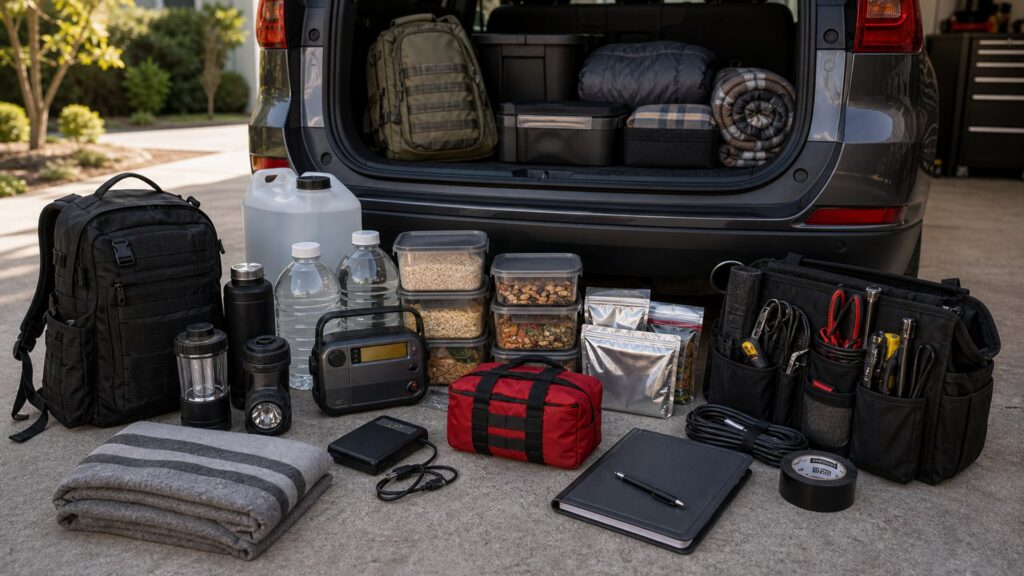
Define who can drive, who needs help, which vehicle carries each person or pet, and the minimum fuel or charge that triggers early action. Choose primary and alternate destinations outside the hazard path, then create an out-of-area communication and reunification plan. Pack portable modules for medication, documents, water, food, sanitation, clothing, mobility, and pet care. Keep them accessible without overloading or blocking visibility. Practice loading, message priorities, route changes, and leaving with one vehicle or caregiver unavailable.
Buying framework
Build evacuation around decisions and movement capacity
Official alerts, departure triggers, accountable people, usable vehicles, routes, and destinations must connect before gear selection.
Know the authority and zone: Enroll in official alerts, identify evacuation zone and hazards, learn school or workplace procedures, and distinguish warning, order, and shelter guidance.
Set household triggers: Choose when to fuel or charge, load priority modules, relocate vulnerable members, secure pets, and leave before routes and services deteriorate.
Assign transport and accountability: List drivers, seats, restraints, mobility equipment, pets, vehicles, keys, cargo, fuel, medication, and who confirms each person.
Plan destinations and reunification: Select primary and alternate locations, out-of-area contacts, meeting points, message order, accessible shelters, pet options, and medical continuity.
Who this is for
Evacuation equipment follows household and hazard
Wildfire, flood, hurricane, industrial release, mobility needs, apartment living, and pet transport create different timing and protection.
Wildfire-exposed households: Prioritize early departure, official zones, smoke and visibility, fuel, fast-loading modules, closed windows, multiple road options, and no return until authorized.
Flood and storm households: Avoid flooded roads, monitor surge and river forecasts, plan inland or elevated destinations, protect documents, and leave before wind or water closes routes.
Medical and mobility households: Coordinate accessible transport, equipment power, medication, oxygen or other professional plans, caregiver backup, shelter suitability, and earlier relocation.
Pet and livestock households: Use carriers, leashes, records, food, water, sanitation, destination acceptance, and prearranged large-animal transport rather than last-minute improvisation.
What to pay attention to
Evacuation gear specifications tied to departure
Portability, loading order, document resilience, occupant access, duration, and destination acceptance are more important than total kit volume.
Leave Capability
Alerts, keys, drivers, fuel or charge, routes, vehicle condition, loading speed, restraints, visibility, and official control.
Continuity Capability
Communication, reunification, medication, water, food, clothing, sanitation, documents, funds, pets, mobility, and shelter.
Portable module design: Limit weight to the assigned user, use stable labels and handles, protect contents, prioritize loading order, and prevent bags from blocking exits or becoming projectiles.
Communication resilience: Prepare emergency alerts, out-of-area contacts, written numbers, group-message rules, charging, battery backup, radios where appropriate, and low-bandwidth status formats.
Document and funds package: Keep protected copies or secure access to identification, insurance, prescriptions, vehicle and pet records, contacts, maps, account details, cash, and assistance information.
Occupant duration supplies: Scale water, ready food, medication, clothing, hygiene, child, elder, disability, pet, and climate needs to evacuation travel and destination uncertainty.
Vehicle departure state: Maintain fuel or charge floor, tires, fluids, lights, recalls, keys, accessible routes, cargo capacity, restraints, maps, and a backup when the primary vehicle is unavailable.
Avoid these traps
Evacuation kits that delay the actual evacuation
Perfect packing, late fuel stops, untested pet loading, and one assumed route can consume the window authorities are trying to preserve.
Waiting to load every possession: Prepacked priorities and a leave-now cutoff prevent optional property decisions from delaying people, medication, pets, and mobility equipment.
Treating the shortest route as guaranteed: Hazard direction, congestion, closures, emergency traffic, flooding, fire, debris, and official control can invalidate familiar roads.
Keeping the vehicle near empty: Demand spikes, outages, power loss, and evacuation traffic can remove fuel or charging that looked available during normal conditions.
Assuming family phones will always connect: Congestion, power loss, separation, damaged devices, and incompatible plans require written contacts, message priorities, check-ins, and meeting logic.
Decision guidance
Buy what makes earlier, simpler departure possible
Prioritize alerts, fuel or charge readiness, lightweight modules, medical and pet continuity, and communication over elaborate shelter equipment that delays loading.
If an evacuation order is issued: Follow official instructions promptly; do not wait for every household member, item, or preferred route when the plan provides accountability and reunification alternatives.
If the primary route is compromised: Use official traffic guidance and a preplanned alternate that remains outside the hazard; never enter flooded, closed, fire-affected, or restricted roads.
If a traveler needs powered medical or mobility equipment: Coordinate professional guidance, backup power, accessible transport, compatible destination, supplies, documentation, and an earlier departure trigger.
If the household separates: Use the out-of-area contact, status message format, official school or workplace process, and predetermined reunification logic rather than sending people back into the hazard.
Ownership & compatibility
Practice evacuation as a timed household operation
A plan that has never loaded pets, devices, medicines, people, and documents into the actual vehicle is still a theory.
Run timed load drills: Practice alerts, keys, person and pet accountability, restraint, priority modules, mobility equipment, communication, route choice, and departure with one helper absent.
Review before hazard seasons: Update zones, alerts, routes, shelters, contacts, documents, prescriptions, pet records, clothing, vehicle condition, fuel or charge, and destination agreements.
Debrief alerts and exercises: Record slow decisions, overweight bags, missing keys, blocked exits, communication failure, pet resistance, accessibility issues, and route assumptions, then revise assignments.
FAQ
Disaster and evacuation planning questions
These answers cover alerts, departure timing, routes, fuel, go kits, documents, families, pets, mobility, and returning.
When should a household evacuate?
What belongs in a vehicle evacuation go kit?
How many evacuation routes should I plan?
How much fuel or battery charge should be maintained?
What documents should be taken during evacuation?
How should separated family members communicate?
How should pets be included in evacuation planning?
What extra planning is needed for mobility or medical equipment?
When is it safe to return home after evacuation?
Bottom line
Evacuation readiness is the ability to leave before choices disappear
Connect official alerts to early household triggers, accountable transport, portable continuity supplies, multiple destinations, and a practiced reunification process.
Decide early: Know zones, alerts, fuel or charge floor, vulnerable-person triggers, and the order that starts movement.
Move people first: Assign drivers, seats, restraints, medicine, mobility devices, pets, keys, and lightweight priority modules.
Stay connected: Use official routes, out-of-area contacts, brief status messages, destinations, and return authorization.
Reading Shortcuts
Move from the credible risk to a documented evacuation mobility plan that can be maintained and verified.
Decision Reminders
Keep the complete evacuation mobility plan in view while comparing equipment.
- Alerts: Know authority and evacuation zone.
- Trigger: Act before routes deteriorate.
- Transport: Drivers, seats, pets, mobility.
- Modules: Portable priorities, not possessions.
- Contact: Out-of-area relay and reunification.
- Return: Wait for official authorization.
Glossary Snippets
Terms that separate useful performance from apparent compatibility.
When to Use a Top 10 Review
Use a product roundup only after the required capability and evacuation mobility plan limits are known.
- Problem defined: The visibility or mobility failure is specific.
- Vehicle mapped: Interfaces and limits are documented.
- Format chosen: The correct product family is settled.
- Evidence available: Finalists can be compared on relevant tests.
Have finalists already? Open a Comparison for a closer tradeoff.
When to Use a Comparison
Compare finalists that solve the same defined evacuation mobility plan need for the same vehicle and users.
- Application: Both match the exact vehicle and function.
- Performance: Evidence addresses the operating problem.
- Integration: Mounting and system effects are understood.
- Ownership: Inspection and service demands are acceptable.
Need a broader field? Use a Top 10 to form a shortlist.