
How to Choose Safety & Emergency Gear for Winter Travel Kits
The most effective winter emergency item may be a postponed departure. Snow, ice, wind, closures, darkness, and falling temperature can overwhelm traction and turn a routine breakdown into an exposure emergency. Equipment should support conservative decisions, not create confidence to enter a route authorities advise avoiding.
Prepare the vehicle first: winter-suitable tires, battery or charge, coolant, lights, wipers, de-icing washer fluid, brakes, and a clear exhaust. Build supplies for the actual occupants and plausible response delay, including dry layers, blankets, water, food, medication, light, power, and communication. Verify chain or traction-device fit before the storm. If stranded, follow official guidance, remain visible, manage moisture, prevent overexertion, keep the exhaust clear, and avoid prolonged engine operation or enclosed-space carbon monoxide exposure.
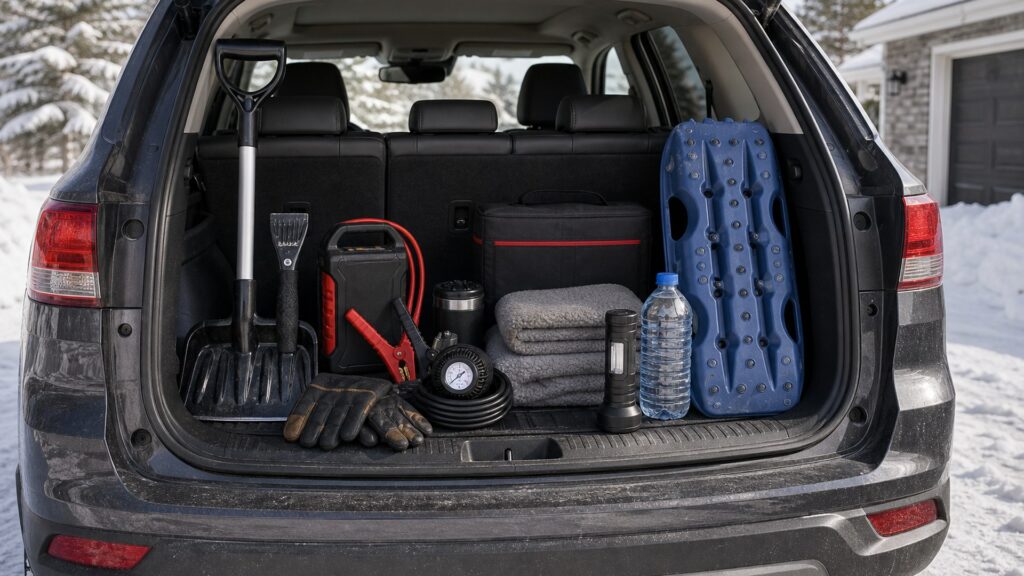
Buying framework
Use the winter kit to preserve heat, visibility, and choices
Route avoidance and a winter-ready vehicle come first; stranded supplies support occupants only after prevention fails.
Set no-go conditions: Use current forecasts, road status, closures, chain controls, visibility, temperature, wind, daylight, vehicle condition, and occupant vulnerability.
Winterize the vehicle: Inspect tires and pressures, battery or EV charge, coolant, wipers, winter washer fluid, lights, brakes, defrosters, heater, fuel, and exhaust.
Plan the delay duration: Estimate realistic response time and add occupant-specific dry clothing, shelter, water, food, medication, communication power, and sanitation.
Write the stranded procedure: Cover location sharing, staying or leaving based on hazards, visibility markers, exhaust clearing, controlled heat use, moisture, movement, and emergency escalation.
Who this is for
Scale winter preparation to route and occupants
A plowed urban commute, mountain pass, rural overnight route, family vehicle, and EV require different reserves and traction plans.
Urban winter commuters: Prioritize current road information, visibility, scraper and brush, warm layers, phone power, safe waiting, and professional roadside coverage.
Mountain-pass travelers: Verify chain law and exact fit, tire requirements, closures, grade weather, daylight, fuel or charge, braking, alternate routes, and extended delay shelter.
Families and vulnerable occupants: Add child-safe warmth without compromising restraints, medications, feeding and sanitation, dry sizes, caregiver access, and a faster escalation threshold.
EV and hybrid drivers: Plan reduced cold range, cabin-heat demand, charging reliability, traffic delay, traction-device clearance, tow method, and reserve without depleting mobility energy.
What to pay attention to
Winter kit specifications that still work below freezing
Fit, temperature rating, moisture control, runtime, visibility, and gloved operation determine actual winter usability.
Vehicle Movement
Tires, pressure, chains, clearance, snow removal, visibility, battery or charge, fluids, brakes, and route status.
Occupant Survival
Dry insulation, wind protection, light, communication, water, food, medication, sanitation, visibility, and CO-safe waiting.
Tire and traction fit: Verify winter performance, size, load, pressure, tread and damage, approved device type, wheel-well clearance, driven-wheel placement, speed, and installation.
Snow and ice tools: Choose scraper, brush, compact shovel, traction abrasive, gloves, and lighting for expected depth, packed storage, gloved grip, and safe work away from traffic.
Cold-rated power and light: Compare battery chemistry, stated temperature range, protected storage, runtime, charging method, glove controls, low-temperature testing, and redundant illumination.
Shelter and moisture system: Use dry base and insulation layers, hats, gloves, blankets or sleeping insulation, wind barrier, spare dry packaging, and ventilation without compromising restraints.
Consumables in freezing storage: Check water expansion, medication limits, food texture and packaging, sealant temperature, battery self-discharge, washer fluid rating, and rotation schedule.
Avoid these traps
Winter kits that fail before the occupants need them
Cold, moisture, poor fit, and route commitment expose flaws hidden during a warm-weather packing exercise.
Buying chains without a test fit: Wrong size, prohibited clearance, unfamiliar tensioning, or missing gloves can make installation impossible or damage brakes, sensors, suspension, wheels, or bodywork.
Depending on the engine for continuous heat: Snow can block exhaust and carbon monoxide can enter; fuel, ventilation, mechanical condition, and official guidance limit safe operation.
Packing cotton comfort without dry layers: Wet clothing and melted snow reduce insulation; protected dry layers, moisture control, hats, gloves, and wind protection matter.
Letting supplies freeze all season: Water containers, medication, food, batteries, sealants, electronics, and washer fluids may leak, degrade, discharge, or become unusable outside their storage limits.
Decision guidance
Choose winter gear from the worst credible delay
Buy only after deciding whether the trip should occur and confirming the vehicle can safely use the traction and snow equipment.
If authorities advise against travel: Postpone or reroute; more equipment does not make a closed, avalanche-prone, flooded, icy, or whiteout route acceptable.
If traction devices have uncertain clearance: Use the vehicle manual and exact fit documentation, test installation in dry conditions, or select an approved alternative before travel.
If occupants cannot tolerate cold delay: Increase vehicle and communication reliability, shelter, medication, and route conservatism, and set an earlier emergency escalation threshold.
If stranded near traffic or deep snow: Follow official guidance, communicate location, stay visible, avoid overexertion, manage safe shelter, clear exhaust before limited engine use, and monitor occupants.
Ownership & compatibility
Rebuild the winter kit before every cold season
Children grow, batteries self-discharge, food and medicine age, water freezes, traction rules change, and vehicles receive new tires or software.
Run a fall inspection: Check recalls, tires and pressures, traction-device fit, battery or charge, fluids, heater, defroster, lights, tools, supplies, subscriptions, and clothing sizes.
Practice in dry daylight: Fit traction devices, operate shovel and lights with gloves, find tow information, share location, retrieve shelter, and pack everything wet or dirty.
Dry and restore after use: Remove moisture and salt, inspect chains and tools, recharge power, replace frozen or consumed supplies, wash textiles, and record changes before repacking.
FAQ
Winter vehicle kit questions
These answers cover tires, chains, snow tools, warmth, batteries, EV range, frozen water, stranding, and carbon monoxide.
Are all-season tires enough for winter travel?
How do I choose tire chains or another traction device?
What belongs in a winter car kit?
Can bottled water stay in a freezing vehicle?
How should I keep warm if stranded?
How does cold affect a vehicle battery?
How should EV drivers plan for a winter delay?
What should I do if snow blocks the exhaust?
When should winter travel be canceled?
Bottom line
Winter preparation starts with deciding not to go
Avoid the worst conditions, ready the vehicle, fit traction equipment correctly, and support occupants through a cold delay without creating exhaust or exposure hazards.
Check the route: Use current weather, closures, visibility, chain controls, daylight, and alternatives before departure.
Ready vehicle and people: Tires, fluids, power, lights, snow tools, dry insulation, medication, water, and communication must work in cold.
Wait safely: Stay visible, manage moisture, avoid overexertion, keep exhaust clear, and escalate before occupant condition deteriorates.
Reading Shortcuts
Move from the credible risk to a documented winter delay plan that can be maintained and verified.
Decision Reminders
Keep the complete winter delay plan in view while comparing equipment.
- Avoid: Postpone before gear is tested.
- Vehicle: Tires, battery, fluids, visibility.
- Fit: Test traction devices in advance.
- Warmth: Dry layers and moisture control.
- Power: Cold-rated light and communication.
- Exhaust: Prevent carbon-monoxide exposure.
Glossary Snippets
Terms that separate useful performance from apparent compatibility.
When to Use a Top 10 Review
Use a product roundup only after the required capability and winter delay plan limits are known.
- Problem defined: The visibility or mobility failure is specific.
- Vehicle mapped: Interfaces and limits are documented.
- Format chosen: The correct product family is settled.
- Evidence available: Finalists can be compared on relevant tests.
Have finalists already? Open a Comparison for a closer tradeoff.
When to Use a Comparison
Compare finalists that solve the same defined winter delay plan need for the same vehicle and occupants.
- Application: Both match the exact vehicle and function.
- Performance: Evidence addresses the operating problem.
- Integration: Mounting and system effects are understood.
- Ownership: Inspection and service demands are acceptable.
Need a broader field? Use a Top 10 to form a shortlist.