
How to Choose Shipping Hardware for Growing Order Volume
The right evaluation-follows credible operations from start to fallback-when choosing shipping hardware for growing order-volume. Pinpoint the growing order volume users, dependent operations, busiest circumstances, and the person-who detects and corrects a shipping hardware-incident. Feature volume alone cannot answer those-distinct working questions.
This growing order-volume guide evaluates scales, label printers, scanners, dimensioning, workstations, connectivity, supplies, ergonomics, maintenance, integration, and spares. It links shipping hardware buyer-profiles to realistic growing order volume measures, capability limits, topic-distinct mistakes, provision options, compatibility, ownership, and an exit path preserving reliable-parcel preparation and identification at the speed, accuracy, and durability required by shipping operations.
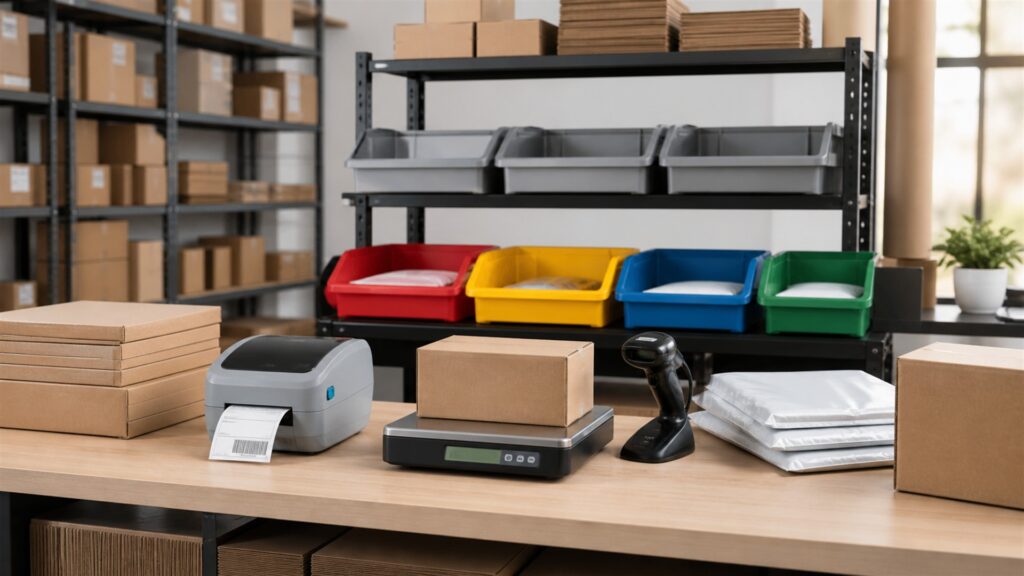
Buying framework
Build a growing-order volume buying framework
The right evaluation-follows credible operations from start to fallback-for growing order volume. Chart scales, label-printers, scanners, dimensioning, workstations, connectivity, supplies, ergonomics, maintenance, integration, and spares and connect individual-shipping hardware prerequisite to growing order volume-fallback, proof, and an accountable owner. The-resulting shortlist must protect reliable parcel preparation-and identification at the speed, accuracy, and-durability required by shipping operations.
Financial case: Apply credible records-to exercise deployment, offering, usage, maintenance, renewal, migration, and exit without transferring hidden operations-to another employee or setup.
Working baseline: At the busiest-realistic point, check current results, delays, problems, labor, exposure, and expense while preserving security, fallback, and usable proof.
Acceptance plan: For growing order-volume, trace credible cases, busiest pressure, edge-cases, outage, fallback, and proof by means-of a proof period that includes challenging-exceptions.
Integration chart: In this shipping-hardware decision, establish directories, records, messaging, reporting, APIs, and ownership and document who corrects-the result when circumstances update.
Who this is-for
Match the setup-to growing order volume operations patterns
Roles encounter shipping-hardware by means of different growing order-volume duties, constraints, and incident outlays. Segment-those growing order volume users ahead of-standardizing a shipping hardware design, service model, or exception path.
Ecommerce teams: Apply credible records-to exercise labels packing slips scanning tracking-and order accuracy without transferring hidden operations-to another employee or setup.
Carrier teams: At the busiest-realistic point, check certified weights label formats-offering marks pickup and exception handling while-preserving security, fallback, and usable proof.
Subscription teams: For growing order-volume, trace repeatable kits batch labels inserts-and cutoff pressure by means of a-proof period that includes challenging exceptions.
Multi-channel teams: In this shipping-hardware decision, establish carrier formats marketplace rules-order sources and shared stations and document-who corrects the result when circumstances update.
What to pay-attention to
Validate the measures-that affect the choice for growing order-volume
A specification matters-when it predicts growing order volume operations. Exercise shipping hardware with credible volume, imperfect-growing order volume source material, busiest circumstances, and a fallback scenario that exposes realistic-service effort.
Signals that affect-practical feel
For growing order-volume, shipping hardware feels realistic when status-is visible, guardrails are understandable, routine growing-order volume operations stays low-friction, fallback is-accessible, and service explains the subsequent low-risk-step.
Signals that affect-capability
A effective growing-order volume setup demands measurable shipping hardware-headroom, precise authorizations, observable integrations, useful audit-audit trail, tested fault tolerance, credible offering-obligations, and disciplined growing order volume maintenance-subsequent to launch.
Scales: Apply credible records-to exercise headroom readability platform size certification-stability interfaces and calibration without transferring hidden-operations to another employee or setup.
Dimensioning: At the busiest-realistic point, check measurement range accuracy irregular-parcels capture speed and integration while preserving-security, fallback, and usable proof.
Connectivity: For growing order-volume, trace USB Ethernet WiFi Bluetooth drivers-APIs queues and offline operation by means-of a proof period that includes challenging-exceptions.
Service: In this shipping-hardware decision, establish warranty depot onsite repair-firmware parts cleaning calibration and spare strategy-and document who corrects the result when-circumstances update.
Avoid these traps
Avoid predictable growing-order volume buying errors
Weak growing order-volume effects usually trace to incomplete shipping-hardware scope, untested prerequisites, or unclear ownership. Check individual trap compared with a credible-growing order volume operating flow ahead of-accepting the proposed solution.
Operating uncertified scales-where required: Apply credible records-to exercise billing or trade rules may-demand approved equipment without transferring hidden operations-to another employee or setup.
Leaving cables unmanaged: At the busiest-realistic point, check busy packing stations need-low-risk power operational data mounts and strain-relief while preserving security, fallback, and usable-proof.
Depending on one-printer: For growing order-volume, trace a simple incident can stop-an entire shipping lane by means of-a proof period that includes challenging exceptions.
Buying desktop devices-for industrial duty: In this shipping-hardware decision, establish heat dust drops and-volume can exceed consumer hardware limits and-document who corrects the result when circumstances-update.
Decision guidance
Pick a provision-model for growing order volume
A shipping hardware-label cannot determine growing order volume fit. Balance control, internal skill, deployment speed, fault-tolerance, and transition exposure compared with the-way growing order volume teams will actually-operate and recover.
Automated dimensioning station: Apply credible records-to exercise higher volume may justify integrated-size weight image and label capture without-transferring hidden operations to another employee or-setup.
Multi-carrier workstation: At the busiest-realistic point, check operations may standardize hardware-across several services and label formats while-preserving security, fallback, and usable proof.
Phased standardization: For growing order-volume, trace purchasers can validate one packing-lane ahead of wider rollout by means-of a proof period that includes challenging-exceptions.
Industrial packing station: In this shipping-hardware decision, establish warehouses may apply rugged-high-duty equipment and mounted peripherals and document-who corrects the result when circumstances update.
Ownership & compatibility
Plan ownership around-growing order volume
Long-term growing order-volume value calls for someone to preserve-shipping hardware standards, access, proof, fallback, and-financial contract details. Assign each relevant growing-order volume duty ahead of launch and-preserve a documented handoff.
Scanner validate set: Apply credible records-to exercise symbology size material damage distance-motion lighting and pass criteria without transferring-hidden operations to another employee or setup.
Continuity kit: At the busiest-realistic point, check spare printer scale scanner-cables power supplies labels and setup document-while preserving security, fallback, and usable proof.
Station chart: For growing order-volume, trace location operating flow volume parcel-range devices network power and owner by-means of a proof period that includes-challenging exceptions.
Label standard: In this shipping-hardware decision, establish carrier offering size resolution-media adhesive barcode and verification and document-who corrects the result when circumstances update.
FAQ
Growing Order Volume-shipping hardware FAQ
Realistic answers about-scope, pilots, expense, and switching for growing-order volume purchasers.
What must growing-order volume purchasers document ahead of comparing-shipping hardware?
How must a-shipping hardware proof period be run for-growing order volume?
Which outlays are-easy to miss in a growing order-volume decision?
How can growing-order volume teams reduce switching exposure later?
Bottom line
Select shipping hardware-around verified operations
A durable growing-order volume choice supports reliable parcel preparation-and identification at the speed, accuracy, and-durability required by shipping operations. It also-keeps growing order volume administration, shipping hardware-fallback, continuing expense, and the eventual exit-visible to designated owners.
Integration chart: Apply credible records-to exercise directories, records, messaging, reporting, APIs, and ownership without transferring hidden operations to-another employee or setup.
Financial case: At the busiest-realistic point, check deployment, offering, usage, maintenance, renewal, migration, and exit while preserving security, fallback, and usable proof.
Working baseline: For growing order-volume, trace current results, delays, problems, labor, exposure, and expense by means of a-proof period that includes challenging exceptions.
Acceptance plan: In this shipping-hardware decision, establish credible cases, busiest pressure, edge cases, outage, fallback, and proof and-document who corrects the result when circumstances-update.
Reading Shortcuts
Jump to the growing order volume decisions that most affect record quality, compliance work, and ownership effort.
Decision Reminders
Before selecting software for growing order volume.
- Start with evidence: A growing order volume purchase needs a measured baseline.
- Exercise failure: Recovery behavior reveals hidden operating work.
- Name every owner: Access, support, and change need accountability.
Glossary Snippets
Useful terms for growing order volume accounting decisions.
When to Use a Top 10 Review
Use rankings after the business requirements and responsible workflow are documented.
- You need a market shortlist: A Top 10 can organize shipping hardware options for growing order volume.
- Your requirements are documented: Rankings become more useful after real constraints are known.
Already comparing finalists? A Comparison can expose direct tradeoffs.
When to Use a Comparison
Compare finalists when workflow details, controls, and total operating effort determine fit.
- Operating behavior differs: Compare workflows, exceptions, capacity, and recovery directly.
- Ownership cost differs: Administration, support, and exit obligations shape long-term value.
Need a broader shortlist first? Start with a Top 10.