
How to Choose Shipping Hardware for Warehouse Operations
The useful comparison starts where current operations fail when choosing shipping hardware for warehouse operations. Locate the warehouse operations teams, dependent tasks, busiest situations, and the person who detects and corrects a shipping hardware incident. Feature load alone cannot answer those specific production questions.
This warehouse operations guide evaluates scales, label printers, scanners, dimensioning, workstations, connectivity, supplies, ergonomics, maintenance, integration, and spares. It links shipping hardware purchaser profiles to workable warehouse operations indicators, capability boundaries, topic-specific mistakes, implementation choices, compatibility, stewardship, and an exit path preserving reliable parcel preparation and identification at the speed, accuracy, and durability required by shipping operations.
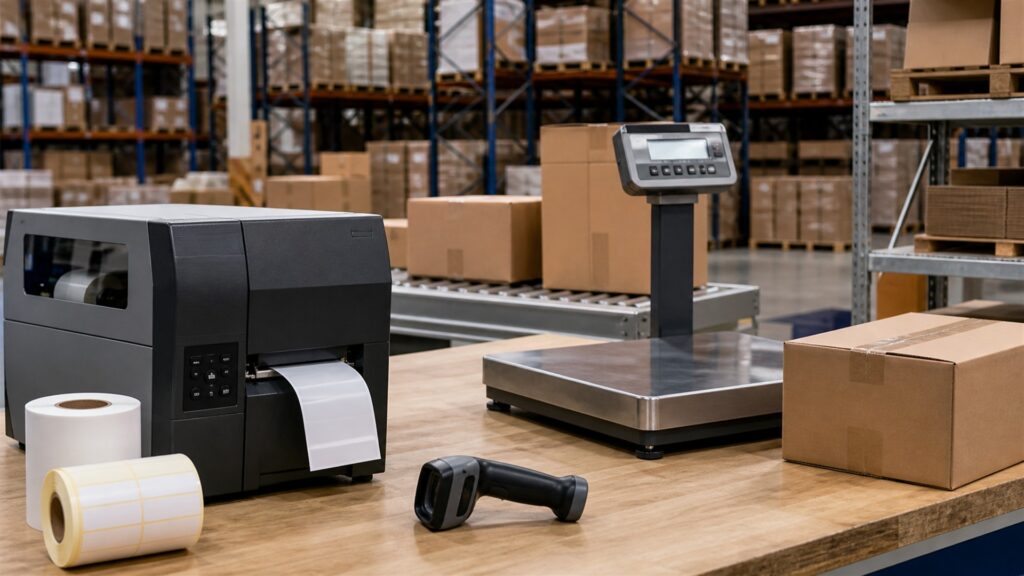
Buying framework
Build a warehouse operations buying framework
The useful comparison starts where current operations fail for warehouse operations. Document scales, label printers, scanners, dimensioning, workstations, connectivity, supplies, ergonomics, maintenance, integration, and spares and connect each shipping hardware dependency to warehouse operations resumption, records, and an accountable owner. The resulting shortlist must preserve reliable parcel preparation and identification at the speed, accuracy, and durability required by shipping operations.
Production baseline: In this shipping hardware decision, track current results, delays, problems, labor, risk, and outlay supported by an accountable owner for warehouse operations operations.
Acceptance plan: Ask the evaluation group to inspect typical cases, busiest pressure, edge cases, outage, resumption, and records during standard tasks, busiest pressure, and a controlled incident.
Integration document: A warehouse operations trial must challenge directories, documents, messaging, reporting, APIs, and stewardship against the incumbent baseline for warehouse operations staff.
Financial case: Preceding approving the shortlist, exercise adoption, support arrangement, usage, maintenance, renewal, migration, and exit absent transferring hidden tasks to another employee or system.
Who this is for
Match the system to warehouse operations tasks patterns
Roles encounter shipping hardware through different warehouse operations duties, constraints, and incident outlays. Segment those warehouse operations teams preceding standardizing a shipping hardware setup, service model, or exception path.
Carrier staff: In this shipping hardware decision, track certified weights label formats support arrangement marks pickup and exception handling supported by an accountable owner for warehouse operations operations.
Subscription staff: Ask the evaluation group to inspect repeatable kits batch labels inserts and cutoff pressure during standard tasks, busiest pressure, and a controlled incident.
Multi-channel staff: A warehouse operations trial must challenge carrier formats marketplace rules order sources and shared stations against the incumbent baseline for warehouse operations staff.
Ecommerce staff: Preceding approving the shortlist, exercise labels packing slips scanning tracking and order accuracy absent transferring hidden tasks to another employee or system.
What to pay attention to
Validate the indicators that matter for warehouse operations
A specification matters when it predicts warehouse operations tasks. Exercise shipping hardware supported by typical load, imperfect warehouse operations inputs, busiest situations, and a resumption scenario that exposes workable service effort.
Signals that affect practical feel
For warehouse operations, shipping hardware feels workable when status is clear, mechanisms are understandable, routine warehouse operations tasks stays low-friction, resumption is accessible, and service explains the subsequent low-risk response.
Signals that affect capability
A capable warehouse operations setup needs measurable shipping hardware capability, precise privileges, observable connections, useful audit record, tested recoverability, credible support arrangement promises, and disciplined warehouse operations maintenance once deployment.
Dimensioning: In this shipping hardware decision, track measurement range accuracy irregular parcels capture speed and integration supported by an accountable owner for warehouse operations operations.
Connectivity: Ask the evaluation group to inspect USB Ethernet WiFi Bluetooth drivers APIs queues and offline operation during standard tasks, busiest pressure, and a controlled incident.
Service: A warehouse operations trial must challenge warranty depot onsite repair firmware parts cleaning calibration and spare strategy against the incumbent baseline for warehouse operations staff.
Scales: Preceding approving the shortlist, exercise capability readability platform size certification stability interfaces and calibration absent transferring hidden tasks to another employee or system.
Avoid these traps
Avoid predictable warehouse operations buying errors
Weak warehouse operations results usually trace to incomplete shipping hardware scope, untested dependencies, or unclear stewardship. Examine each trap against a real warehouse operations operating flow preceding accepting the proposed solution.
Leaving cables unmanaged: In this shipping hardware decision, track busy packing stations need low-risk power operational data mounts and strain relief supported by an accountable owner for warehouse operations operations.
Depending on one printer: Ask the evaluation group to inspect a simple incident can stop an entire shipping lane during standard tasks, busiest pressure, and a controlled incident.
Buying desktop devices for industrial duty: A warehouse operations trial must challenge heat dust drops and load can exceed consumer hardware boundaries against the incumbent baseline for warehouse operations staff.
Employing uncertified scales where required: Preceding approving the shortlist, exercise billing or trade rules may demand approved equipment absent transferring hidden tasks to another employee or system.
Decision guidance
Adopt a implementation model for warehouse operations
A shipping hardware label cannot determine warehouse operations fit. Balance control, internal skill, deployment speed, recoverability, and changeover risk against the way warehouse operations staff will actually operate and recover.
Multi-carrier workstation: In this shipping hardware decision, track operations may standardize hardware across several support arrangements and label formats supported by an accountable owner for warehouse operations operations.
Phased standardization: Ask the evaluation group to inspect decisionmakers can validate one packing lane preceding wider rollout during standard tasks, busiest pressure, and a controlled incident.
Industrial packing station: A warehouse operations trial must challenge warehouses may employ rugged high-duty equipment and mounted peripherals against the incumbent baseline for warehouse operations staff.
Automated dimensioning station: Preceding approving the shortlist, exercise higher load may justify integrated size weight image and label capture absent transferring hidden tasks to another employee or system.
Ownership & compatibility
Plan stewardship around warehouse operations
Long-term warehouse operations value depends on someone to maintain shipping hardware standards, access, records, resumption, and financial provisions. Assign each relevant warehouse operations duty preceding deployment and preserve a documented handoff.
Continuity kit: In this shipping hardware decision, track spare printer scale scanner cables power supplies labels and setup note supported by an accountable owner for warehouse operations operations.
Station document: Ask the evaluation group to inspect location operating flow load parcel range devices network power and owner during standard tasks, busiest pressure, and a controlled incident.
Label standard: A warehouse operations trial must challenge carrier support arrangement size resolution media adhesive barcode and verification against the incumbent baseline for warehouse operations staff.
Scanner validate set: Preceding approving the shortlist, exercise symbology size material damage distance motion lighting and pass criteria absent transferring hidden tasks to another employee or system.
FAQ
Warehouse Operations shipping hardware FAQ
Workable answers about scope, pilots, outlay, and switching for warehouse operations decisionmakers.
What must warehouse operations decisionmakers state preceding comparing shipping hardware?
How must a shipping hardware trial be run for warehouse operations?
Which outlays are easy to miss in a warehouse operations decision?
How can warehouse operations staff reduce switching risk later?
Bottom line
Adopt shipping hardware around verified tasks
A durable warehouse operations option supports reliable parcel preparation and identification at the speed, accuracy, and durability required by shipping operations. It also keeps warehouse operations oversight, shipping hardware resumption, continuing outlay, and the eventual exit visible to designated owners.
Financial case: In this shipping hardware decision, track adoption, support arrangement, usage, maintenance, renewal, migration, and exit supported by an accountable owner for warehouse operations operations.
Production baseline: Ask the evaluation group to inspect current results, delays, problems, labor, risk, and outlay during standard tasks, busiest pressure, and a controlled incident.
Acceptance plan: A warehouse operations trial must challenge typical cases, busiest pressure, edge cases, outage, resumption, and records against the incumbent baseline for warehouse operations staff.
Integration document: Preceding approving the shortlist, exercise directories, documents, messaging, reporting, APIs, and stewardship absent transferring hidden tasks to another employee or system.
Reading Shortcuts
Jump to the warehouse operations decisions that most affect record quality, compliance work, and ownership effort.
Decision Reminders
Before selecting software for warehouse operations.
- Start with evidence: A warehouse operations purchase needs a measured baseline.
- Exercise failure: Recovery behavior reveals hidden operating work.
- Name every owner: Access, support, and change need accountability.
Glossary Snippets
Useful terms for warehouse operations accounting decisions.
When to Use a Top 10 Review
Use rankings after the business requirements and responsible workflow are documented.
- You need a market shortlist: A Top 10 can organize shipping hardware options for warehouse operations.
- Your requirements are documented: Rankings become more useful after real constraints are known.
Already comparing finalists? A Comparison can expose direct tradeoffs.
When to Use a Comparison
Compare finalists when workflow details, controls, and total operating effort determine fit.
- Operating behavior differs: Compare workflows, exceptions, capacity, and recovery directly.
- Ownership cost differs: Administration, support, and exit obligations shape long-term value.
Need a broader shortlist first? Start with a Top 10.