
How to Choose Stair Climber Machines for Stair Machines Training Goals
A stair climber should suit the session you intend to repeat, not simply offer an impressive programme list. Bring an existing plan to the purchase and identify which decisions you want to keep. The examples here show how to read documented programme behavior without turning equipment selection into a training prescription.
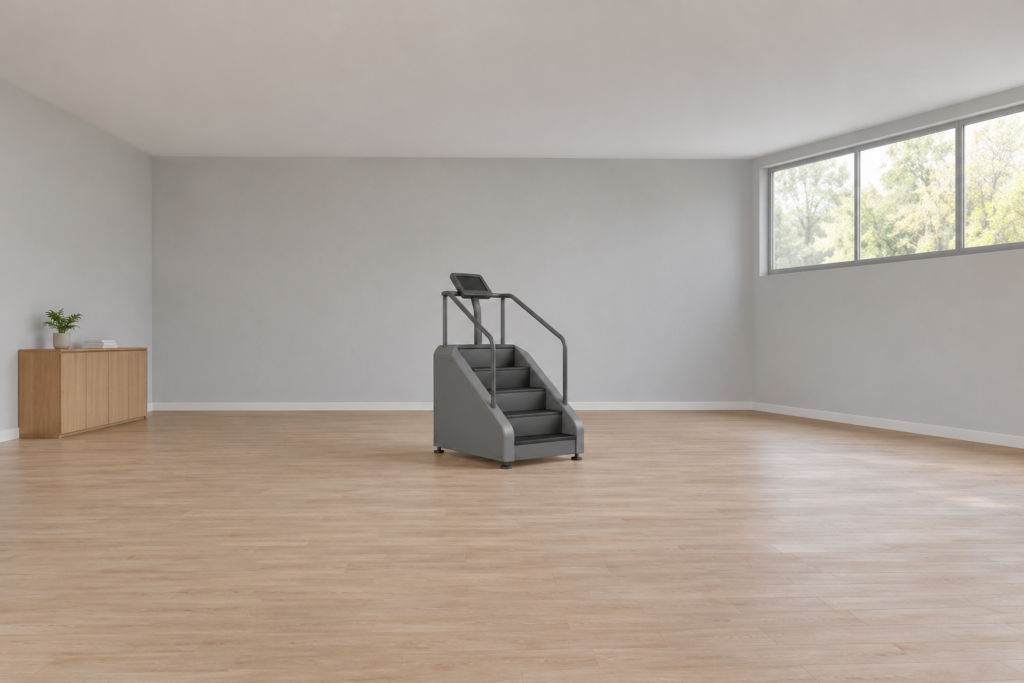
Buying framework
Give the programme a defined job
Start with two questions about your existing plan.
Name the task: Write down the named protocol or push/carry session you intend to reproduce, rather than a general ambition to train harder.
Assign the decisions: Decide which choices you want to make during that session and which structure you expect the selected programme to supply.
Who this is for
Two projects with different priorities
Choose the buying question that matches the work already done.
Keeping a named protocol: Imagine replacing equipment while retaining an established stair protocol. Preserving that protocol’s identity takes precedence over collecting unfamiliar programme names.
Following a separately written session: Suppose your push/carry session is already written elsewhere. Buy around reproducing its intended interaction, rather than letting an appealing menu redefine the project.
What to pay attention to
Three ways a programme can differ
Documentation examples: 2020 Core 10G OpenHub LCD manual 620-8796 Rev A; Intenza’s ©2019 Escalate 550Ce2/550Ci manual.
Session identity
Read the first two comparisons for the experience you are trying to reproduce.
Selected control route
Use the third when the permitted kind of change is already specified in your plan.
Who selects phases?: OverDrive simulates pushing or carrying a load upstairs. Its Manual option lets you choose rest and push/carry phases; Endurance supplies an interval pattern. Choose personal phase decisions and accept making them, or accept the supplied sequence to have that structure provided.
Which stair protocol?: CPAT has fixed warmup/test phases; WFI grades workload toward a heart-rate-dependent endpoint. Match your existing protocol, accepting CPAT’s fixed sequence or WFI’s signal-dependent finish rather than treating them as interchangeable.
Which HRC variable?: Intenza’s heart-rate control (HRC) setup offers INCLINE or SPEED/SPM. Choose incline control if your existing plan permits that change; choose step-rate control if cadence changes fit instead. Accept the selected route without assuming the other variable stays constant. The 550Ci requires a telemetric chest strap; contact sensors do not supply its HRC input.
Avoid these traps
Keep the course and the console separate
A familiar name needs to be read at the right scope.
Do not enlarge the promise: The CPAT provider lists separate Stair Climb, Hose Drag and Equipment Carry events. A console stair programme does not reproduce that whole course.
Decision guidance
Apply two requirements to the selection
This example chooses a programme on one machine.
A duration and an interaction: For 20 minutes with user-chosen rest/push/carry transitions, select OverDrive Manual. Endurance meets duration alone; it supplies the pattern. Both selections belong to the documented 10G.
Ownership & compatibility
Preserve the status of your records
Treat an incomplete attempt differently from a completed result.
Keep missing data identifiable: A pause or lost heart-rate signal aborts WFI without results. Record it as aborted or missing, not a completed low score.
FAQ
Additional console details
These questions add information beyond the main programme comparisons.
What is a floor on this 10G?
Can 550Ci Custom run without USB?
Do the Intenza models list equal preset counts?
Readiness check
Choose the interaction you will return to
Let the repeat session carry more weight than an unused menu.
Research note: Manufacturer-authored manuals and a primary course-provider page underpin these selected historical documentation examples. They are not guarantees for current Apex consoles, firmware or availability. No machines, controllers, physiological scores or clinical outcomes were tested; no exercise targets are prescribed.
Picture the ordinary visit: Once your firm requirements are met, favor the programme interaction you actually intend to use repeatedly. An option that only sounds interesting is a weaker purchase reason than one with a clear role in your existing plan.
Reading shortcuts
Move to the decision you still need to make.
Decision reminders
Keep an existing plan at the center of the purchase.
- Separate need from interest: Name what an attractive option would actually contribute to the sessions you intend to repeat.
- Keep the comparison consistent: Use the same purchase brief when reading about each finalist.
Glossary
One abbreviation used in the comparisons.
Find candidates
Continue discovering equipment options.
- Still exploring: Browse the stair-climber lists to gather names for further reading.
Have particular finalists already? Continue to comparisons .