
How to Choose Stair Machines for Quiet Operation
A quiet stair machine is one that stays acceptable in the room where someone else is sleeping, working or watching television. Listen for both sound through the air and repeated impacts through the floor. A compact hydraulic stepper can still squeak or knock, while a revolving staircase adds tread, drive and ventilation noise.
Start with your workout duration and the most sensitive listener location. Compare machines during a normal warmed-up session, with your usual shoes and the intended floor. Keep a workable home-trial policy in the decision if a showroom cannot reproduce your building.
Buying framework
Choose for the room that needs to stay quiet
Identify the disturbance: Is the problem machinery beside a desk, thumping below the room, or a sleeping household member? Write down the workout time and listening location before deciding what quiet means.
Separate sound from vibration: A mechanical hum and a repeated floor impact are different problems. A machine can sound unobtrusive beside the user yet transmit an irritating rhythm into another room.
Match the session length: Check use-duration and cooling instructions. A short cold demonstration will not show how cylinders, pivots or a rotating step assembly behave during your usual session.
Check return protection: Ask whether an assembled, used machine can be returned, who pays freight and whether packaging is required. A quiet showroom result is not a promise about an upstairs floor.
Who this is for
Compare mechanisms, not quiet labels
Hydraulic mini stepper: Consider one for short sessions when its pedal motion and balance demands suit you. Listen for cylinder noise, pivot squeaks and pedal stops; confirm cooling requirements and replacement-part availability.
Full-size pedal stepper: Fixed hand support may improve control, but the pedal linkage, resistance system and frame can contribute sound. Test the exact model rather than transferring expectations from another machine with similar pedals.
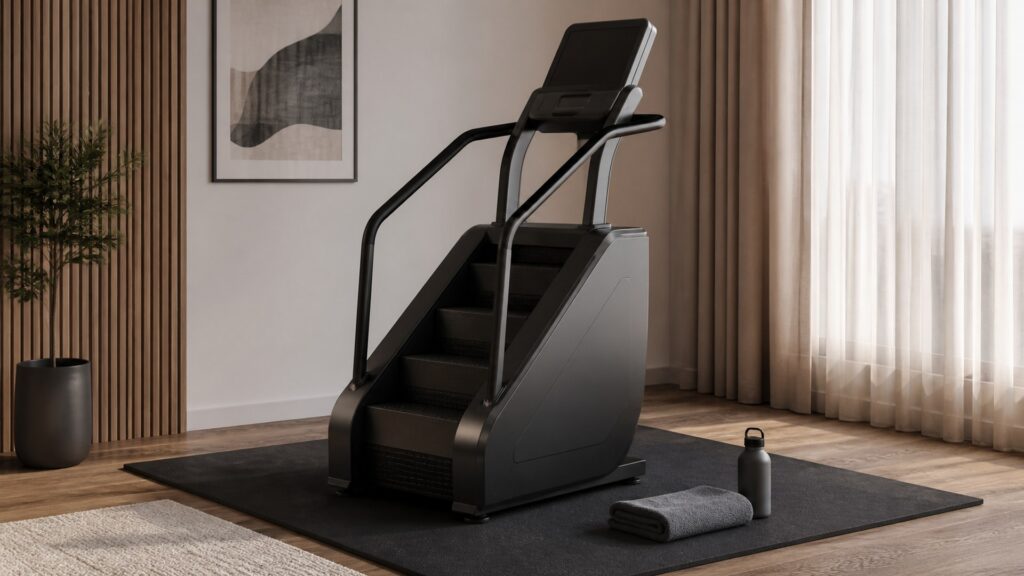
Revolving staircase: Consider this for continuous climbing only if its tread rhythm and drive noise work in the room. Listen at the slowest usable rate and your usual cadence, including acceleration and stopping.
Connected console: Headphones help with classes and music. They do not reduce moving-step noise or floor vibration, and beeps or cooling fans may remain audible.
What to pay attention to
Specifications that help a noise decision
Sound measurements: Ask for the load, step rate, measurement distance, floor, room and warm-up duration behind any dB claim. Values from different setups cannot reliably rank competing machines.
Pedal and tread travel: Check whether your normal stroke repeatedly hits an end stop. A range that forces a hard finish can create noise even when the resistance mechanism is smooth.
Leveling and floor contact: Look for stable contact at every support point and the prescribed leveling procedure. A heavier frame is not a guarantee against vibration through a flexible floor.
Service information: Find the manual, approved lubrication points, wear parts and local support. A quiet new unit is less useful if a worn pivot or drive component cannot be serviced.
Avoid these traps
Avoid fixes that hide the problem
Do not judge from a video alone: Microphone distance, automatic audio processing and background music change the recording. Use sound demonstrations to identify possible noises, not to compare loudness precisely.
Do not stack soft mats: A compatible mat can protect flooring and may help selected vibrations. Excessively soft support can let the machine rock; follow the maker instead of improvising an unstable base.
Do not oil every squeak: Pivots, cylinders and drive parts have different care requirements. Identify the source and follow the exact manual; random lubricant can damage surfaces or conceal a fault.
Decision guidance
Run a repeatable listening test
Set a baseline: Record the room, floor, mat, shoes, user, step depth and cadence. Mute entertainment and remove rattling bottles or loose accessories.
Warm up within permitted use: Compare the first few minutes with normal working conditions. Use easy and usual working rates, plus a harder rate only if appropriate. Stay within the operating and cooling limits.
Move the listener: Have someone listen beside the machine, outside the room and in the affected adjacent or downstairs space. Keep the cadence similar while the listener changes position.
Record what failed: Note hum, squeak, click or impact separately and where each is heard. A short recording helps document later changes but is not a calibrated dB test.
Ownership & compatibility
Keep it quiet as it ages
Start with correct assembly: Check the prescribed fasteners, leveling and clearances according to the manual. Keep loose objects away from moving parts and the machine footprint.
Follow model-specific care: Sunny identifies relevant parts in its stepper lubrication guidance. Its NO. 012 SMART manual also notes cylinder noise when hot and requires cooling between uses. Those instructions apply to that equipment.
Respond to a new sound: Stop for grinding, instability, damaged parts or unreliable movement. Do not assume a worsening knock is harmless just because some operating noise is expected.
FAQ
Quiet stair machine FAQ
Which stair machine is quietest?
Will a mat stop downstairs noise?
Why does a hydraulic stepper get louder after a few minutes?
Can I compare phone dB readings?
What should the return policy cover?
Bottom line
Choose the machine that passes your home test
Buy when: The intended session stays acceptable at the sensitive listening location, the machine remains stable, and the maintenance and return terms are workable.
Change the location or format when: The floor carries repeated impacts despite correct installation. More console features will not solve a building-transmission problem.
Reading Shortcuts
Use the sections below to check fit, practical constraints and ownership before choosing.
Decision Reminders
Keep these checks in view when comparing finalists.
- Listen from the affected room, not only beside the machine.
- Compare warmed operation within the permitted use limits.
- A floor mat cannot guarantee quiet downstairs.
- Keep home-trial and return terms in writing.
Glossary Snippets
Terms that help compare the actual machines.
When to Use a Top 10 Review
Use rankings to find candidates after defining your space, fit and session requirements.
- Look for: Exact-model dimensions, control details and ownership support.
- Then verify: The manufacturer’s manual and a suitable demonstration.
Evidence: Sunny stepper care guidance and NO. 012 SMART manual, p. 6 support the model-specific lubrication and hot-cylinder examples. No independent sound measurements are claimed. Sources reviewed September 24, 2026. No hands-on product test is claimed.
When to Use a Comparison
Use a direct comparison after two or three models meet the basic requirements.
- Fit check: Listen from the affected room, not only beside the machine.
- Cost check: Include delivery, setup, wear parts, service and any subscription.
Keep the exact model and warranty terms alongside the quote so similar names do not hide different specifications.