
How to Choose Sun Protection for Travel Skincare
Travel changes sunscreen demand through climate, altitude, water, long transit, and time spent outside—not merely through liquid limits. A useful travel plan calculates coverage and renewal before choosing the smallest container.
Destination purchases can be necessary, but unfamiliar labeling, language, formula, or availability introduces risk. Packing enough trusted product and protecting it from heat reduces avoidable surprises.
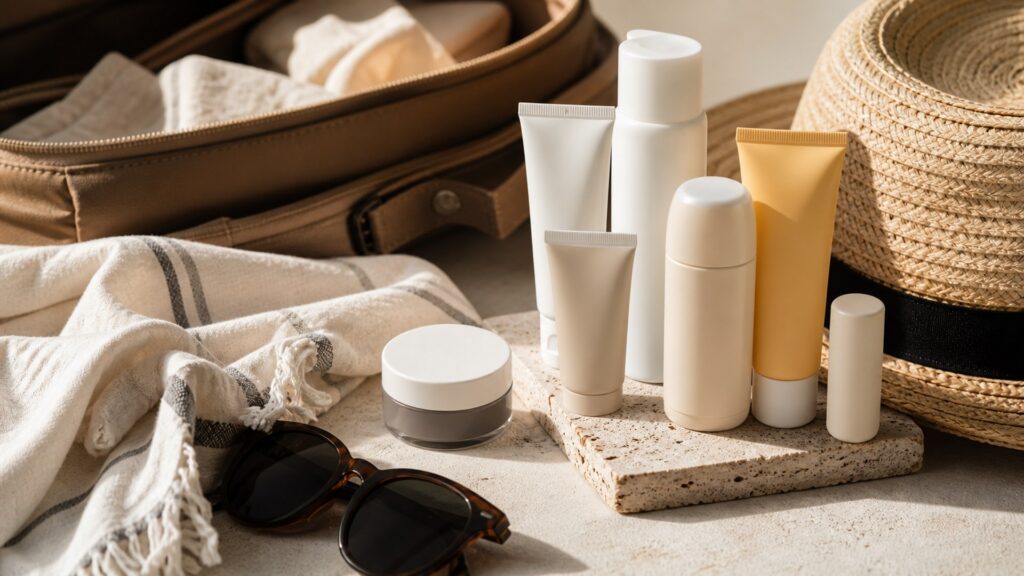
Buying framework
Define the sun protection routine before comparing products
Use the setting, frequency, and skin priorities to narrow sun protection logically.
Start with the use case: List destination exposure, planned activities, clothing, and access to shade.
Rank the practical tradeoffs: Estimate face and body applications for the trip plus a reasonable buffer.
Check instructions early: Check transport, heat, leakage, and destination-repurchase constraints.
Use profiles
Match sun protection to the person and pace
Three shopper profiles expose different priorities for sun protection.
Routine-focused buyer: A carry-on traveler needs secure packages without shrinking below realistic volume.
Performance-focused buyer: A beach traveler should combine water-resistant sunscreen with clothing and shade.
Occasional or flexible user: A city traveler needs portable renewal for walking, outdoor dining, and transit windows.
Specifications
Read the specifications through a sun protection lens
Translate technical language into visible routine benefits.
Handling lens
Calculate total exposed-body use separately from facial use.
Ownership lens
Place one portable container where sightseeing or transit cannot separate it from the user.
Broad-Spectrum Labeling: Package volume must be interpreted as applications, not days.
Labeled Spf: Locking closures and secondary bags limit luggage leaks.
Water-Resistance Duration: Heat exposure in cars or on beaches can threaten storage conditions.
Finish And Wearability: Local labels and directions may differ from the familiar home product.
Reapplication Practicality: Stick portability helps targeted renewal but still requires complete overlapping coverage.
Common mistakes
Avoid shortcuts that undermine sun protection
A good purchase can still disappoint when selection or use is based on the wrong assumption.
Buying from one metric: Do not ration sunscreen to make a travel bottle last.
Skipping compatibility checks: Avoid experimenting with a reactive new formula on departure day.
Ignoring post-use care: Never leave the entire supply in checked baggage or an overheated vehicle.
Decision guidance
Choose the simplest option that covers the real need
Use these decision rules to finish a shortlist for sun protection.
Choose the basic format when: Pack adequate familiar product when destination access is uncertain.
Choose the flexible format when: Buy locally when supply is reliable and labeling can be understood.
Pause before upgrading when: Use clothing and shade to reduce—but not excuse—the reapplication burden.
Ownership & compatibility
Plan for clean, repeatable ownership
The best value remains convenient after the first few uses.
Consumables and replacements: Inspect seals after pressure and temperature changes.
Cleaning and storage: Keep products shaded and follow their storage directions.
Routine compatibility: Photograph labels and expiration information before discarding outer packaging.
FAQ
How to Choose Sun Protection for Travel Skincare FAQ
Practical answers about choosing and owning sun protection for sun protection.
What matters most when choosing sun protection for sun protection?
Is the most expensive option better for sun protection?
How should I compare two similar sun protection options?
Bottom line
Buy for repeatable sun protection results
A focused shortlist is easier to own and use well.
Prioritize fit: Pack for applications, not an arbitrary travel size.
Verify the limits: Protect the supply from heat, loss, and leakage.
Count ownership costs: Reduce exposure demands with clothing, timing, and shade.
Reading Shortcuts
Jump to the key sun protection decisions.
Decision Reminders
Keep these checks beside your shortlist.
- Check broad-spectrum labeling: Follow the label and reapply at the stated intervals, especially after swimming or sweating.
- Check labeled SPF: Use enough product to cover exposed skin rather than relying on a thin cosmetic layer.
- Check water-resistance duration: Combine sunscreen with shade, clothing, and other sun-protective measures.
Glossary Snippets
Plain-language sun protection terms.
When to Use a Top 10 Review
Use a ranked list to identify a manageable set of strong candidates.
- You are still exploring: A ranked list can reveal the main formats and price tiers.
- You want a shortlist: Start broad, then confirm fit with this buying guide.
Have finalists? Use a Comparison.
When to Use a Comparison
Use a direct comparison when only a few candidates remain.
- Features are close: Side-by-side details clarify meaningful differences.
- Prices overlap: Compare ownership value, not only purchase price.
Still exploring? See the Top 10.