
How to Choose Swimming Gear for Open Water Swimming
Open water changes with weather, temperature, currents, waves, visibility, traffic, water quality, access, and distance from help. Equipment can support warmth, sighting, visibility, carrying, or data collection within limits. Gear cannot make unsafe conditions acceptable. The first purchase decision is therefore whether the planned swim has suitable conditions, supervision, competence, permissions, and exit options.
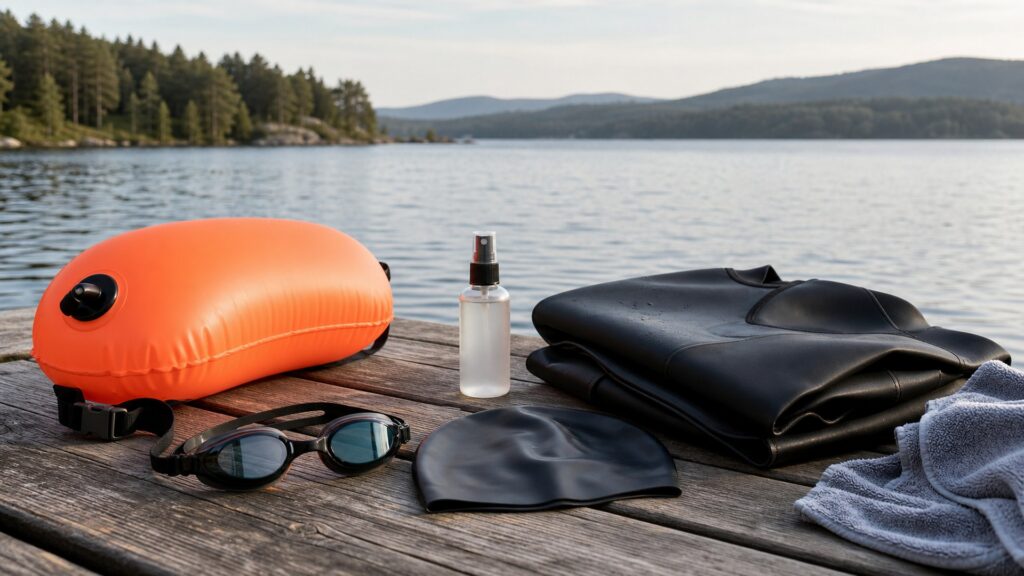
Use this checklist: 1. assess conditions and local warnings; 2. arrange appropriate supervision and a check-in plan; 3. identify exits and turnaround points; 4. confirm water and event rules; 5. fit the wetsuit for shoulder and neck movement; 6. select goggle tint and a bright cap; 7. understand tow-float limitations; 8. test chafe interfaces; 9. declare or verify wearables; 10. pack warm, dry exit supplies.
Buying framework
Conditions and supervision come before equipment
No product choice authorizes entry when weather, water, access, health, skill, or support is unsuitable.
1. Build a conditions gate: Check current weather, water temperature, wind, waves, currents, tide where applicable, visibility, water quality notices, boat traffic, wildlife advisories, access legality, and official closures. Establish explicit cancellation and turnaround decisions before arriving.
2. Define supervision and communication: Choose an appropriate supervised venue, organized group, escort, lifeguarded area, or other plan suited to the swim and local guidance. Share route, timing, signals, check-in, emergency contacts, and the response to separation or changing conditions.
3. Map entries, exits, and warm shelter: Inspect permitted entry surfaces, shore breaks, ladders, docks, alternate exits, sharp or slippery areas, distance from assistance, vehicle or shelter access, and dry clothing. Never let a planned distance remove a necessary early exit.
4. Match wearables to rules: Confirm wetsuit, cap, tow-float, watch, heart-rate device, timing chip, light, whistle, and other equipment requirements or prohibitions with the venue or organizer. World Aquatics events may require declaration of approved wearables.
5. Rehearse the whole system: Use a controlled, appropriate setting to evaluate fit, sighting, cap visibility, breathing, shoulder movement, neck contact, tow line, chafe, signals, removal, and exit warming. A successful rehearsal does not override worse conditions later.
Who this is for
Compare open-water product families
Every family serves a limited environmental or workflow role and carries a fit, rules, or false-confidence drawback.
Open-water wetsuit — best suited for permitted thermal support: Key criteria are event temperature rules, thickness distribution, shoulder mobility, neck seal, torso and limb length, zipper, cuffs, buoyancy profile, and removal. Drawbacks include chafing, overheating, restricted movement, sizing difficulty, and no guarantee against cold-water risk.
Wide-view goggles — best suited for sighting and variable light: Compare face seal, bridge, field of view, tint, polarization claims, anti-fog care, strap security, and cap interaction. A broad lens can still leak, fog, distort, or provide the wrong light transmission for changing weather.
Bright cap — best suited for added surface visibility: Inspect color contrast for local backgrounds, material, size, hair volume, edge pressure, and organizer requirements. A cap may be difficult to see in waves, glare, darkness, or traffic and is not a rescue or flotation device.
Tow float — best suited for permitted visibility and carrying roles: Check buoyancy statement, intended use, belt and leash, drag, closure, chamber design, visibility, capacity, and local rules. Many tow floats are not certified life jackets, can snag or separate, and must not create rescue expectations.
Wearable and anti-chafe system — best suited for data or friction management: Evaluate event approval, declaration, band security, sensor placement, skin compatibility, wetsuit and timing-chip interfaces, and removal. Electronics can fail or distract; topical products may irritate, damage materials, or violate maker or event instructions.
What to pay attention to
Translate open-water details into bounded functions
Fit and official rules matter more than a product's adventure language.
Wetsuit thickness and zoning: Read thickness by torso, shoulder, arm, hip, and leg rather than one headline number. Compare the current venue or event temperature rules, maker size chart, permitted construction, expected conditions, and individual tolerance without predicting safety.
Neck, shoulder, and cuff fit: Check neck contact through rotation and sighting, shoulder resistance through recovery, torso folds, underarm seams, cuff seal, ankle and wrist circumference, zipper base, and removal tabs. Dry fit alone may not reveal every water interface.
Goggle tint and field of view: Plan for sun angle, clouds, glare, dark water, buoys, shoreline landmarks, and escort signals. Consider a known backup tint, but do not claim polarization, mirror finish, or lens color eliminates visibility limitations.
Cap contrast and retention: Compare bright colors against the actual water, sky, shore, boat, and event-cap requirements; check material stretch, hair fit, goggle straps, and double-cap rules. Visibility remains conditional on distance, waves, light, and observer attention.
Tow-float chamber and leash: Inspect valve, seams, chambers, dry-bag closure, belt, tether length, quick-release design if supplied, load statement, and repair guidance. Confirm whether it is permitted and what safety certification, if any, the exact model claims.
Wearable approval and declaration: For World Aquatics open-water competition, consult the current approved list and declaration process rather than assuming any watch is legal. Local events can differ; verify timing chips, watches, sensors, audio, communications, and data transmission separately.
Care and replacement economics: Price the complete system with return restrictions after water use, suit repair options, zipper and seam service, spare goggles and cap, anti-chafe compatibility, tow-float parts, batteries, and shipping. Salt, sand, sunscreen, heat, and storage increase maintenance demands.
Avoid these traps
Avoid open-water gear overconfidence
Equipment failure is serious, but believing equipment controls the water is a deeper purchase error.
Using a wetsuit as entry permission: A permitted suit can alter warmth and buoyancy yet cannot neutralize cold shock, hypothermia, heat, current, waves, distance, illness, or poor judgment. Conditions, supervision, local guidance, and personal readiness remain the gate.
Calling a tow float a life jacket: Unless the exact product carries an applicable certification and is used within its instructions, do not represent it as rescue equipment. Even a visible buoy can detach, leak, snag, drift, or be missed.
Choosing dark lenses for every start: A mirrored or smoke lens may suit glare but reduce useful visibility in cloud, shade, dawn, or murky water. Pack and rehearse a legal alternative when conditions may change.
Ignoring neck and timing-chip friction: Wetsuit collars, zippers, cap edges, goggle straps, watch bands, tow belts, and ankle chips can create repeated contact. Test the complete arrangement and confirm any lubricant is compatible with skin, gear, and event rules.
Trusting electronics as supervision: Route traces, heart-rate data, alerts, or location features can fail, lose power, lose signal, or be misunderstood. A watch does not replace suitable human oversight, communication, navigation judgment, or an exit plan.
Decision guidance
Run a go/no-go gear rehearsal
The open-water process begins with cancellation criteria and ends with a warm, accounted-for exit.
Write the no-go card: List official closures, unsafe weather or water thresholds supplied by authoritative local guidance, loss of supervision, illness or symptoms, missing access, equipment damage, and any condition that cancels or shortens the swim.
Inspect the route from shore: Confirm legal entry, sighting landmarks, boat lanes, buoys, current indicators, alternate exits, escort path, and warm shelter without entering. Conditions observed today override a successful visit or product test from another day.
Dress in sequence: Apply only compatible anti-chafe products as directed, position timing chip or approved wearable, close the wetsuit without overstretching, fit goggles, add required cap, attach permitted float, and verify communication signals with supervision.
Complete a conservative rehearsal: In a suitable supervised setting, assess shoulder movement, neck contact, breathing, sighting, cap retention, tow drag, turn-around decision, exit footing, suit removal, and warming supplies. Stop when the planned boundary or any concern appears.
Audit after exit: Account for every swimmer, record actual conditions, inspect gear, change into warm dry layers, and follow local response guidance for concerning symptoms. Rinse and dry equipment later without allowing the checklist to delay immediate needs.
Ownership & compatibility
Maintain gear without confusing readiness and safety
Inspection protects equipment functions, while current conditions still decide whether the swim proceeds.
Inspect neoprene and closures: Check the wetsuit inside and out for nail cuts, seam separation, thinning, zipper damage, pull-cord issues, cuff tears, neck wear, and persistent odor. Use the maker's repair and storage process rather than undocumented glue.
Protect lenses and bright surfaces: Rinse and handle goggles under their coating instructions, inspect strap and bridge, and wash or dry caps as directed. Replace faded, torn, distorted, or unreliable items while remembering new gear does not assure visibility.
Service the tow system: Inflate and inspect the float, valve, seams, chambers, closure, belt, buckle, leash, and attachment points according to its manual. Keep required flotation or rescue equipment distinct from an uncertified visibility float.
Rinse salt, sand, and residue: Clean wetsuit, zippers, goggles, cap, belt, watch, timing-chip strap, and bag using compatible methods, then dry away from prohibited heat or sun. Open closed chambers and pockets only as instructed.
Refresh official information: Before a new venue or event, review local hazards, water-quality notices, organizer instructions, wetsuit thresholds, cap requirements, wearable approval and declaration, tow-float rules, and the CDC's current open-water safety guidance.
FAQ
Open-water swimming gear FAQ
Nine answers keep conditions, supervision, and gear limitations in the correct order.
Does a wetsuit make cold open water safe?
How should an open-water wetsuit fit?
Which goggle tint suits open water?
Why are bright swim caps recommended?
Is a tow float a life-saving device?
Can a watch be worn in open-water races?
How can wetsuit neck chafing be reduced?
What should be packed for the exit?
Can gear make unsafe open water acceptable?
Bottom line
Let the water gate overrule the shopping list
Open-water equipment supports limited functions only after the swim plan is appropriate.
Conditions proof: Check current weather, water, quality notices, traffic, access, and exits.
Supervision proof: Share route, signals, check-in, separation response, and cancellation triggers.
Fit proof: Rehearse wetsuit movement, goggles, cap, float limits, wearables, and chafe interfaces.
Exit proof: Prepare accounting, warm dry supplies, communication, and current response guidance.
Open-Water Go/No-Go Route
Move through the open-water swimming decision from conditions to drying.
Conditions and Supervision Boundaries
Four practical boundaries for open-water swimming gear.
- Unsafe water stays unsafe: Equipment never grants entry permission.
- Supervision is a system: Share route, signals, exits, and response.
- Visibility has limits: Caps and floats can still be missed.
- Rules are event-specific: Verify wetsuits and declare wearables.
Open-Water Fit and Rule Terms
Terms used to compare open-water swimming equipment.
When an Open-Water Ranking Helps
Open rankings only after the open-water swimming fit and rule checks are written.
- Best suited for: Filter each family by the swimmer, venue, session, and open-water swimming job.
- Typical drawback: For open-water swimming, keep seal, drag, fatigue, storage, cleaning, replacement, and rule limitations visible beside attractive features.
Safety sources: CDC natural-water guidance and healthy swimming. No gear claim overrides local authorities, supervision, or conditions.
Compare Bounded Open-Water Systems
Compare the full open-water swimming kit, including backups and wet-item handling.
- Fit evidence: When evaluating open-water swimming, use permitted dry or water trials and the seller's return conditions; do not invent performance evidence.
- Ownership evidence: For open-water swimming ownership, check policy, material care, drying access, replacement availability, and dated delivered price.
Rule source: World Aquatics open-water wearable approval and declaration. Verify the exact event and current device list.