
How to Choose Tires & Wheels for Performance Handling Goals
Handling is not a single grip number. A tire that turns in sharply may be nervous in rain; a compound that produces one fast autocross run may overheat during a long session; a wider wheel may support the tread but create clearance or classing problems.
Define the maneuver and failure first: delayed steering, front push, rear instability, braking inconsistency, wheelspin, heat fade, or wet uncertainty. Record tire, wheel, alignment, pressure, temperature, surface, weather, and driver variation. Choose an approved matched system, then change one theme at a time. Verify full clearance, load, speed, brakes, TPMS, and event rules. Compare repeated runs or road evaluations under documented conditions, because a dramatic first impression is not the same as balanced, sustainable performance.
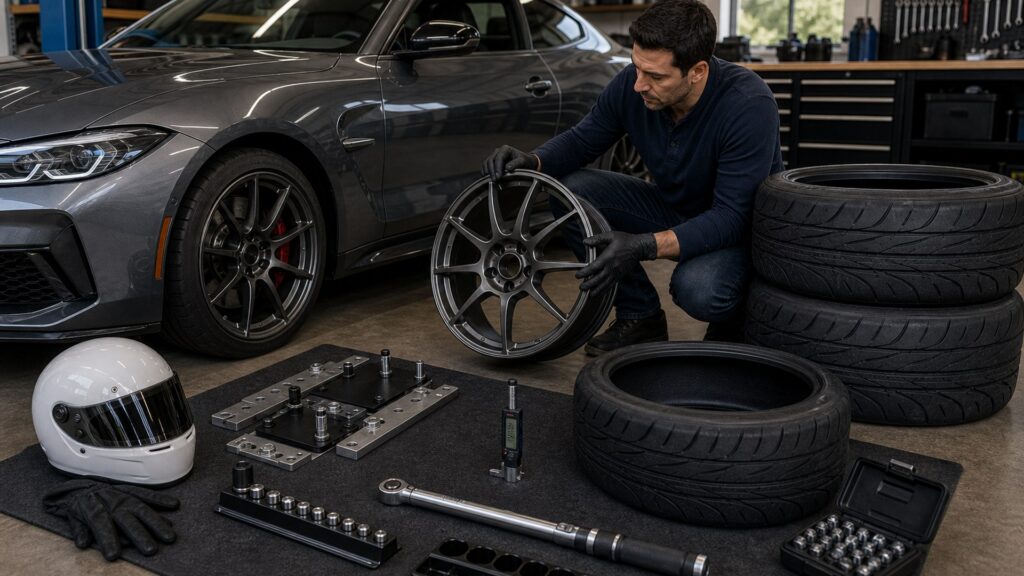
Buying framework
Turn a handling complaint into a measurable tire job
Steering response, balance, braking, traction, wet behavior, and heat need separate evidence and may point to different solutions.
Define the maneuver: Specify speed, corner type, braking or throttle phase, surface, weather, tire temperature, load, and whether the problem is transient or sustained.
Establish driver and vehicle baseline: Inspect tires, wheels, brakes, alignment, suspension, bearings, fluids, faults, pressure, temperature, and repeatability before modifying.
Select the limiting axle and mechanism: Use data and controlled testing to distinguish tire support, compound, temperature, pressure, alignment, damping, differential, or driver input.
Change one theme and retest: Keep matched conditions and preserve the prior setup so pressure, alignment, wheel, or tire effects remain attributable.
Who this is for
Match the package to performance duration and weather
Street drivers, autocross competitors, track users, and wet-climate enthusiasts need different warm-up, heat, tread, and replacement strategies.
Performance street drivers: Prioritize cold and wet behavior, braking, noise, wear, road-hazard tolerance, progressive response, legal use, and available replacement sizes.
Autocross drivers: Value rapid warm-up, transient response, legal class and size, pressure repeatability, launch grip, and performance across short separated runs.
Track-day drivers: Need sustained temperature control, braking support, stable hot pressure, sidewall and tread integrity, wet contingency, and consumable forecasting.
Mixed-weather enthusiasts: Choose a broader compound and tread window or dedicated seasonal sets rather than using warm dry grip beyond its supported conditions.
What to pay attention to
Handling specifications tied to a complete test condition
Section width and marketing class are incomplete without rim, load, pressure, temperature, alignment, surface, wear, and duration.
Vehicle Response
Turn-in, steering effort, lateral balance, braking, traction, ride, feedback, ABS, stability, and wet control.
Session Control
Temperature, pressure, heat cycles, wear, wheel strength and mass, alignment, clearance, rules, spares, and replacement.
Tire construction and compound: Compare exact size, approved rim, load, speed, casing, sidewall, tread, compound window, wet design, warm-up, heat tolerance, and wear.
Wheel width and stiffness: Use the tire maker’s rim range, desired tread support, mass, stiffness, offset, brake clearance, load rating, runout, and impact environment.
Pressure and temperature process: Start from approved guidance, measure consistently, track hot behavior and across-tread temperature where meaningful, and change pressure only with a defined test.
Alignment relationship: Camber, toe, caster, ride height, corner loads, compliance, travel, and tire wear must support the tire and maneuver without compromising street safety.
System and rule compatibility: Verify ABS, stability, AWD circumference, TPMS, speed display, brake cooling, fender coverage, event class, tire list, sound, and road legality.
Avoid these traps
Handling upgrades that make the car faster only once
Peak grip without temperature, balance, wet control, rules, and consumable planning can reduce repeatability or create abrupt behavior.
Buying the widest tire that fits visually: Width can add mass, drag, hydroplaning sensitivity, warm-up demand, steering load, rubbing, and poorer support on an unsuitable wheel.
Tuning balance with large pressure guesses: Pressure affects load, heat, stiffness, footprint, wear, and response; uncontrolled changes can hide alignment, damping, or driving problems.
Mixing performance categories across axles: Different compound, construction, temperature, tread, and wear can produce unexpected front-rear balance during braking, cornering, or rain.
Ignoring event class before purchase: Wheel width, diameter, offset, tire size, compound, treadwear grade, and modifications may change eligibility or competitive context.
Decision guidance
Choose the tire-wheel variable that addresses the measured limit
Spend on the mechanism that loses time or confidence, then verify balance over a complete street drive, run set, or session.
If steering response is delayed: Inspect pressure, wear, alignment, bushings, wheel support, sidewall, steering and damping before choosing a stiffer or wider tire.
If the tire overheats: Review driving, load, pressure, camber, compound, size, session length, cooling time, and vehicle balance rather than adding more tread width automatically.
If wet control is uncertain: Prioritize tread depth and evacuation, appropriate compound, pressure, matching, visibility, temperature, and conservative speed over dry-category prestige.
If performance varies run to run: Standardize warm-up, pressure, temperature, fuel, load, line, driver rest, and data before changing hardware.
Ownership & compatibility
Manage performance tires by sessions and condition
Mileage alone cannot describe heat cycles, temperature excursions, flat spots, graining, punctures, shoulder wear, or wheel impacts.
Keep a test sheet: Record tire and wheel, position, age, heat cycles, tread, pressure, temperature, alignment, weather, surface, times, balance, and driver notes.
Inspect between high-load uses: Check tread, shoulders, sidewalls, beads, punctures, pressure loss, wheels, valves, balance weights, rubbing, fasteners, brakes, bearings, and TPMS.
Retire by evidence: Use manufacturer limits, damage, wear, performance falloff, pressure retention, age, repairs, heat history, vibration, and event rules to end service.
FAQ
Performance handling tire questions
These answers cover width, wheel size, pressure, temperature, alignment, mixing, street use, wheel weight, and testing.
Do wider tires always provide more grip?
What wheel width is best for a performance tire?
How should performance tire pressure be set?
Do lightweight wheels improve handling?
How does alignment affect tire grip?
Can track-focused tires be used safely on the street?
Is it safe to mix different performance tires front and rear?
How should tire temperatures be interpreted?
What is the best way to test a handling change?
Bottom line
Performance handling is repeatable balance, not one peak grip event
Define the maneuver, control temperature and pressure, match tire and wheel geometry, and confirm the result across complete conditions and repeated runs.
Measure the deficiency: Separate transient response, balance, braking, traction, heat, and wet confidence.
Build the matched system: Coordinate tire, rim, wheel geometry, pressure, alignment, electronics, clearance, and rules.
Retest the duration: Judge street drives, autocross sets, or sessions—not a single favorable corner or first lap.
Reading Shortcuts
Move from the measured problem to a documented handling-balance plan that can be installed and verified.
Decision Reminders
Keep the complete handling-balance plan in view while comparing tires and wheels.
- Goal: Define maneuver and failure.
- Window: Compound, temperature, wet, duration.
- Wheel: Width, stiffness, mass, geometry.
- Setup: Pressure, alignment, balance.
- Rules: Class, road use, electronics.
- Test: Repeat under matched conditions.
Glossary Snippets
Terms that separate useful performance from apparent compatibility.
When to Use a Top 10 Review
Use a product roundup only after the required performance and handling-balance plan limits are known.
- Problem defined: The visibility or mobility failure is specific.
- Vehicle mapped: Interfaces and limits are documented.
- Format chosen: The correct product family is settled.
- Evidence available: Finalists can be compared on relevant tests.
Have finalists already? Open a Comparison for a closer tradeoff.
When to Use a Comparison
Compare finalists that solve the same defined handling-balance plan need on the same vehicle.
- Application: Both match the exact vehicle and function.
- Performance: Evidence addresses the operating problem.
- Integration: Mounting and system effects are understood.
- Ownership: Inspection and service demands are acceptable.
Need a broader field? Use a Top 10 to form a shortlist.