
How to Choose Towing, Trailers & Hauling for Cargo Security and Storage
Cargo security works when every layer supports the next. Physical barriers buy time, monitoring reports an event, records identify the property, and a response procedure turns information into action. Transport restraint remains a separate safety requirement.
Begin with the actual unattended locations and the easiest ways the trailer or cargo could leave. Then compare exact fit, mounting, corrosion resistance, key or app control, power, coverage, maintenance, storage conditions, and insurance requirements.
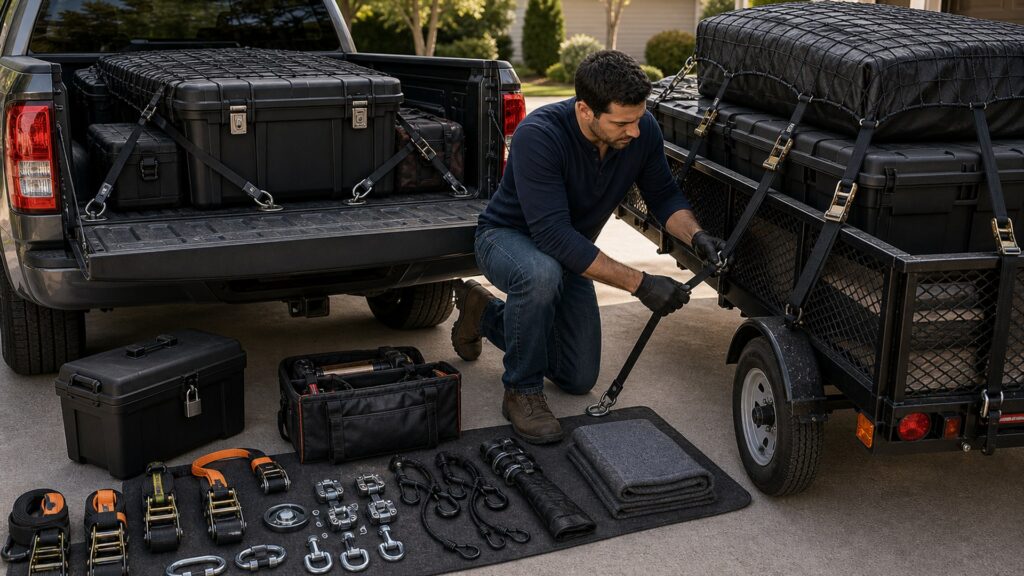
Buying framework
Design a complete chain of custody
Cargo security is not one lock. It combines identification, physical restraint, access control, concealment, monitoring, records, and storage practices matched to the value and mobility of the load.
Classify the loss scenario: List what is being protected, its replacement cost, operational impact, portability, resale appeal, identifying marks, and exposure at the yard, jobsite, fuel stop, hotel, ramp, and home. Separate theft protection from transport securement.
Map every access path: Inspect coupler, receiver, safety chains, doors, ramp, roof, windows, toolboxes, racks, spare carrier, wheel and axle access, and removable accessories. A premium door lock cannot compensate for an exposed hinge or detachable box.
Layer delay, detection, and recovery: Combine hardened locks or barriers with lighting, alarms, location reporting, cameras, inventory records, and recovery contacts. Make defeat noisy, slow, visible, and likely to produce useful evidence without creating an emergency-egress hazard.
Choose an appropriate storage site: Evaluate gate control, lighting, surveillance coverage, fencing, drainage, fire separation, storm exposure, access logs, hours, insurance terms, and whether the trailer can be anchored or boxed in without blocking safe retrieval.
Create a repeatable handoff routine: Assign keys, codes, inspection points, seal numbers, parking position, photo records, tracker checks, inventory verification, and exception reporting. A system that depends on memory usually degrades after the first rushed departure.
Who this is for
Match protection to how the cargo moves
A daily work trailer, seasonal RV, boat at a marina, and overnight freight load have different access, weather, and recovery requirements.
Mobile trades and service crews: Frequent door cycles and shared equipment make accountability as important as lock strength. Prioritize fast inventory checks, controlled keys, interior partitions, mounted charging storage, concealed tracking, and hardware that survives dust, vibration, and weather.
Landscape and equipment operators: Open trailers expose mowers, compact machines, fuel containers, and handheld tools. Use equipment-specific immobilization, rated transport restraint, locked racks or enclosures, anchor protection, and a parking arrangement that limits ramp and hitch access.
Recreational trailer and boat owners: Long idle periods increase battery, tire, water, corrosion, and unnoticed-tampering risk. Secure the coupler and wheels, remove portable electronics, manage keys, inspect covers and drains, and use monitoring suitable for the storage location's connectivity.
Enclosed cargo and motorsport users: High-value but visually concealed loads may attract targeted theft. Protect doors, hinges, receiver and coupler, and the entire trailer from tow-away theft; keep VIN, serial, photo, and insurer records away from the unit.
Commercial and overnight haulers: Drivers need procedures that work at controlled yards and public stops. Coordinate route and parking policy, seal or lock control, dispatch communication, inspection records, cargo rules, and safe emergency access rather than buying consumer hardware in isolation.
What to pay attention to
Ratings and details that determine whether security lasts
Compare complete installed systems. Materials, fit, key control, power, communications, mounting, and environmental protection can matter more than a broad security claim.
Physical Protection
Exact fit, leverage resistance, protected fasteners, hinges, anchor structure, materials, corrosion exposure, and safe installation.
Monitoring & Records
Power, coverage, alert timing, account control, inventory, serial numbers, photographs, access logs, subscriptions, and response procedure.
Lock fit and protected geometry: Confirm the device matches the exact coupler, latch, receiver, door hasp, wheel, chain, or container. Minimize exposed shackle and leverage space, protect fasteners and hinges, and verify the locked assembly cannot simply be unbolted or removed.
Material and weather resistance: Look for construction and coatings appropriate to road salt, coastal air, mud, ultraviolet exposure, freezing, and standing water. Stainless parts are not automatically immune to galvanic corrosion; follow the maker's cleaning and lubrication instructions.
Key, code, and credential control: Check whether keys are unique or keyed alike, whether duplicates are restricted, how codes and app users are added or revoked, and what happens when a worker leaves. Keep an offline recovery method that does not weaken normal access control.
Tracker power and communications: Compare internal battery life, vehicle power requirements, sleep and motion behavior, network coverage, subscription cost, alert delay, location history, geofence options, tamper resistance, and the consequences of a disconnected tow-vehicle battery.
Alarm and sensor behavior: Review door, motion, tilt, glass, vibration, wheel, and power-loss sensors for the actual trailer environment. Adjustable sensitivity, local siren output, remote notification, backup power, and event logs help distinguish useful warning from constant false alerts.
Anchor and enclosure construction: A chain, cable, safe, locker, or cage is only as useful as its attachment and closing structure. Verify anchor ratings where relevant, mounting backing, pry resistance, drainage, ventilation, load clearance, and compatibility with rated cargo restraints.
Installation and safe access: Route wiring away from abrasion and water, protect batteries and connectors, preserve emergency exits, ventilation, breakaway operation, lighting, inspection access, and legal markings. Security equipment must not become loose cargo or interfere with towing systems.
Avoid these traps
Security purchases that leave the easy route open
The strongest visible component can create false confidence when the trailer, cargo, credentials, or response process remains exposed.
Buying one conspicuous lock: A coupler lock does not protect removable cargo, doors, wheels, receiver hardware, or a trailer that can be winched onto another vehicle. Use a site-specific layer plan and inspect the weakest remaining access path.
Confusing securement with theft prevention: Transport tiedowns are selected to control cargo forces, while locks and alarms deter unauthorized access. A locked machine can still move dangerously, and a properly restrained machine can still be stolen. Provide both systems independently.
Hiding a tracker without testing it: Metal enclosures, cargo, weak coverage, sleep settings, depleted batteries, or an expired plan can suppress reports. Test location, alerts, power-loss behavior, and account access in every common loaded and stored configuration.
Sharing uncontrolled keys and codes: Unrecorded duplicates and permanent shared codes erase accountability. Issue credentials by role, record transfers, revoke access promptly, protect recovery information, and avoid labeling keys with a location or valuable asset.
Leaving evidence and response until later: A delayed police report with no VIN, serial number, photographs, ownership record, last known location, or tracker account access slows recovery. Prepare a concise asset packet and response tree before loss occurs.
Decision guidance
Build the system around the highest-risk exposure
Start with where the loaded or empty trailer spends unattended time, then add compatible layers that crews will actually use.
If the trailer sits at home or a small yard: Use lighting and camera coverage that captures approaches and identifying detail, restrict hitch and wheel movement, anchor where engineered and allowed, remove keys, control gate access, and avoid advertising valuable contents.
If crews enter the trailer all day: Choose durable, quick hardware and an inventory routine instead of cumbersome locks that will be bypassed. Separate high-value compartments, issue identifiable credentials, log exceptions, and verify everything at shift change.
If the load stops overnight: Plan the stop before departure. Favor authorized or well-controlled parking, back doors against a barrier when safe and permitted, maintain dispatch contact, protect seals and keys, and avoid blocking required exits or inspections.
If storage is remote or seasonal: Prioritize independent power, coverage testing, periodic physical inspections, moisture and corrosion management, tire and battery care, removable valuables, and an escalation plan for power loss, movement, or missed check-ins.
If the cargo is unusually valuable: Ask the insurer and relevant specialists about required storage, tracking, alarm, documentation, and custody controls. Use redundant location information, restricted access, concealed identifiers, and a response contact who can act immediately.
Ownership & compatibility
Maintain the protection after installation
Security declines quietly as batteries age, subscriptions lapse, locks corrode, staff change, and inventory records drift.
Inspect hardware on a schedule: Check lock bodies, cylinders, shackles, chains, cables, anchors, hinges, fasteners, door alignment, racks, enclosures, wiring, seals, and mounting structure. Follow product guidance for cleaning and lubrication, and replace damaged or unidentified components.
Test every electronic path: Trigger alarms, movement alerts, geofences, battery warnings, backup power, cameras, and recovery logins. Confirm the correct people receive actionable notifications and can find the VIN, location history, account details, and escalation contacts.
Reconcile assets and credentials: Inventory tools and accessories, photograph condition, update serial numbers, assign keys and app users, revoke departed personnel, rotate codes under policy, and record loans or transfers. Store the master record separately from the trailer.
Review site and insurance changes: Construction, foliage, new neighboring access, failed lights, camera blind spots, policy exclusions, storage contracts, and different cargo can change risk. Rewalk the site and confirm insurer requirements at renewal or after any material change.
FAQ
Cargo security and storage FAQ
Answers about locks, tracking, documentation, monitoring, and long-term trailer storage.
What should I secure first on a cargo trailer?
Is a coupler lock enough to stop trailer theft?
Can cargo tiedowns also serve as security chains?
What should I compare in a trailer tracker?
Where should I hide a tracking device?
What records help after equipment is stolen?
How often should stored trailers be checked?
Should trailer security use keyed-alike locks?
What belongs in a seasonal storage checklist?
Bottom line
Protect the whole custody path
Effective trailer and cargo security combines fitted physical barriers, accountable access, tested monitoring, useful records, a suitable storage site, and a response routine. It also stays separate from the rated equipment needed to restrain cargo safely in transit.
Start with the exposure: Identify the asset, unattended locations, likely access paths, and operational consequence of loss before comparing devices.
Install compatible layers: Pair delay, detection, documentation, and response measures that fit the trailer, cargo, users, weather, and communications environment.
Make the routine usable: Choose hardware and credential processes that operators can complete during real departures, stops, handoffs, and storage checks.
Recheck the system: Test locks, mounts, power, alerts, accounts, inventory, records, and site conditions whenever equipment, staff, cargo, or storage changes.
Reading Shortcuts
Inspect hitch, wheels, doors, hinges, cargo, and keys.
Decision Reminders
Checks to complete before the combination moves.
- Keep safety systems separate: Locks do not replace rated cargo restraint.
- Test loaded signal: Metal and cargo can block tracker reports.
- Control every credential: Record keys, codes, and app users.
- Prepare recovery records: Keep VINs, serials, photos, and contacts off-unit.
- Inspect the weakest path: A premium lock cannot protect an exposed hinge.
- Maintain subscriptions: Monitoring ends when power or service lapses.
Glossary Snippets
Terms used in this towing decision.
When to Use a Top 10 Review
Use rankings after the exposure and required layers are defined.
- The access points are mapped: Rank hardware that fits the actual construction.
- The storage site is known: Compare weather, power, coverage, and access needs.
- Users are identified: Evaluate key, code, and app administration.
- Response duties are assigned: Choose alerts the team can act on.
Already down to 2–3 options? A Comparison is usually the faster next step.
When to Use a Comparison
Compare finalists as complete installed systems, not isolated gadgets.
- Compare physical fit: Review leverage, fasteners, hinges, and mounting.
- Compare monitoring: Test power, coverage, alerts, history, and fees.
- Compare administration: Review keys, codes, users, and recovery access.
- Compare upkeep: Price batteries, subscriptions, corrosion care, and inspections.
Still building a shortlist? Start with a Top 10.