
How to Choose Vitamin C Serums for Layering With Existing Products
Adding vitamin C to a routine is less about finding the loudest percentage and more about choosing a serum that behaves well beside products you already trust. Texture, pH, packaging, and active load all affect whether it slips under moisturizer and sunscreen or turns the morning into a sticky, irritating stack.
This guide focuses on routine fit: what kind of vitamin C belongs before SPF, when to separate it from exfoliating acids or retinoids, and how to avoid buying a strong formula that your skin cannot comfortably support.
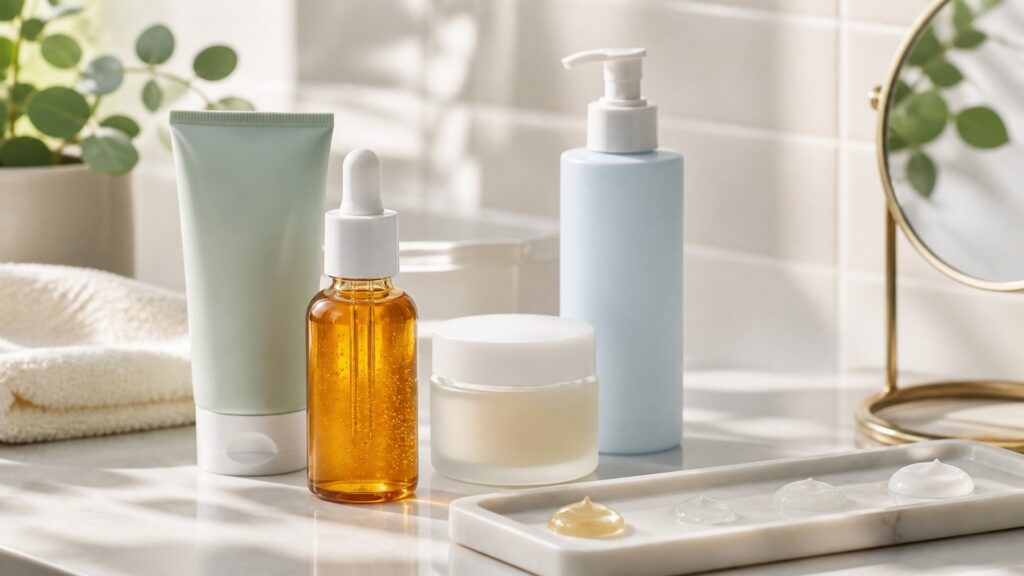
Buying framework
Start with the routine you already own
A vitamin C serum should earn a clear place in your lineup. Before comparing percentages, look at the products it must sit beside every week.
Map the morning layers: Vitamin C usually makes the most sense after cleansing and before moisturizer or sunscreen. If you use toner, essence, primer, or makeup, a watery serum with a quick dry-down will be easier to keep in place.
Match strength to tolerance: A low-pH L-ascorbic acid serum can feel sharp on skin that already handles exfoliating acids or retinoids. Derivatives are often the calmer choice when your routine is active-heavy.
Check the finish, not only the ingredient list: Some antioxidant blends leave tack, slip, or an oily film. That finish matters because sunscreen needs an even layer and should not be rubbed aggressively to fix pilling.
Choose packaging for slow use: If vitamin C is one step among many, you may not finish it quickly. Opaque air-limiting packaging helps protect freshness better than a clear dropper kept on a sunny counter.
Decide what vitamin C is replacing: The new serum should have a job, such as antioxidant support or tone-evening. If it duplicates a brightening product you already use, a gentler or less frequent schedule may make more sense.
Who this is for
Which layering situation sounds like yours?
Different routines create different serum requirements. The right choice depends on what must stay comfortable after vitamin C is added.
Minimal morning routine: If you use cleanser, moisturizer, and sunscreen, a straightforward daytime vitamin C can be easy to add. Prioritize a light texture, stable packaging, and enough hydration support to avoid tightness before SPF.
Acid exfoliant user: If glycolic, lactic, mandelic, or salicylic acid already appears in your week, avoid treating vitamin C like another harmless extra. A derivative or alternate-day plan can reduce the chance of stinging.
Retinoid night routine: Retinoids do not automatically rule out vitamin C, but they raise the value of separation. Many buyers do best with vitamin C in the morning and retinoid products at night.
Makeup or sunscreen pilling problem: If your current layers roll up, buy for texture first. Thin, non-oily serums that absorb cleanly are more important than a maximal ingredient panel.
Sensitive barrier phase: If your skin is dry, flushed, or reactive, start with comfort. Look for lower-intensity derivatives, humectants, panthenol, or ceramide support instead of chasing the strongest acid-based serum.
What to pay attention to
The formula details that change layering
Vitamin C specs only matter when they change comfort, freshness, or how the next product applies. These details are the ones that usually show up in daily use.
Formula strength & stability
L-ascorbic acid, concentration, pH, and packaging affect potency and how quickly the serum may age after opening.
Routine fit & skin tolerance
Texture, supporting hydrators, and active spacing determine whether the serum cooperates with moisturizers, sunscreen, and treatments.
Vitamin C form: Pure L-ascorbic acid is the classic potent option, while derivatives can be steadier and gentler. Choose based on tolerance and how crowded your routine already feels.
Concentration range: A stronger number is not automatically better under several layers. If your skin already sees acids or retinoids, moderate strength used consistently may beat an ambitious serum you avoid.
pH and sensation: Low-pH formulas can tingle, especially after cleansing or exfoliation. Persistent burning is a mismatch signal, not proof that the serum is working harder.
Texture and dry-down: Watery serums tend to layer cleanly before moisturizer. Rich, oily, or gummy finishes may disturb sunscreen film formation or make foundation cling unevenly.
Antioxidant partners: Vitamin E and ferulic acid can make a daytime antioxidant serum more complete. They also add texture, so check whether the formula remains comfortable under SPF.
Bottle design: Amber glass, opaque pumps, and tight caps matter because vitamin C is vulnerable to light and air. A darkening serum may be aging before the bottle is finished.
Avoid these traps
Layering mistakes that make vitamin C harder to use
Most disappointments come from crowding the routine, not from vitamin C being wrong for everyone. These mistakes are easier to avoid before purchase.
Buying the strongest serum first: High intensity can be tempting, but it increases the chance of stinging when other actives are already present. Start with a formula your routine can actually tolerate.
Stacking every active in one sitting: Vitamin C, exfoliating acids, and retinoids can all be useful, but combining them casually may irritate skin. Separate timing when your routine is already treatment-heavy.
Ignoring sunscreen behavior: A serum that pills under SPF creates a real protection problem because you may underapply or over-rub sunscreen. Texture compatibility is part of the buying decision.
Keeping clear bottles in bright rooms: Light and air exposure can shorten useful life. If a product will sit on a vanity for months, protective packaging becomes more important.
Treating tingling as a quality score: A brief sensation can happen, but strong or lasting discomfort is not a badge of effectiveness. Comfort predicts whether you will use the serum consistently.
Duplicating brightening products: If you already use niacinamide, exfoliants, or tone-focused treatments, vitamin C should add a distinct role. Otherwise, you may buy more irritation than benefit.
Decision guidance
How to choose by routine complexity
Use your current steps as the filter. The best serum is the one that adds antioxidant value without destabilizing the rest of the routine.
If your routine is simple: Choose a lightweight daytime serum with stable packaging and a finish that disappears under moisturizer. You can consider L-ascorbic acid if your skin is generally resilient.
If you use exfoliating acids: Pick a lower-sting derivative or plan vitamin C for mornings when acids are not part of the same routine. Avoid adding a high-strength formula during an irritated week.
If you use retinoids: Keep the decision clean by using vitamin C under morning sunscreen and retinoids at night. A barrier-supporting formula helps if dryness already limits retinoid comfort.
If sunscreen or makeup pills: Shop for texture before percentage. A thin serum, fewer silicone-heavy layers, and enough drying time can matter more than an impressive antioxidant blend.
If your skin is reacting often: Pause on strong vitamin C and repair the routine first. A gentler derivative may fit later, but ongoing burning, rash, or unusual sensitivity belongs with a dermatologist.
Ownership & compatibility
Keeping the serum useful after it joins the shelf
Vitamin C ownership is mostly about freshness, storage, and knowing when the routine needs adjustment. The product should remain easy to use after the first week.
Store it like a vulnerable active: Keep the bottle closed, cool, and away from direct window light. Do not leave a dropper open while finishing other routine steps.
Watch the color and scent: A shift toward dark orange or brown can suggest oxidation. If the smell changes sharply or the texture feels different, replace rather than forcing use.
Introduce with a schedule: Start a few mornings per week if your routine includes other actives. Increase only when your skin stays calm through moisturizer and sunscreen.
Adjust surrounding products: If pilling begins, reduce layers before blaming the serum alone. Heavy creams, silicone primers, or rushed sunscreen application can cause conflict.
Know when to stop: Persistent burning, peeling, or rash means the routine is not working. Stop the new serum and seek professional guidance if symptoms continue.
FAQ
Vitamin C layering questions
These answers focus on order, spacing, and compatibility after you already own other skincare products.
Should vitamin C go before or after moisturizer?
Can I use vitamin C with retinol?
Can vitamin C be layered with niacinamide?
Why does my sunscreen pill after vitamin C?
Do I need to wait between vitamin C and other products?
Is a vitamin C derivative better for layered routines?
Can I use vitamin C after exfoliating toner?
What if my vitamin C serum turns brown?
Can vitamin C replace sunscreen?
Bottom line
The cleanest layering choice
Choose vitamin C by asking how it will behave in the routine you already use. A serum that layers comfortably is more valuable than a stronger product that causes friction.
For simple routines: A lightweight daytime L-ascorbic acid serum can work if your skin tolerates active products well.
For active-heavy routines: A derivative or lower-intensity antioxidant blend is often easier to keep consistent.
For sunscreen wearers: Prioritize a fast dry-down and non-pilling finish over an overloaded ingredient list.
For sensitive phases: Let comfort and barrier support guide the decision before strength.
For long-term use: Buy packaging you can store well and finish before the formula visibly ages.
Reading Shortcuts
Jump to the parts of the guide that match your decision stage.
Decision Reminders
Keep these checks in view while comparing formulas.
- Use sunscreen: Vitamin C supports a daytime routine but never replaces SPF.
- Protect the bottle: Limit heat, light, and air exposure after opening.
- Respect stinging: Persistent discomfort is a mismatch signal, not a quality proof.
- Check texture: A serum must sit cleanly under the products that follow.
- Choose a clear job: Avoid adding vitamin C when it only duplicates another treatment.
- Adjust frequency: Comfortable consistency beats occasional overuse.
Glossary Snippets
Useful vitamin C terms from this guide.
When to Use a Top 10 Review
Use a ranked list after you know which vitamin C form, texture, and comfort level fit your routine.
- Shortlist formulas: Compare candidates after narrowing your preferred vitamin C type.
- Check packaging: Use rankings to spot opaque pumps, amber glass, or air-limiting containers.
- Compare textures: Look for notes about dry-down and sunscreen compatibility.
- Confirm routine fit: Filter out formulas that conflict with your existing actives.
Already down to 2-3 options? A Comparison is usually the faster next step.
When to Use a Comparison
Use a head-to-head comparison when two vitamin C serums look similar but differ in form, texture, or tolerance.
- Resolve form differences: Compare L-ascorbic acid against derivatives for your comfort level.
- Check routine order: See which product fits your morning or night schedule more cleanly.
- Weigh stability: Packaging and freshness clues can decide close choices.
- Avoid duplicate roles: Choose the serum that adds something your routine lacks.
Still exploring? Start with a Top 10 to build a shortlist first.