
How to Choose Walkers for Caregiver Assistance
A caregiver-assisted walker has to be easy for another person to check quickly and correctly. Visible height settings, obvious folding locks, secure tips, and predictable parking matter as much as the frame itself.
This guide looks at walker choice through the helper's routine: transfers, vehicle loading, bedside placement, cleaning checks, adjustment confirmation, and handoff moments when rushed assumptions create risk.
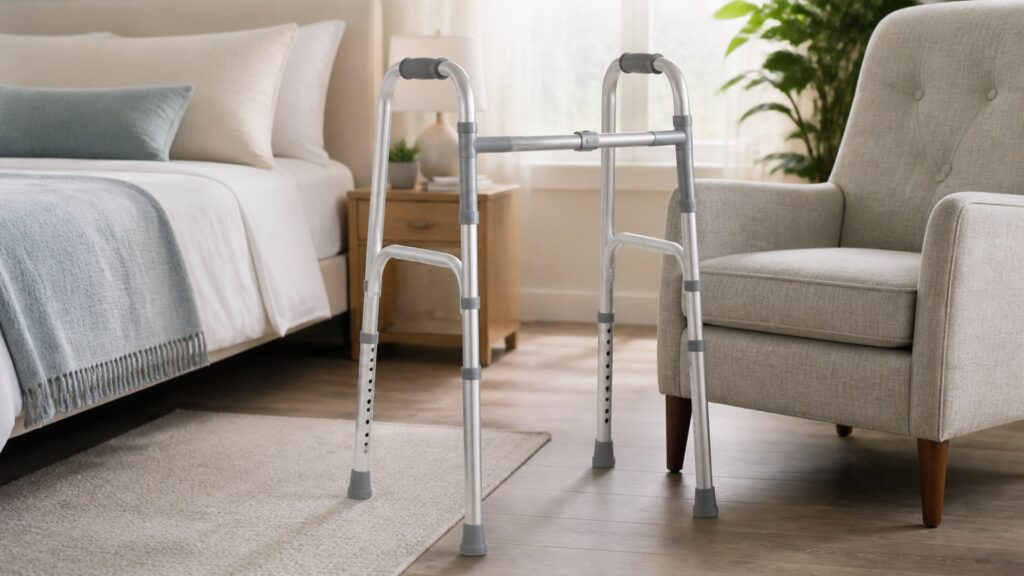
Buying framework
Make the walker easy for helpers to verify
Caregiver assistance works best when setup details are visible, repeatable, and tied to the user's transfer and walking routine.
Visible settings: Height holes and push buttons should be easy to confirm without disassembling or guessing.
Transfer parking: The frame should sit squarely where the user stands, sits, or turns with help nearby.
Folding clarity: Helpers need to know when the frame is fully open, locked, and safe to reposition.
Role boundary: Caregivers should support setup routines, not invent gait or weight-bearing instructions.
Who this is for
Walker buyers coordinating caregiver help
These profiles focus on the helper tasks that influence walker choice.
Transfer helper: Needs the frame to park consistently during sit-to-stand routines.
Vehicle loader: Needs folding hardware and lift points that are obvious under time pressure.
Settings checker: Needs height marks and buttons that can be confirmed at a glance.
Shared-care household: Needs repeatable instructions for multiple helpers.
What to pay attention to
Caregiver-friendly walker details
The best details reduce ambiguity for someone assisting with setup, storage, transfers, and inspections.
Caregiver Assistance Contact
For caregiver assistance, contact parts show how this walker grips, slides, rolls, or wears.
Caregiver Assistance Setup
For caregiver assistance, settings and locks need a clear confirmation routine.
Button visibility: Adjustment buttons should protrude clearly and match on both sides.
Latch feedback: A folding mechanism should give obvious visual or tactile confirmation when locked.
Grip condition: Helpers should be able to spot loose, torn, wet, or dirty handles before use.
Parking footprint: The open frame should fit beside beds, chairs, toilets, and vehicle doors.
Cleaning access: Tips, glides, wheels, and joints should be reachable without taking the walker apart.
Avoid these traps
Caregiver-assistance mistakes
Helper routines fail when the walker hides important status details or creates awkward transfer positions.
Assuming helpers will remember settings: Use visible marks or photos when the walker is folded or adjusted often.
Parking too far away: The frame should be reachable before weight shifts, not after the user has started standing.
Skipping contact checks: Helpers may notice worn tips or loose glides before the user feels the change.
Using the walker as a lifting handle: The frame is for user support, not for pulling a person upright.
Decision guidance
Choose by the caregiver task that happens most
The right caregiver-assisted walker makes the repeated helper action safer: transfer setup, loading, adjustment, cleaning, or room placement.
If transfers dominate: Prioritize parking footprint, grip height, and a frame that stays square.
If loading is common: Compare folding locks, weight, and places a helper can hold securely.
If many helpers rotate: Choose obvious adjustment cues and simple inspection points.
If cleaning is frequent: Look for contact parts and grips that are easy to wipe and dry.
Ownership & compatibility
Build a shared walker-check routine
Caregiver ownership is a repeatable checklist: settings, contact parts, latch, route, and the user's current instructions.
Use a consistent check: Height, latch, tips, glides, wheels, and parking position should be reviewed in the same order.
Record the setup: A photo of correct height and parking can reduce confusion between helpers.
Escalate changes: New leaning, pain, falls, or uncertainty about weight bearing should go to qualified care guidance.
FAQ
Questions buyers ask about how to choose walkers for caregiver assistance
These answers focus on the caregiver assistance decisions that affect walker fit, contact, setup, and safe use boundaries.
What makes a walker caregiver-friendly?
Should caregivers adjust walker height?
Where should the walker be during transfers?
Can a caregiver lift the user with the walker?
Which features help multiple helpers?
How often should caregivers inspect tips?
Are baskets helpful for caregiver assistance?
What if the user resists the walker?
What should be written down?
Bottom line
The best helper setup is easy to verify
Choose a walker that makes caregiver tasks visible and repeatable, from transfer parking to height confirmation, folding, cleaning, and route checks.
Make settings obvious: Helpers should not have to guess height or latch status.
Plan transfer placement: The frame needs a safe square parking position.
Use shared routines: A small checklist protects consistency between helpers.
Reading Shortcuts
caregiver-assistance checkpoints.
Decision Reminders
Before choosing: caregiver-assistance.
- Control: Confirm walker control in use.
- Fit: Measure body contact points.
- Surfaces: Check the expected floors.
- Wear: Inspect replaceable parts.
- Storage: Park it without clutter.
- Guidance: Ask about clinical limits.
Glossary Snippets
walker terms for caregiver-assistance.
When to Use a Top 10 Review
Ranked picks after caregiver-assistance.
- Shortlist: Compare after fit decisions.
- Filter: Use caregiver-assistance priorities.
- Complaints: Watch repeated fit issues.
- Upkeep: Check replacement details.
For caregiver-assistance finalists, use Comparison next.
When to Use a Comparison
Compare close walker options.
- Fit: Check measurements side by side.
- Control: Compare brakes and contact.
- Storage: Match the real location.
- Care: Review wear and cleaning.
For broad caregiver-assistance shopping, start with Top 10.