
How to Choose Walkers for Durability and Cleaning Checks
Durability and cleaning checks focus on the walker parts that touch hands, floors, hinges, and adjustment holes. Grips, rubber tips, glides, wheels, push buttons, and frame finish show wear before the whole aid looks old.
This guide helps buyers choose a walker that can be inspected and cleaned without hiding damage. It focuses on replaceable contact parts, moisture traps, latch access, standard hardware, and visible wear points.
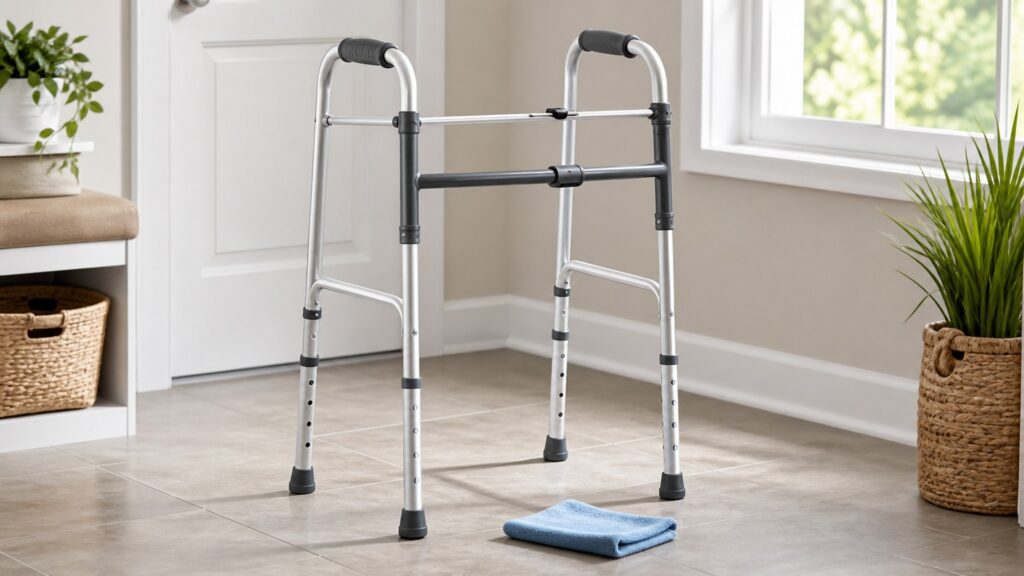
Buying framework
Judge durability by the parts that wear first
A durable walker is one whose contact parts, adjustment points, and folding hardware can be kept clean, inspected, and replaced when needed.
Hand-contact wear: Grips should resist tearing, slick buildup, and trapped moisture from frequent handling.
Floor-contact wear: Tips, glides, and wheels need visible surfaces that show flattening, cracking, grit, or looseness.
Adjustment hardware: Push buttons and holes should remain clear after wiping and repeated height checks.
Frame finish: Coatings and joints should tolerate routine cleaning without hiding corrosion, bends, or loosened hardware.
Who this is for
Walker buyers focused on upkeep
These profiles show where durability and cleaning needs usually affect walker choice.
Frequent cleaner: Needs grips and lower parts that wipe clean and dry quickly.
Outdoor-to-indoor user: Needs replaceable tips or glides that tolerate grit and floor changes.
Shared-home user: Needs visible wear checks that another person can repeat.
Long-term owner: Needs common replacement parts and hardware that does not hide damage.
What to pay attention to
Durability and cleaning details
Useful upkeep specs identify what wears, what can be cleaned, and what can be replaced without guesswork.
Durability Cleaning Contact
For durability cleaning, contact parts show how this walker grips, slides, rolls, or wears.
Durability Cleaning Setup
For durability cleaning, settings and locks need a clear confirmation routine.
Replaceable tips: Standard rubber tips are easier to inspect and replace than obscure contact parts.
Grip material: Grips should not absorb moisture, shed pieces, or become slick after regular wiping.
Wheel or glide access: Moving contact parts should be easy to clear of hair, grit, and sticky residue.
Button protection: Adjustment buttons need to stay clean enough to move freely and lock visibly.
Frame joints: Hinges and cross braces should be accessible for inspection after cleaning or transport.
Avoid these traps
Durability and cleaning mistakes
Upkeep mistakes come from making the frame look clean while missing the parts that control movement.
Cleaning only the handles: Floor contact parts collect grit and often reveal wear before the frame does.
Ignoring replacement availability: Unusual tips or glides can make a minor wear issue harder to fix.
Soaking hardware: Moisture around buttons, holes, or joints can create new problems if not dried.
Hiding damage with covers: Covers should not conceal cracked tips, torn grips, loose glides, or bent legs.
Decision guidance
Choose the walker that makes upkeep obvious
A good durability choice makes inspection simple enough to repeat before small wear changes safety or handling.
If cleaning is frequent: Prioritize wipeable grips, accessible lower parts, and hardware that dries easily.
If floors are gritty: Choose common, replaceable tips or glides and inspect them often.
If helpers inspect it: Favor visible buttons, simple latches, and wear points that are easy to explain.
If ownership will be long: Check replacement-part availability before a small component becomes the weak link.
Ownership & compatibility
Build a practical walker upkeep routine
Durable walker ownership means cleaning enough to see problems, then replacing worn parts before they change support.
Wipe and dry: Clean grips, tips, glides, wheels, and lower frame areas according to manufacturer guidance.
Inspect during cleaning: Look for cracks, flattening, loose pieces, sticky buttons, rough glides, and new wobble.
Replace early: Do not wait for a contact part to fail completely before changing it.
FAQ
Questions buyers ask about how to choose walkers for durability and cleaning checks
These answers focus on the durability cleaning decisions that affect walker fit, contact, setup, and safe use boundaries.
What parts of a walker wear fastest?
How should I clean walker grips?
When should rubber tips be replaced?
Are glides harder to maintain?
Can cleaning damage a walker?
Should I choose a walker with wheels for durability?
How do caregivers help with upkeep?
Is frame finish important?
What should I do if the walker wobbles?
Bottom line
Durability is visible, repeatable upkeep
Choose the walker whose grips, tips, glides, wheels, buttons, latches, and frame finish make cleaning and inspection straightforward.
Inspect contact parts: Hands and floors reveal wear first.
Keep hardware dry: Buttons, holes, and joints should not trap moisture.
Plan replacements: Common wear parts make long-term ownership easier.
Reading Shortcuts
durability-cleaning checkpoints.
Decision Reminders
Before choosing: durability-cleaning.
- Control: Confirm walker control in use.
- Fit: Measure body contact points.
- Surfaces: Check the expected floors.
- Wear: Inspect replaceable parts.
- Storage: Park it without clutter.
- Guidance: Ask about clinical limits.
Glossary Snippets
walker terms for durability-cleaning.
When to Use a Top 10 Review
Ranked picks after durability-cleaning.
- Shortlist: Compare after fit decisions.
- Filter: Use durability-cleaning priorities.
- Complaints: Watch repeated fit issues.
- Upkeep: Check replacement details.
For durability-cleaning finalists, use Comparison next.
When to Use a Comparison
Compare close walker options.
- Fit: Check measurements side by side.
- Control: Compare brakes and contact.
- Storage: Match the real location.
- Care: Review wear and cleaning.
For broad durability-cleaning shopping, start with Top 10.