
How to Choose Walkers for Sizing and Adjustability
Sizing a walker is more than matching a height chart. Handle range, adjustment-hole spacing, frame width, depth, grip alignment, and capacity all affect whether the setup can be repeated correctly.
This guide helps buyers read walker sizing details as practical fit controls. It explains what to measure, what to verify after folding, and why between-size users should compare adjustment increments carefully.
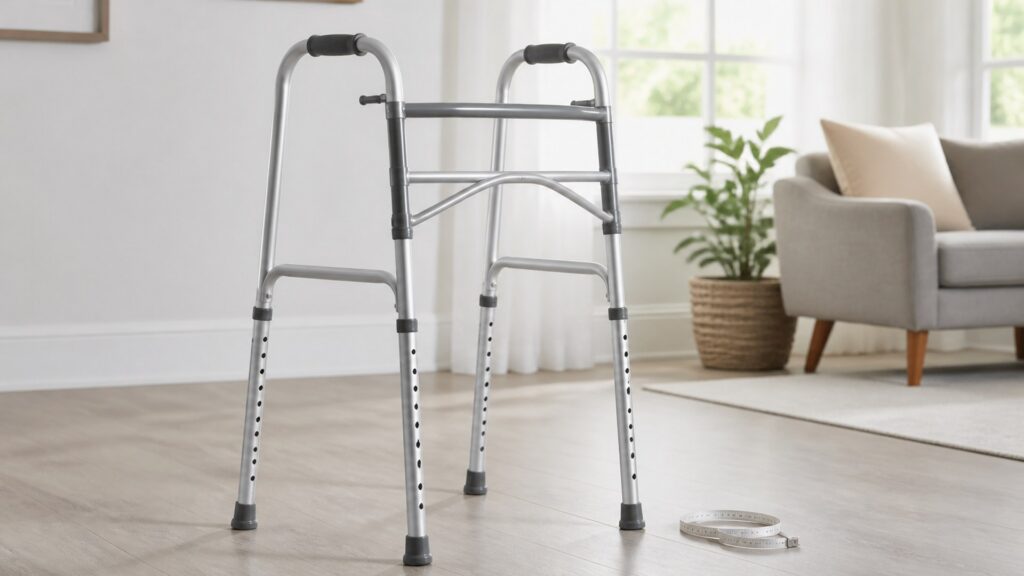
Buying framework
Use measurements to make setup repeatable
Sizing works when the walker can be set the same way every time and still fit the user's rooms, stance, and support needs.
Handle range: The listed range must include the user's workable hand level, not merely their general height.
Hole spacing: Smaller increments can matter when one setting feels low and the next feels high.
Frame dimensions: Width and depth affect stance, doorway clearance, bedside positioning, and turning room.
Capacity fit: Weight rating should be paired with frame width, rigidity, and the user's body position.
Who this is for
Sizing-focused walker buyers
These profiles highlight when adjustment details should lead the purchase decision.
Between-setting user: Needs holes close enough to avoid a shoulder or wrist compromise.
Shared-helper household: Needs settings that another person can verify after folding or cleaning.
Doorway measurer: Needs body fit and home clearance considered together.
Capacity checker: Needs a frame that fits the user without creating an oversized indoor footprint.
What to pay attention to
Sizing and adjustment details to compare
The best sizing specs show whether the walker can be adjusted, confirmed, and used in the intended space without guessing.
Sizing Adjustability Contact
For sizing adjustability, contact parts show how this walker grips, slides, rolls, or wears.
Sizing Adjustability Setup
For sizing adjustability, settings and locks need a clear confirmation routine.
Minimum and maximum handle height: Check actual grip level rather than relying only on the user's stated height category.
Adjustment-button design: Buttons should click fully through the holes and be easy to see from both sides.
Open width: A wider frame may fit the user but fail the narrowest route at home.
Depth from front to rear: Depth affects how close the user can stand and how the frame turns near furniture.
Fold repeatability: After folding, the walker should reopen without losing the verified height setting.
Avoid these traps
Sizing mistakes to avoid
Sizing mistakes usually happen when buyers trust one measurement and skip the body-and-room combination.
Using height charts alone: Charts can start the search, but grip position and posture have to be checked.
Ignoring hole spacing: A walker can list the right range yet still lack a comfortable exact setting.
Oversizing for capacity: A larger frame may solve rating concerns while making bathrooms or transfers harder.
Skipping post-fold checks: Settings should be verified again after transport, cleaning, or storage.
Decision guidance
Choose the walker that can be set correctly twice
A sizing-friendly walker is one the buyer can measure, adjust, fold, reopen, and confirm without uncertainty.
If the user is between settings: Prioritize finer height increments and grip comfort over accessory packages.
If helpers adjust it: Choose visible buttons and clear reference marks so settings are easy to restore.
If space is limited: Let open width and depth compete with comfort instead of assuming bigger is safer.
If capacity is a concern: Compare rating, frame stance, and doorway clearance together.
Ownership & compatibility
Protect the sizing setup
Sizing remains useful only when adjustment points stay clean, visible, matched, and fully locked.
Mark the setting: A discreet mark or photo can help restore the correct hole after cleaning.
Check button engagement: Both sides should protrude fully before the walker is used.
Watch for bent legs: Transport or storage damage can change alignment even if the holes still match.
FAQ
Questions buyers ask about how to choose walkers for sizing and adjustability
These answers focus on the sizing adjustability decisions that affect walker fit, contact, setup, and safe use boundaries.
How do I size a walker?
Are walker height ranges reliable?
What if one setting feels low and the next high?
Does frame width count as sizing?
Should capacity change the size choice?
Can two people share a walker?
How do I know adjustment buttons are secure?
Does folding affect sizing?
When should sizing be reviewed?
Bottom line
Good sizing is repeatable sizing
Choose the walker that can be measured accurately, adjusted visibly, reopened confidently, and used in the rooms where support actually happens.
Check height precisely: Grip level matters more than broad user-height labels.
Measure the footprint: Width and depth affect home use as much as comfort.
Verify after changes: Folding and transport should trigger a quick setting check.
Reading Shortcuts
sizing-adjustability checkpoints.
Decision Reminders
Before choosing: sizing-adjustability.
- Control: Confirm walker control in use.
- Fit: Measure body contact points.
- Surfaces: Check the expected floors.
- Wear: Inspect replaceable parts.
- Storage: Park it without clutter.
- Guidance: Ask about clinical limits.
Glossary Snippets
walker terms for sizing-adjustability.
When to Use a Top 10 Review
Ranked picks after sizing-adjustability.
- Shortlist: Compare after fit decisions.
- Filter: Use sizing-adjustability priorities.
- Complaints: Watch repeated fit issues.
- Upkeep: Check replacement details.
For sizing-adjustability finalists, use Comparison next.
When to Use a Comparison
Compare close walker options.
- Fit: Check measurements side by side.
- Control: Compare brakes and contact.
- Storage: Match the real location.
- Care: Review wear and cleaning.
For broad sizing-adjustability shopping, start with Top 10.