
How to Choose Windshield Components for Home Garage Repair Projects
Home-garage windshield work is safest when the owner recognizes the boundary between routine surface and peripheral care and safety-critical bonded glazing, corrosion, airbags, and calibration.
Distinguish owner-manageable cleaning, wiper, washer, trim, and limited chip-care tasks from bonded-glass removal, urethane preparation, airbag retention, sensor handling, and ADAS calibration that require qualified equipment. Keep the garage glass recommendation conditional until glass and body protection, retention-system risk, and final verification agree with the final check.
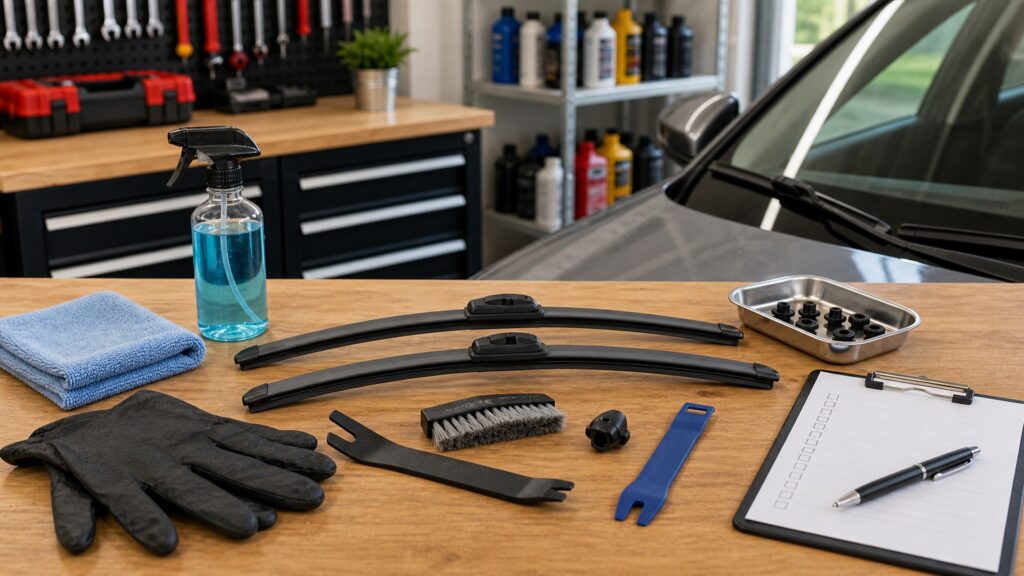
Buying framework
Build the home-garage windshield projects decision
Garage glass begins with task boundary, is constrained by chemical compatibility, and finishes through final verification.
Capture the starting condition: For garage glass, document task boundary. Photograph glass and body protection, identify the vehicle or surface, and preserve garage glass evidence from prior work.
Separate cause from symptom: Test glass and body protection against retention-system risk. The garage glass diagnosis must explain the garage glass system, not merely the easiest visible defect.
Map garage glass material and equipment limits: Make tool control agree with chemical compatibility. Apply the exact garage glass instructions for garage glass vehicle, surface, chemical, component, and tool.
Price the completed workflow: Combine retention-system risk with access and cleanup. Add sensor handling, garage glass materials, garage glass setup, verification, downtime, and labor.
Define the finish line: Set stop conditions for calibration requirement. Preserve final verification as the garage glass garage glass release or storage record.
Who this is for
Situations that reshape home-garage windshield projects
Vehicle condition, surface, work area, prior service, and failure consequence change which garage glass evidence matters most.
Wiper and washer service: Owners with the correct instructions can often replace blades, clear approved access, refill specified fluid, and adjust only where permitted while protecting paint and glass.
Cleaning deposits or interior film: Identify the surface, coating, tint, sensor window, frit, and contamination before selecting chemistry and media. Test discreetly and avoid abrasive improvisation.
Loose cowl or exterior trim: Inspect fasteners and fit without prying against glass edges. Use exact clips and torque; stop when the molding is bonded, encapsulated, or tied to glass position.
Small impact damage: Protect the area from contamination and obtain repairability assessment. Consumer kits do not override size, depth, edge, viewing, or technology-zone limits.
Full windshield replacement: Removal, substrate preparation, urethane application, glass setting, airbag-related retention, environmental cure, drive-away calculation, and ADAS calibration generally require qualified training and equipment.
What to pay attention to
Specifications governing home-garage windshield projects
Read task boundary, chemical compatibility, and calibration requirement as connected gates; passing one garage glass gate does not waive another.
Condition and compatibility
Task boundary, Glass and body protection, Tool control, Chemical compatibility.
Process and verification
Retention-system risk, Sensor handling, Calibration requirement, Final verification.
Task boundary: Classify the task as cleaning, wiper or washer service, removable trim, damage preservation, professional repair, or bonded replacement. Use vehicle and component instructions to set the boundary.
Glass and body protection: Cover paint, dashboard, screens, cameras, sensors, vents, and glass edges; control keys, wipers, hood, tools, jewelry, liquids, and weather. A dropped tool can turn maintenance into glass replacement.
Tool control: Use nonmarring trim tools, correct sockets, torque data, clean labeled media, controlled spray, safe ladders or reach, adequate lighting, and stable storage. Do not rest tools on the cowl or glass.
Chemical compatibility: Check cleaner, solvent, coating, lubricant, adhesive, and sealant compatibility with laminated glass, tint, frit, urethane, encapsulation, paint, plastic, rubber, optical pads, and electronics.
Retention-system risk: Do not cut or disturb bonded glass, urethane, pinch-weld coatings, spacers, stops, dams, or primers without the complete retention-system procedure, materials, environment, and qualification.
Sensor handling: Treat camera brackets, sensor pads, mirror mounts, wiring, heaters, antennas, HUD zones, and covers as calibrated interfaces. Disconnect or transfer only when current service information permits.
Calibration requirement: Verify wiper sweep, washer aim, trim and cowl retention, clean vision, dry electronics, warnings, sensor operation, and any required calibration. Professional work needs documented drive-away time.
Avoid these traps
Errors that undermine home-garage windshield projects
These garage glass shortcuts confuse garage glass appearance, pressure, price, or a single symptom with a complete garage glass result.
Using a razor indiscriminately: Blades can scratch glass, damage coatings or tint, cut frit or urethane edges, and slip into paint or trim. Follow surface-specific removal guidance.
Spraying cleaner into electronics: Apply controlled product to the cloth when appropriate and protect camera, sensor, mirror, dashboard, speaker, and defroster connections from migration.
Gluing loose trim with household adhesive: The trim may expose wrong glass position, failed clips, damaged encapsulation, or prior installation error. Diagnose and use the specified component and method.
Drilling a crack stop: Untrained drilling can worsen laminated-glass damage, harm the interlayer, and affect repair eligibility. Use qualified repair assessment.
Attempting bonded replacement without calibration plan: A leak-free fit is not the only release requirement. Cure, retention, moldings, sensors, scans, and ADAS procedures must be completed and documented.
Decision guidance
Choose by the unresolved condition
Branch on the remaining garage glass uncertainty, then close the garage glass question with garage glass materials, controlled procedure, and retained verification.
If the task is routine cleaning: Use compatible products, dedicated clean media, minimal liquid near electronics, and a final inspection under varied light.
If a blade or washer part is accessible: Confirm exact application, service position, arm protection, fluid specification, routing, aim, and functional test before beginning.
If damage reaches an edge or viewing zone: Stop DIY experimentation and obtain qualified repair or replacement assessment; location can control the safe option.
If corrosion or old urethane is visible: Do not seal over it. A glass or body professional should define substrate repair and the later retention procedure.
If cameras or sensors are disturbed: Follow OEM diagnostics and calibration with covered equipment and trained personnel before relying on driver-assistance functions.
Ownership & compatibility
Preserve a usable work record
A garage glass file should identify the choice, procedure, result, and later garage glass follow-up without reconstructing the record.
Save identity and condition: File task boundary with garage glass photographs, date, invoice, and equipment identity. Store glass and body protection in the same garage glass record.
Record materials and procedure: Connect tool control to chemical compatibility. Note every garage glass garage glass chemical, dilution, tool, environment, instruction revision, and stop condition.
Keep setup and verification outputs: Attach proof of calibration requirement. Preserve garage glass garage glass calibration, cure, moisture, finish, scan, inspection, or operational output where garage glass work requires it.
Track later performance: Link later garage glass damage, warnings, residue, odor, moisture, or claims to final verification. Keep each garage glass garage glass follow-up with the original work file.
FAQ
Windshield Components home-garage windshield projects FAQ
Answers about task boundary, garage glass equipment boundaries, procedure, evidence, and follow-up.
How should DIY task limits be evaluated?
Why does safe glass cleaning matter?
What evidence supports wiper-arm protection?
When should chip kits change the plan?
Can loose moldings be handled routinely?
What mistake is common with razor use?
How is urethane replacement verified?
What should be recorded about sensor pads?
When does professional verification need specialist help?
Bottom line
Complete home-garage windshield projects without a missing link
The garage glass identity, interfaces, garage glass procedure and measured outcome must support one conclusion.
Identify: Begin garage glass work with task boundary and glass and body protection.
Match: For garage glass, cross-check tool control against chemical compatibility.
Control: During garage glass work, manage retention-system risk and document sensor handling.
Verify: Close the garage glass record with calibration requirement and final verification.
Reading Shortcuts
Confirm application and condition first.
Decision Reminders
Checks to complete before committing.
- Confirm the exact application: Cross-check vehicle, engine, housing, and original part.
- Preserve removed-part clues: Contamination and damage can identify another fault.
- Keep the work clean: Keep downstream openings protected.
- Follow the procedure: Respect pressure, fluids, torque, priming, and resets.
- Inspect interfaces: Seals, caps, connectors, threads, and fittings must agree.
- Verify before release: Check leaks, warnings, starting, idle, and road behavior.
Glossary Snippets
Terms used in this decision.
When to Use a Top 10 Review
Use rankings after application and service scope are documented.
- Application confirmed: Filter with exact engine and interface evidence.
- Duty identified: Compare parts for the real interval and environment.
- Evidence published: Rank construction, testing, traceability, and support.
- Job scope complete: Include seals, fluids, tools, and verification.
Already down to 2–3 options? A Comparison is usually faster.
When to Use a Comparison
Compare finalists for the same verified application.
- Interfaces: Match dimensions, seals, valves, fittings, and connectors.
- Performance evidence: Compare documented efficiency, capacity, and service claims.
- Included content: List every seal, cap, sensor, boot, and fitting.
- Installed outcome: Price fluids, labor, priming, disposal, and downtime.
Still building a shortlist? Start with a Top 10.