
How to Choose Yoga & Pilates Equipment for Pilates Workouts
Pilates workouts ask more from equipment than a basic stretch mat and a bag of mixed props. Rolling, kneeling, bridging, side-lying work, and slow transitions all depend on cushioning that stays stable, surfaces that grip the floor, and props that give feedback without stealing attention from alignment.
This guide focuses on building a Pilates-first kit: a supportive mat, then rings, mini balls, bands, blocks, straps, or sliders only when they match the exercises you plan to practice. The goal is to avoid bulky bundles and choose pieces that improve control, comfort, storage, and cleanup.
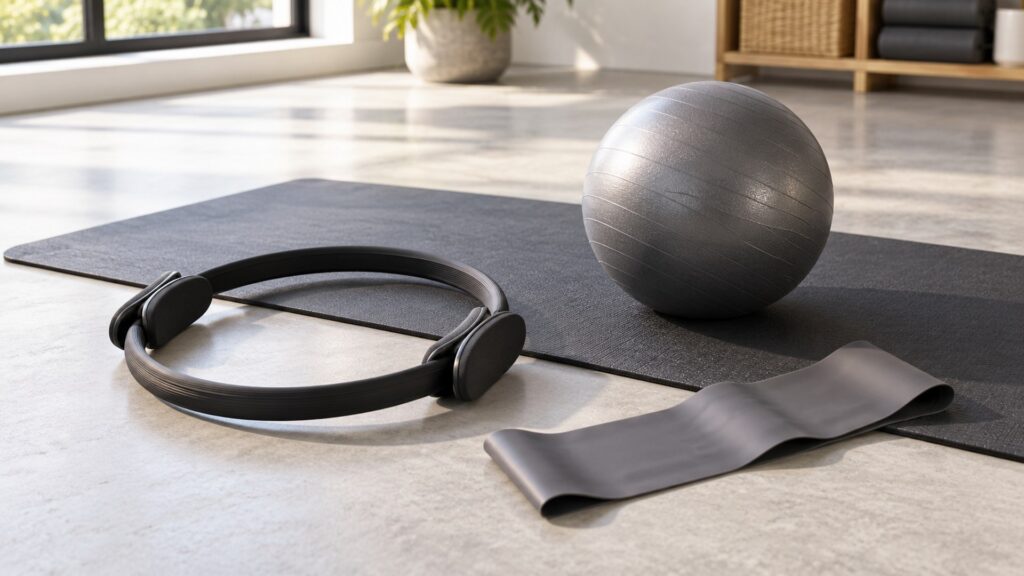
Buying framework
Build the kit around control, not prop count
Pilates equipment should make precise movement easier to feel, not just add more pieces to the floor. Use the mat, ring, ball, bands, and yoga props according to the specific job each one performs.
Put the mat first: Choose a Pilates mat or firm cushioned yoga mat before adding accessories. Rolling, kneeling, bridges, and side-lying exercises need enough padding for pressure points while still giving stable feedback from the floor.
Add resistance with a purpose: A magic circle, flat band, or tube should match the exercise cue you want: inward pressure, outward pull, or smooth tension through a small range. Too much spring can make controlled movement feel jerky.
Treat yoga props as support tools: Blocks and straps are useful when they improve reach, alignment, or supported stretching. They are less important if your workouts focus mainly on core mat sequences, ring drills, or band work.
Plan for the floor you have: Hard floors, rugs, and small rooms change the right mat texture and prop footprint. A mat that stays flat and a ball that does not roll away are worth more than a crowded accessory bundle.
Favor simple upkeep: Wipeable surfaces, sealed foam, and props that dry quickly matter because Pilates keeps equipment in close contact with hands, feet, knees, and back. Easy cleaning also helps the kit stay usable between sessions.
Who this is for
Match the equipment to the way you practice
Different Pilates routines use props in different ways, so the best kit is not always the biggest one. Start with your floor space, exercise style, and tolerance for storing extra pieces.
The new mat-work starter: Begin with a stable mat and one feedback prop, usually a small ball or magic circle. That combination covers many beginner core, bridge, and leg sequences without forcing you to manage several accessories at once.
The comfort-focused floor exerciser: If kneeling, rolling, or side-lying work feels harsh, prioritize mat density and surface feel. A thicker Pilates mat can help, but it should still resist wobbling when you hold balance positions.
The progression-minded home user: Bands, tubes, and rings make sense when your sessions already include controlled arm, thigh, or hip resistance. Look for predictable tension rather than the hardest level available.
The small-space practitioner: A rollable mat, deflatable mini ball, flat band, and compact ring store more cleanly than bulky gear. Measure the area needed for arms and legs to extend before buying a full set.
The studio-to-home learner: Choose props that resemble the cues your instructor uses, such as a ball behind the pelvis or a ring between the knees. Avoid buying reformer-style extras until you know which movements you will repeat at home.
What to pay attention to
Specs that change how Pilates movements feel
Small differences in thickness, texture, spring, and diameter can noticeably change a Pilates workout. Read specifications as clues about control, contact, and feedback rather than as isolated numbers.
Support, Grip & Floor Contact
This lens covers the mat and support props: how cushioning, underside traction, top texture, block density, and slider surfaces affect stability during slow transitions and floor-based positions.
Resistance, Feedback & Prop Control
This lens covers rings, bands, tubes, and mini balls: how resistance level, handle shape, inflation, and elastic recovery influence precision instead of simply making exercises harder.
Mat thickness and density: Many Pilates mats are thicker than travel yoga mats because rolling and kneeling create more pressure. Dense foam is usually preferable to a plush surface that compresses unevenly under hips or hands.
Top texture and underside traction: The top should give enough grip for bridges, planks, and side support without feeling sticky against bare skin. The underside should hold on tile, wood, or laminate instead of creeping forward during transitions.
Ring spring and handle shape: A Pilates ring should flex smoothly and return without a sharp snap. Padded opposing handles matter because the ring may sit between knees, ankles, palms, or forearms during repeated squeezes.
Mini ball diameter and firmness: Smaller balls are easier to place behind the back, under the pelvis, or between the knees. Adjustable inflation lets you change support and challenge without replacing the whole prop.
Band length and resistance labeling: Flat bands need enough length for seated rows, leg extensions, and arm reach without forcing awkward grip positions. Clear resistance levels help you progress gradually while latex-free labeling matters for sensitive users.
Blocks, straps, and sliders: Blocks should feel firm under light load, straps should not dig into the hands, and sliders need a surface that matches your floor. These pieces help only when they suit the specific exercises in your plan.
Avoid these traps
Common buying mistakes with Pilates props
Most disappointing purchases come from treating Pilates gear like a generic fitness bundle. The better approach is to buy fewer pieces that solve real movement, support, or resistance needs.
Buying the biggest bundle first: A large kit can look efficient, but extra pieces often sit unused if your workouts never call for them. Start with the mat and the one or two props that appear repeatedly in your sessions.
Choosing cushion without stability: A very soft mat may feel comfortable at first and then make standing balance, planks, or controlled rolling less precise. Check whether the material rebounds evenly and stays flat under shifting weight.
Assuming stronger resistance is better: Pilates often relies on small, deliberate motions, so an overly stiff band or ring can pull the body out of alignment. Smooth moderate tension usually teaches better control than fighting a prop.
Ignoring the room surface: The same mat can behave differently on carpet, sealed wood, tile, or a rubber floor. Match underside traction and slider materials to the place where you will actually practice.
Treating props as treatment tools: Equipment can support exercise variety, but it should not be bought as a shortcut for injury care or diagnosis. If pain changes how you move, get qualified guidance before relying on a ring, ball, or band.
Decision guidance
How to choose the right Pilates equipment mix
Use the equipment list as a staged purchase, not a checklist to finish in one order. The right answer depends on which movements dominate your workouts and which prop would remove the biggest friction point.
If you are starting from zero: Buy the best mat you can justify, then add either a mini ball or magic circle once your routine calls for feedback. That path keeps early sessions focused and prevents a drawer full of unfamiliar tools.
If floor comfort limits the workout: Prioritize mat density, length, and grip before shopping for resistance. A better floor surface can make kneeling, rolling, and side-lying sequences more consistent, while extra props will not fix a mat that slides.
If you want more strength work: Choose a band or ring based on the motion you want to load. Bands are more versatile for pulls and extensions, while a ring gives clear inward pressure cues for thighs, arms, and chest.
If storage is tight: Use a rollable mat, flat band, compact ring, and ball that can be partially deflated. Skip blocks, sliders, or tubes unless they are named in workouts you plan to repeat.
If you expect reformer-style training: Sliders and bands can echo some reformer ideas, but they do not recreate carriage travel, springs, or guided machine alignment. For that style, consider classes, instruction, or dedicated apparatus instead of overloading a mat kit.
Ownership & compatibility
Keep the equipment easy to use again
Pilates props live close to the body and often touch the floor, so maintenance is mostly about cleanliness, shape, and consistent resistance. A kit that is easy to reset is more likely to stay in rotation.
Clean surfaces after sweaty sessions: Follow the product label, especially on natural rubber, cork, textured foam, or fabric-covered bands. Let mats and balls dry before rolling or storing them so moisture does not stay trapped.
Store props without distorting them: Do not crush a magic circle under heavier gear, and avoid leaving a mini ball pressed against sharp edges. Roll mats loosely enough to protect the surface and keep bands away from heat.
Inspect elastic and inflated pieces: Bands can develop small tears, sticky spots, or uneven stretch before they fail completely. Mini balls should hold air reliably, and plugs should sit flush so the ball feels predictable under the body.
Replace equipment when feedback changes: Worn mat grip, flattened cushioning, loose ring handles, or stretched-out bands affect the way exercises feel. Replacement is less about age and more about whether the prop still behaves consistently.
FAQ
Pilates equipment questions buyers ask
These answers cover the practical choices that often come up after comparing mats, rings, balls, bands, and support props.
Do I need a separate Pilates mat if I already own a yoga mat?
Is a Pilates ring necessary for home workouts?
What size mini ball should I buy?
Are resistance bands or handled tubes better for Pilates?
Should beginners buy a complete yoga and Pilates kit?
Do yoga blocks and straps belong in a Pilates setup?
Are grippy socks part of Pilates equipment?
Can mat props replace a Pilates reformer?
How do I know when to replace Pilates props?
Bottom line
Choose equipment that supports the movements you repeat
The strongest Pilates kit is usually focused rather than large. Start with reliable floor contact, then add feedback and resistance only where your workouts call for them.
Anchor the purchase with the mat: A supportive, grippy mat affects nearly every exercise, so it deserves more attention than a long accessory list.
Pick one main feedback prop: A ring, mini ball, or band should solve a clear movement need instead of simply making the kit look complete.
Let your space set limits: Compact gear is easier to keep accessible, especially when the workout area doubles as a living room, office, or bedroom.
Upgrade when control improves: Add more resistance, sliders, blocks, or straps after your current routine shows where extra support or challenge would matter.
Reading Shortcuts
Jump to the choice that matters now.
Decision Reminders
Keep the purchase focused and usable.
- Mat first: Floor contact affects every session.
- Moderate tension: Smooth control beats strain.
- Use-based props: Buy pieces your routine names.
- Surface match: Check grip on your floor.
- Compact storage: Accessible gear gets used.
- Label check: Verify materials and care.
Glossary Snippets
Terms worth knowing before checkout.
When to Use a Top 10 Review
Use a ranked list after choosing prop types.
- You know the prop: Compare mats, rings, or bands.
- You want a shortlist: Filter many models faster.
- You have a budget: See tradeoffs by price range.
- You need availability: Check current product choices.
Already down to 2-3 options? A Comparison is usually the faster next step.
When to Use a Comparison
Use a comparison for close finalists.
- Two mats seem close: Compare grip and cushioning.
- Ring comfort differs: Check handles and spring.
- Bands look similar: Review tension and material.
- Bundles overlap: See which pieces duplicate.
Still exploring? Start with a Top 10 to build a shortlist first.