How to Clean, Store, or Maintain Body Treatments Safely

Follow the label, wash your hands before using a cosmetic body treatment, and close the container when you’re done. Avoid adding water, which can bring in germs or dilute any preservatives in the product. Use the storage directions for your exact pack and pause if you notice an unexplained change in the contents.

By: Review Streets Research Lab
Updated: November 25, 2026
Explainer · 9–11 min read
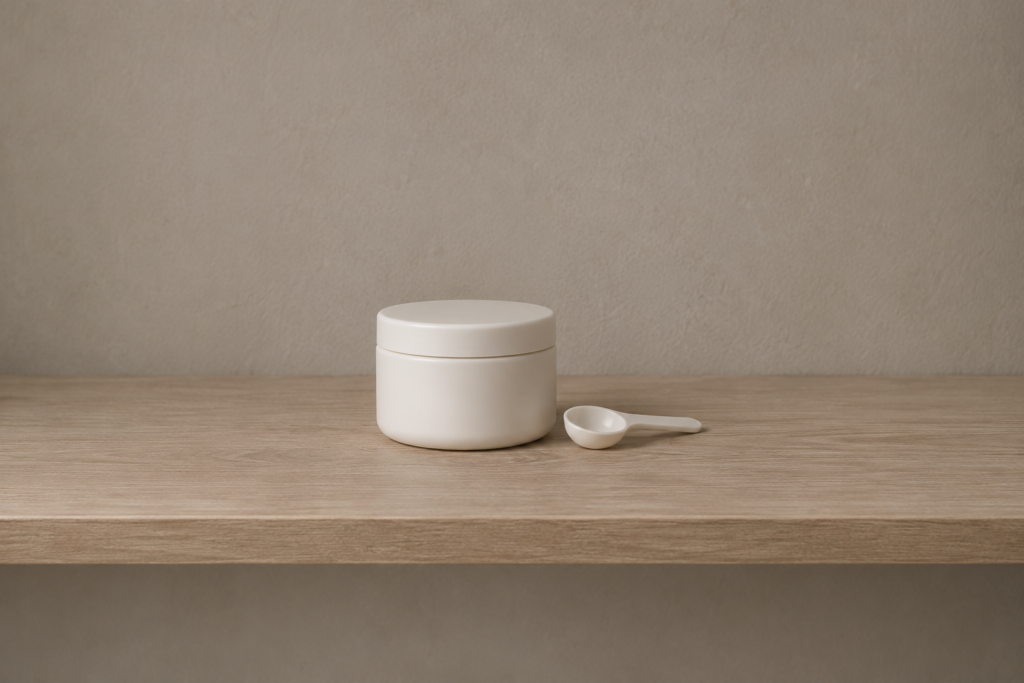
Closed cosmetic jar and a small empty scoop on a wooden shelf.
Start here

What you’ll learn

This guide covers U.S. cosmetic body treatments. One label detail worth finding early is the opening interval, if your product gives one.

  • Recognize the opening that gives you access to the product.
  • Trace how fingers can carry germs into a shared jar.
  • Tell when the directions call for a separate scoop.
  • Recognize why warm or damp storage can matter.
  • Read the month count on an open-jar symbol.
  • Recognize when a change calls for pausing use.
  • Find the instructions that apply to a recalled batch.

Tip: Check the carton as well as the container for an opening seal.

Key terms

Key words for body treatment care

The opening interval gives you a time reference. A lot code gives you a batch reference.

Closure

The part that closes a container and may control how the product comes out.

  • Jar lid: Removing the lid lets you reach the contents directly.
  • Tube opening: A squeeze tube delivers a portion through its opening.
  • Pump outlet: Pressing a pump dispenses a portion from the supply held inside.

Preservative system

The parts of a formula that curb bacterial and fungal growth.

  • Entry: Microbes can enter when fingers dip into the product.
  • Evaluation: Preservation can be tested on the finished formula as a whole.
  • Aging: Preservatives can become less effective over time.

Shelf life

How long a cosmetic is expected to remain safe and usable.

  • Product type: The span varies with the kind of cosmetic.
  • History: Use and storage affect it.
  • Estimate: The maker determines the shelf life for its product.

Period after opening

The use interval shown for a product once you open it.

  • Symbol: An open-jar icon may show the number of months.
  • Starting point: Count from the day you first open it.
  • Which interval: Read the number on your own pack.

Tamper-evident feature

A barrier or indicator that can make entry into the pack visible.

  • Example: A strip of sealing tape is one form it can take.
  • Position: It can be on the carton, the container inside, or both.
  • Evidence: An expected seal provides a clue about whether the package has been opened.

Lot code

An identifier that links an item to a production batch.

  • Alongside the code: A notice may also name a size or show a package picture.
  • Scope: A recall can apply to only certain lots of a product.
  • Dates: A recall notice can list a use-by date separately from the lot code.

Tip: For a timing question, look for the opening interval. In a recall, match the identifiers in the notice.

The package

Start with how you reach the treatment

Look at the pack in your hand. Lifting a jar lid exposes the supply. A pump gives you a portion from inside the bottle.

  • Find the directions for the exact version you own. A Drug Facts panel flags a U.S. over-the-counter medicine, even if the product is also a cosmetic.
  • For a jar, identify what reaches inside. The Orange Sugar Body Scrub from Rinse & Resonance calls for a clean, dry scoop.
  • Look at the outlet on a dispenser. Nécessaire’s The Body Exfoliator comes in a tube and its The Body Retinol uses a bottle with a pump.
  • For a solid treatment such as Lush Scrubee, it’s the bar itself that you put away after use.
  • An individual packet can be its own unit of access. M-61 PowerGlow Peel Body, for example, uses foil packets for individual exfoliating towelettes.

Keep the dispensing part in mind when identifying the pack. Even refill pod directions can apply to just one jar design.

Handling

Keep the parts you touch clean

Fingers can introduce microbes. The formula’s preservation helps control growth once they’re inside.

  • Wash your hands before use. When several people dip into a shared jar, they can pass germs through the contents.
  • Follow the label for cleaning. Keep the closure clean, reclose the pack and keep rinse water out of the contents.
  • A removable scoop can have its own care directions. For Sanbe Beauty’s silicone spatula, the maker calls for mildly soapy warm water, a rinse and thorough air-drying.

Wash and dry the Sanbe spatula as its maker directs. For Orange Sugar Body Scrub, follow its own directions to keep water out of the jar’s contents.

Storage

Choose where to put it between uses

Think about where your treatment spends the hours between uses. Warmth or dampness may let some microbes grow more quickly.

  • Look for moisture instructions for the item itself. Lush calls for keeping its Scrubee bar cool and dry after use.
  • Heat can follow you out of the house. FDA advises against leaving cosmetics in a hot car.
  • A closed lid still leaves the question of light. The makers of Orange Sugar Body Scrub tell you to store that jar out of direct sun.

For Scrubee, check the spot where the bar itself will rest after use. It needs to meet both parts of Lush’s storage directions.

Condition

Know when to pause

Look at the outside first. A breach at the closure can be visible before you open the pack. A bad smell or foreign material may only be apparent after opening.

  • A leak, damage at the opening or a broken seal that should have been intact gives you reason to pause and ask the seller or maker what the pack should look like.
  • An unexpected color or smell change warrants discarding the product, according to FDA. Visible foreign material is also a reason to stop using it.
  • Oil-and-water mixtures can separate. Air, sunlight and temperature changes can also affect the look or smell of a cosmetic.

Use visible damage and unexpected changes as cues to pause. Appearance alone can leave problems from handling or storage undetected.

Disposal

Check what you’re throwing away

A recall notice can give instructions for particular units. Local waste guidance can address leftover product and the empty package separately.

  • For a recall, match the product and the identifiers the notice lists. Follow that notice for what to do with a matching unit, including whether to return or discard it.
  • For leftovers, check your local guide. StopWaste, for example, directs people in its service area to put unwanted nonmedicated cosmetic liquids in household trash and keep them out of drains. If local guidance classifies your leftover as hazardous, check for its collection route.
  • For an empty package, look up its parts separately. Nécessaire’s U.S. guide for The Body Retinol says to discard the pump and check local acceptance of the plastic bottle. The box and insert have separate paper recycling labels.

If a recall might apply, read the notice before separating or discarding the pack. You may need its identifying details to check for a match.

At home

Two situations you might encounter

Oil settling is expected in one salt scrub’s directions. The next two examples show which details to read closely.

A jar in the shower

Imagine opening Rinse & Resonance’s Orange Sugar Body Scrub just as you turn on the shower. The maker directs you to use it on damp skin and keep water out of the jar. Left open in reach of the spray, the jar is in the wrong spot for that second instruction.

Instead, take a portion with a clean, dry scoop and close the jar before turning on the water. Apply the portion to damp skin as directed. Store the closed jar in a cool, dry spot out of direct sun.

A layer of oil on a scrub

Imagine opening SEACRET’s Green Tea Dead Sea Salt Body Scrub and seeing oil at the top. The maker says oil can settle between uses in this salt-and-oil formula. The layer in this example fits that description.

The maker is describing the visible oil layer. That explanation can’t establish whether microbes got in during use. Treat a new speck of foreign material as a reason to stop.

Common assumptions

Five shortcuts that can mislead

You might draw these conclusions from a label, a dispenser or a storage choice. Researchers can evaluate what a closure lets through to the supply and what reaches the portion that comes out.

Can I add tap water if the scrub’s ingredient list already includes water?

Born Of Four lists water in The Polish and still tells users to keep water out of the jar. Adding water can bring in microbes and dilute any preservatives present.

Does a pump keep a treatment sterile?

Protection varied among the closures in a lab study. In an older volunteer study of unpreserved lotion, researchers found microbes even with the tested pump. That finding applies to the setup they studied.

Will a fridge make every treatment last longer?

Follow your product’s storage directions. For Lush Scrubee, the hot-weather fridge instruction is there to keep that specific bar from melting.

Does a “natural” claim tell me how well a treatment keeps?

Ingredient origin alone can’t establish safety. Preservation can be evaluated for the formula as a whole.

Can I recycle a container if there’s a number inside the triangle?

Use the number to identify the kind of plastic. Confirm acceptance of the actual package with your local recycling program.

Tip: If the package has multiple pieces, use the plastic number as one detail when asking your recycling program about a specific part.

Practical questions

When the directions leave a question

The manufacturer is the place to ask about shelf life. Have the product name and package size handy when you get in touch.

What if the scrub has no expiration date?

U.S. law doesn’t require expiration dates on cosmetic labels. If your pack shows an opening interval, see whether you have a record of when you opened it.

Is a missing inner seal a defect?

Ask what the manufacturer uses for that size and version. Sol de Janeiro says its larger boxed body creams generally come without a plastic seal, while most smaller ones have one.

How do I get a jar ready for a refill pod?

For Sol de Janeiro’s 240 mL Brazilian Bum Bum Cream refill, the directions say to clean and dry the existing jar and lid before fitting the matched pod.

What should I check before packing an opened scrub?

If you’re packing the original jar, make sure its lid closes fully. Check whether your planned storage follows any directions on the label.

What if the storage directions say ‘cool and dry’ without giving a temperature?

The general FDA guidance gives no temperature cutoff. Ask the maker what ‘cool and dry’ means for the treatment you have.

Can I skim out a speck that shouldn’t be there?

Stop using it. Removing the speck can’t establish the condition of what’s left.

What if the carton and website give different directions?

Ask which directions match your pack. If a recall applies to your unit, follow the notice.

How do I report a product problem?

FDA takes reports of suspected cosmetic defects even when there’s been no skin reaction. Use its “How to Report a Cosmetic Product Related Complaint” page. If you’ve had a reaction, stop using the product and contact a healthcare provider.

Tip: If you’re throwing out a carton with care directions on it, a quick photo gives you a copy for later.

The takeaway

Think of cleaning as care for what touches the product. Keeping the container clean and closed helps you manage that contact. An unexpected change in the contents calls for a fresh decision about using it.

If the product shows an opening interval, note the day you first open the product container itself. Put the note somewhere you’ll see it when you reach for that product again.

Explore more

More on body treatments

Choose a format for your next read.