How to Clean, Store, or Maintain Foot Care Safely

Clean each tool part as its maker directs. For foot creams and other cosmetics, keep the container clean and close it tightly between uses. Store each product as its own label directs. When deciding what to retire, look for a change in a cosmetic’s color or smell, a medicine’s expiration date or a worn roller.

By: Review Streets Research Lab
Updated: November 27, 2026
Explainer · 10–12 min read
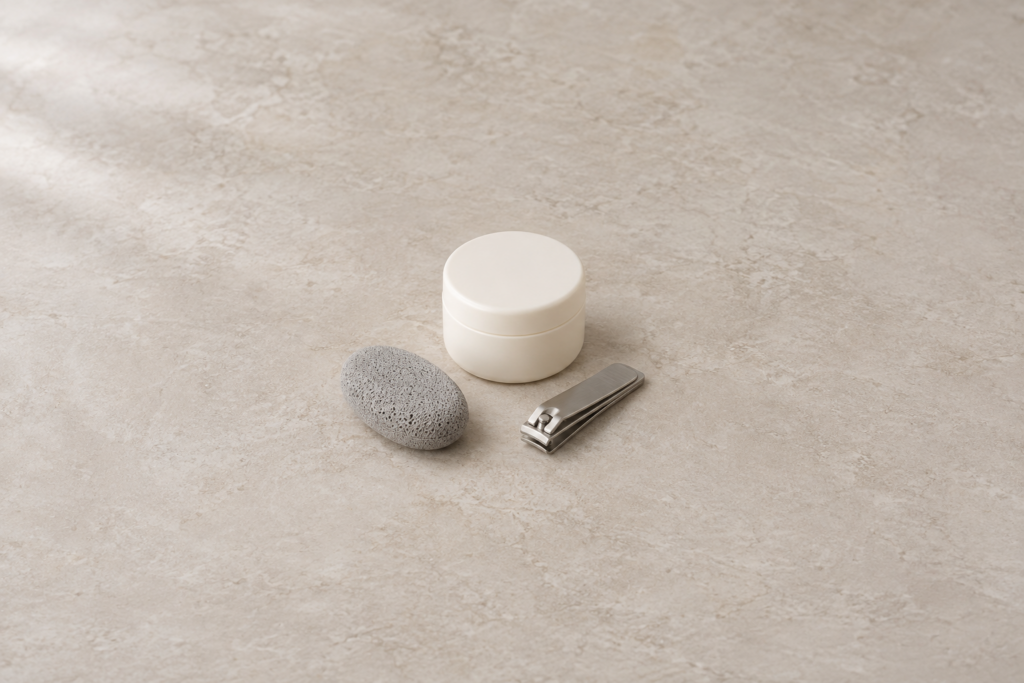
Closed ivory cream jar, gray pedicure stone and steel toenail clipper on a pale stone counter.
What you’ll learn

Care for the products you already have

Start with the item in front of you, then work through the part, package or label that answers your question.

  • Which tools and parts to clean, and how.
  • How to protect the contents of an open cosmetic.
  • Where to look for storage limits on a Drug Facts label.
  • How to interpret cosmetic changes and drug expiration dates.
  • When a single-use item is finished.
  • What a seal can tell you on first opening.
  • Where to take unwanted medicine or a spent rechargeable battery.

Tip: If your product manual is handy, keep it open as you read.

Key terms

Six terms on labels and in manuals

Care directions name parts, package features and conditions. Knowing the terms makes them easier to find.

Cleaning

Physically removing dirt, residue and many germs from a surface.

  • What comes off: A wash can carry surface dirt away with the rinse water.
  • Electronics: Use the maker’s method for the device.
  • Disinfection: Disinfecting a household surface uses chemicals to kill most germs.

Tamper-evident seal

A feature meant to show visible signs that a new package may have been disturbed.

  • Where to look: The medicine label describes the feature to inspect.
  • What to inspect: Look at the named feature itself, even if the cap is in place.
  • What it tells you: A seal can show disturbance. Its protection has limits.

Removable roller head

The detachable working piece on some powered files.

  • The roller: The detachable piece carries the grit.
  • The housing: The housing is the body left in your hand.
  • Reassembly: On the Diamond Crystals file, dry the roller and housing before reassembly.

Shelf life

How long a cosmetic is expected to keep its usual appearance, work as intended and remain safe to use.

  • Product type: The expected span varies by kind of cosmetic.
  • Handling: How the product is used affects that span.
  • Storage: Where and how you keep it also matters.

Drug expiration date

The end of the period in which a drug is known to remain stable under its labeled storage conditions.

  • Strength: Stability includes the medicine retaining its expected potency.
  • Quality and purity: Both are part of what stability testing addresses.
  • Conditions: Read the date alongside the storage instructions.

Single-use booties

The plastic booties in a foot peel such as Baby Foot’s Original Exfoliation Foot Peel, labeled for one use.

  • Opening: The directions call for immediate use once opened.
  • Afterward: The booties are finished after that first use.
  • Leftover contents: Anything left inside still falls under the one-use direction.

Tip: Find the label or care booklet and see which terms apply to your item.

Cleaning

Start with the part you can clean

Even two items from one kit can call for different methods. The useful question is which surface the direction names.

  • O’Keeffe’s Healthy Feet Original Jar is a jar of foot cream. With a cosmetic like this, care for the container by keeping it clean and closed. Leave the formula as supplied.
  • After each use, wash the stone from Tweezerman’s Essential Pedicure Kit #4219-R with soap in warm water, as the maker directs. Rinse well and air-dry the stone.
  • After each use, give that kit’s clipper a wipe using either peroxide or alcohol, as Tweezerman directs.
  • For Amopé’s Pedi Perfect Electronic Foot File with Diamond Crystals, remove the roller and rinse it under running water. Wipe the body with a cloth, then dry both parts with a clean, dry cloth before reassembly.
  • Conair’s FB52 Waterfall Foot Bath booklet says to unplug the unit immediately after use and before cleaning. Rinse the bath and wipe it with a damp cloth. Never submerge the unit.

At the sink, work through one piece at a time so you know which directions you’re following.

Contact and closure

Protect the contents each time you open the container

An open jar gives fingers direct access to the formula. That makes the moment you reach in part of how you care for it.

  • Wash your hands before touching the cosmetic, especially when you have to dip into it. Fingers can carry microorganisms into the jar.
  • Keep added water out of the jar. It may carry microbes into the cream and make any preservatives in the formula less concentrated.
  • Keep the container clean and tighten its closure when you put it away.

If you have to put the open jar down to do something else, close it before you step away.

Storage

Read the conditions on the exact package

Some directions describe what to avoid. Others set a numbered range or give a separate warning about high temperatures.

  • Baby Foot’s Original Exfoliation Foot Peel directions keep it away from direct sunlight and extreme heat or cold, without giving a numbered temperature range.
  • Dr. Scholl’s DURAGEL Corn Remover lists 20–25 °C (68–77 °F). Rexall Athlete’s Foot Clotrimazole Cream lists 15–30 °C (59–86 °F).
  • Tinactin AF Powder Spray Talc Free lists 20–25 °C (68–77 °F) for storage. A separate warning for the pressurized can rules out temperatures above 120 °F. Use the narrower range for routine storage.

Compare your shelf with the package directions. A spot under the Tinactin can’s upper warning can still fall outside its storage range.

Condition and age

Read wear, formula changes and dates on their own terms

Before you put something away, pause over the sign that caught your eye. The next step depends on what you’re looking at.

  • A cosmetic can harden as it dries, and an oil-and-water mixture can separate. FDA advises throwing away cosmetics if their color or smell changes. Several things can change how a cosmetic looks, so appearance alone leaves the cause open.
  • The date on a medicine marks the end of the period over which its stability is known, provided it’s stored as directed.
  • Amopé says to replace the Diamond Crystals roller once it’s worn. It typically looks lighter, with grit that looks rubbed down. How fast that happens depends on how hard and how long you use it.

An unchanged appearance tells you little about whether a medicine was kept under the conditions behind its date.

Replacement and disposal

Decide what is finished and where it goes

A disposable bootie, leftover medicine and a battery each raise a different question. Start by identifying what you’re about to take out of use.

  • Baby Foot calls for using the Original Exfoliation Foot Peel as soon as the booties are opened, then retiring them after that use. Tweezerman says to replace the nail file and buffer from its Essential Pedicure Kit after regular use, with no interval specified.
  • FDA favors take-back for most unused or expired medicines, including over-the-counter products like creams. Check what your collection program accepts. Sprays can have separate disposal instructions.
  • EPA says the battery’s chemistry guides disposal. Keep rechargeable batteries out of household trash and curbside recycling. If a rechargeable battery is built in, look for electronics collection that accepts the whole device.

If you’re clearing out a bathroom drawer, sort the items by what you’re discarding. Deciding what is finished and finding where to take it are separate jobs.

Two examples

How the directions apply at home

These hypothetical cases show how one detail can change what you do next.

Draining a foot bath

Suppose you’re at the sink with an unplugged Conair FB52 that you’ve just rinsed. The cord is to your right and there’s still water in the basin.

Conair tells you to drain the basin only on the side away from the cord. In this example, you’d tilt it toward the left. For storage, the booklet gives you two choices, the unit’s box or a dry, clean spot.

Checking a tube on first opening

Imagine examining the box and the tube before using Rexall Athlete’s Foot Clotrimazole Cream. The carton looks intact. The tamper-evident line tells you which part of the package you need to check.

The instruction points to the seal on the tube itself. Check for a hole in the seal or for a missing seal. Either finding is a reason to leave the cream unused.

Misconceptions

Where care instructions get misread

Small differences in the wording can change what an instruction actually covers.

Does washing a tool count as disinfecting it?

A wash can carry germs away along with dirt. The Tweezerman kit gives soap-and-water directions for cleaning its stone. A claim about how many germs that method kills would need separate evidence.

Can I skip washing a stone labeled antibacterial?

Tweezerman says to wash its Sole Smoother Antibacterial Callus Stone with soapy water and let it air-dry. The word in the product name leaves that care step in place.

Can I chill a heat-exposed foot medicine to make the original date reliable again?

FDA’s stability guidance assumes storage as labeled. Cooling the package later gives you no evidence about what happened during the earlier heat exposure.

Should all abrasives follow one replacement schedule?

Earth Therapeutics recommends changing the pumice in its Natural Sierra Pumice Brush every three to six months for hygiene. Amopé calls for replacing its Extra Coarse Pedi Perfect refill when worn and suggests three months for best performance. Those schedules address different concerns.

Does a look-alike organizer work just as well for storing foot medicines?

FDA advises leaving medicines in the packages they came in. That helps someone identify the medicine and avoid taking it for something else.

Tip: Read the stated reason alongside the interval.

Common questions

Care questions that come up at home

Use these answers for the situation and product each one names.

What should I do with personal nail tools before using them?

Clean them beforehand, CDC advises. That includes both files and clippers.

When does the cap go back on a washed pedicure rasp?

For the Tweezerman Pedicure Rasp Callus Remover, let the tool dry first, then put its storage cap back on.

Where can I keep a used roller for later?

Amopé suggests a small plastic bag for the Diamond Crystals file’s used, unworn rollers when you alternate grits. If you rinse a roller, dry it before putting it in the bag.

Where can I find storage directions if the OTC carton is gone?

DailyMed carries current labels submitted by manufacturers. Match the exact product and form, and compare with any label you still have because the online version can differ from the package you bought. Look under Other Information for storage details, and read the Warnings section for separate limits.

How can I track the age of a foot cosmetic without a date?

In the U.S., cosmetic-only products may be sold without a printed expiration date. Writing down the day you opened one lets you track its age. That tells you when the package was opened. The maker is responsible for determining its shelf life.

Can I report a cosmetic product problem if nobody had a reaction?

Yes. FDA accepts reports of suspected cosmetic problems even without a reaction. Consumers can report voluntarily online through MedWatch or use the paper form.

What if the aerosol can still has something in it?

The Tinactin AF Powder Spray Talc Free label warns against making holes in the can or burning it. EPA says to keep nonempty aerosol cans out of curbside recycling. Ask your local household hazardous-waste program whether it accepts them.

What if the foot-bath cord is damaged?

Stop using the Conair FB52 and have a Conair Service Center examine it. The booklet says owners have no parts they can service themselves.

Tip: If you’ve already decided to stop using the item, go to the disposal section for the next step.

Bottom line

Start by naming the part you’re about to handle. For a cosmetic container, the job is keeping the package clean and closed. For a tool, look up the cleaning directions for that item. Whatever goes back on the shelf still has to meet its own storage conditions.

At the end of a pedicure, a closed jar may be ready to put away while the freshly washed Tweezerman kit stone still needs to air-dry. Decide what can go back on the shelf before you clear the sink.

Related reading

Explore Foot Care

Choose the format that fits what you want to read next.