How Track Saws Works

Track saws are often described as simple guided circular saws, but their operation involves a coordinated system of plunge mechanics, rail guidance, and controlled cutting depth. Misunderstandings typically arise from assuming the rail alone ensures accuracy, when in reality the interaction between the saw base, blade position, and guide track defines both alignment and cut behavior.

This explainer outlines how the plunge system engages the blade, how the guide rail stabilizes and directs movement, and how depth and bevel adjustments influence cutting geometry. It clarifies how these components function together to produce consistent, controlled cuts, providing a clear understanding of the mechanism behind track saw operation.

By: Review Streets Research Lab
Updated: April 19, 2026
Explainer · 8–12 min read
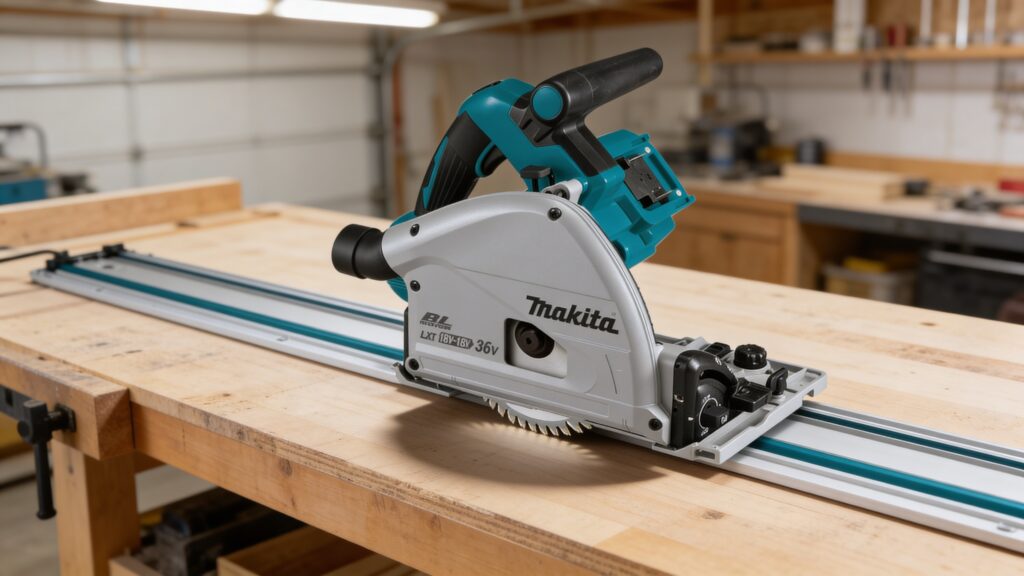
Makita XPS01Z track saw
What You’ll Learn

How Track Saws Work

A focused breakdown of the internal systems and guided mechanisms that control blade movement, alignment, and cutting depth in a track saw.

  • How the plunge mechanism lowers the blade in a controlled cutting motion
  • How the guide rail constrains movement to maintain straight, consistent cuts
  • What the base plate does to stabilize alignment along the track edge
  • How depth adjustment determines blade exposure and influences cut behavior
  • How bevel settings change cutting angle relative to the guide rail
  • What keeps the blade aligned with the splinter guard during operation
  • How friction strips and rail features prevent shifting during a cut

Tip: Think of the system as blade motion guided by a fixed reference edge, where each adjustment directly changes how the cut is formed.

Definitions

Key Parts That Make a Track Saw Work

Understanding each core component clarifies how the system maintains alignment, controls blade movement, and produces consistent, guided cuts.

Plunge Mechanism

The system that lowers and raises the blade into the material. It controls how the cut begins and how the blade engages under load.

  • Entry control: Determines how smoothly the blade enters the material
  • Spring return: Retracts the blade when pressure is released
  • Depth linkage: Works with depth settings to limit blade travel

Guide Rail

A fixed reference track that constrains the saw’s movement. It ensures the saw travels in a straight line relative to the cutting path.

  • Alignment edge: Defines the exact line the blade will follow
  • Friction strips: Help prevent shifting during operation
  • Splinter guard: Supports fibers at the cut edge for cleaner results

Base Plate

The flat surface that rides along the guide rail. It stabilizes the saw and maintains consistent positioning throughout the cut.

  • Contact surface: Keeps the tool level against the track
  • Guide interface: Locks into the rail to prevent lateral movement
  • Balance: Distributes weight evenly during forward motion

Depth Adjustment

The mechanism that sets how far the blade extends below the base. It directly influences cutting exposure and material engagement.

  • Blade exposure: Controls how much of the blade enters the material
  • Material matching: Adjusts for thickness to avoid overcutting
  • Consistency: Ensures repeatable cut depth across passes

Bevel System

The adjustment system that tilts the saw relative to the rail. It changes the angle of the cut while maintaining guided alignment.

  • Angle control: Sets the tilt relative to the guide rail
  • Pivot points: Maintain stability while adjusting cutting angle
  • Reference scale: Provides repeatable angle positioning

Blade Alignment System

The relationship between the blade, base plate, and rail edge. It ensures the blade tracks precisely along the intended cut line.

  • Offset control: Positions the blade relative to the rail edge
  • Tracking accuracy: Maintains consistent cut path during motion
  • System interaction: Depends on base, rail, and plunge working together

Tip: Think of the system as controlled blade movement constrained by a fixed guide, where each component defines position, depth, and direction.

Power Path

How Motion and Guidance Work Together in a Track Saw

A track saw operates through a sequence of linked mechanical actions rather than a single cutting event. Understanding that sequence explains how the tool controls blade position, travel direction, and cutting depth at the same time.

  • The motor creates blade rotation before the blade enters the material
  • The plunge mechanism lowers the blade into a controlled cutting position
  • The base plate transfers the saw’s weight and movement onto the guide rail
  • The rail constrains travel so the saw follows a fixed reference line
  • The depth setting limits how far the blade extends below the base

When these parts stay in alignment, the saw produces a cut path that remains mechanically consistent from start to finish.

Motors

Blade Rotation Determines How the Cut Begins and Continues

The rotating blade is the cutting element, but its behavior depends on how steadily it maintains speed under load. This matters because cutting quality is shaped by how the blade enters, shears, and exits the material.

  • Startup speed affects how cleanly the blade begins the cut as it plunges
  • Load response influences whether rotation stays consistent through dense sections
  • Blade stability affects how smoothly teeth pass through the kerf without excess deflection

Consistent blade rotation helps the entire guided system behave predictably as resistance changes along the cut.

Gearing

Depth and Bevel Settings Change Cutting Geometry

Depth and bevel adjustments do more than reposition the blade. They change the geometry of the cut by altering blade exposure and the angle at which the blade passes through the material.

  • Shallower depth reduces blade exposure and limits how much tooth enters below the surface
  • Greater depth increases blade projection and changes how the blade engages the workpiece
  • Bevel adjustment tilts the saw relative to the guide rail while preserving the guided path
  • Angle changes affect the relationship between blade position, cut edge, and support surface

These settings directly shape how the saw enters the material, tracks through it, and exits at the far edge.

Heat Management

Friction and Resistance Influence Cut Behavior

A track saw is guided, but it is never friction-free. Resistance builds at the blade, along the rail interface, and at the contact surfaces that keep the tool stable during movement.

  • Blade friction increases as more tooth surface stays engaged in the cut
  • Rail contact friction helps stabilize travel while still allowing forward motion
  • Material resistance changes with density, thickness, and cutting angle

As resistance changes, the saw’s movement and blade behavior change with it, which is why guided cutting still depends on system balance.

User Control

Rail Guidance Creates a Fixed Reference for Straight Movement

The guide rail is the system’s external reference, and the saw’s base is built to follow it. This relationship matters because straight cutting depends on constrained motion, not visual steering alone.

  • The rail establishes the line the saw will follow across the material
  • The base plate engages the rail to reduce side-to-side deviation
  • Friction strips help keep the rail from shifting during the cut
  • The splinter guard marks the cut line and supports the material edge

Because the rail defines direction mechanically, the saw’s accuracy comes from guided tracking rather than freehand correction.

Quick Reality Check

Where Track Saws Stay Controlled — and Where Limits Appear

A quick balance of what the guided system controls well, and where its mechanical limits become more visible in real cutting conditions.

What the System Controls

A track saw controls direction extremely well because the base rides against a fixed rail instead of relying on freehand steering alone.

That constrained movement keeps blade travel aligned to the reference edge, so the cut path remains consistent as long as the rail stays stable.

Where the Limits Show

The system does not remove resistance, heat, or blade deflection, so cut behavior can still change when material density or setup conditions vary.

If depth, bevel, or rail contact changes during the pass, the guided path remains fixed but the blade’s interaction with the material does not.

Common Myths

Misconceptions About How Track Saws Work

Track saws are often explained too simply, which hides how rail guidance, plunge motion, and blade setup actually shape cut behavior.

The rail alone guarantees a perfect cut

The rail controls direction, but it does not control every variable in the cut. Blade condition, depth setting, bevel angle, and material resistance still affect how the blade moves through the workpiece.

Track saws are just circular saws on rails

A track saw uses a guided base and plunge system that change how the blade enters and follows the cut. That mechanical relationship makes the tool operate differently from a freehand saw.

Plunge action only lowers the blade

The plunge system does more than move the blade downward. It controls blade entry, interacts with the depth stop, and determines how the blade engages the material at the start of the cut.

Depth settings only matter for thickness

Depth adjustment also changes blade exposure and how much tooth remains engaged below the surface. That affects cutting geometry, resistance, and the way the blade exits the material.

If the cut wanders, the rail moved

Deviation can also come from blade deflection, changing resistance, or inconsistent contact between the saw base and rail. A fixed reference line does not eliminate every source of movement within the system.

Tip: Think of a track saw as a guided cutting system, where the rail sets direction but the final cut still depends on blade motion, setup, and material interaction.

FAQ

Frequently Asked Questions About How Track Saws Work

Clear answers to common questions about how plunge action, rail guidance, and blade setup interact to control direction, depth, and cutting behavior.

How does a track saw stay perfectly straight during a cut?

The saw’s base engages with the guide rail, which acts as a fixed reference edge. This constrains movement to a single path, so the blade follows the rail rather than relying on freehand alignment.

What actually happens when you plunge the blade into material?

The plunge mechanism lowers the spinning blade into the workpiece in a controlled motion. This action determines how the cut begins and how the blade engages with the material at entry.

Why does blade depth setting matter beyond material thickness?

Depth controls how much of the blade extends below the base, which changes how many teeth stay engaged in the cut. This affects resistance, stability, and how the blade exits the material.

How does the splinter guard influence the cut edge quality?

The splinter guard supports the material fibers directly at the cut line as the blade passes. By limiting fiber lift at the edge, it helps maintain a cleaner separation along the guided path.

What causes a track saw cut to feel rough or inconsistent?

Changes in resistance, blade condition, or depth setup can alter how the blade moves through the material. Even with a fixed rail, the blade’s interaction with the workpiece determines how smooth the cut feels.

How does bevel adjustment change the way the saw cuts?

The bevel system tilts the saw relative to the rail, changing the angle of the blade as it passes through the material. This alters cutting geometry while the rail continues to define the path.

Why can a cut deviate even when the rail is stable?

Deviation can come from blade deflection, uneven pressure, or inconsistent contact between the base and rail. The guide sets direction, but the blade’s behavior within the material can still vary.

What role does the base plate play during the cut?

The base plate supports the saw and maintains consistent contact with the guide rail. It stabilizes movement, ensuring the blade remains aligned with the rail throughout the cutting process.

Tip: When a cut behaves unexpectedly, trace the system step by step—rail position, base contact, blade setup, and material resistance—to identify where the change begins.

How Track Saws Works

Bottom Line

Track saws work by constraining blade motion through a guided mechanical system. The rail, plunge mechanism, base plate, and depth settings work together to control direction, entry, and blade engagement throughout the cut.

Once that system is clear, it becomes easier to interpret cut behavior as the result of alignment, geometry, and material interaction rather than a single feature.

Next Steps

Go Deeper or Explore Related Track Saw Guides

Now that the mechanism is clear, these pages help extend that understanding into broader track saw categories and decision-oriented reference content.

Track Saw Lists

A curated overview of track saw pages organized to help readers narrow the field through broader category-level editorial coverage.

Track Saw Comparisons

Focused comparison pages that examine how different track saw designs, features, and systems change cutting behavior and practical use.

Track Saw Buying Guides

Reference-style buying guides that explain which specifications and design details matter when interpreting how track saw systems actually work.

Quick Summary

How Track Saws Work

  • Track saws combine plunge motion, blade rotation, and rail-guided alignment
  • The guide rail controls direction by constraining the saw’s travel path
  • Depth settings change blade exposure and affect cutting resistance and geometry
  • Bevel adjustments alter blade angle while preserving guided directional movement
  • Cut quality depends on alignment, blade behavior, and material interaction