
Bottle Body
The bottle body is the main chamber that holds fluid and determines capacity, grip, weight, and durability.
- Example: a slim bottle that fits a car cup holder
- Check: match capacity to carry comfort
- Limit: larger capacity can become bulky
Water bottles work by giving the user a controlled way to carry, drink, seal, and refill fluids throughout the day or around exercise. The useful parts are simple: a body that holds liquid, an opening for drinking, and a closure that prevents leaks.
The differences show up in daily use. Capacity, cap design, flow rate, grip, insulation, material, cleaning access, and carry style determine whether a bottle is easy to keep nearby or easy to ignore.
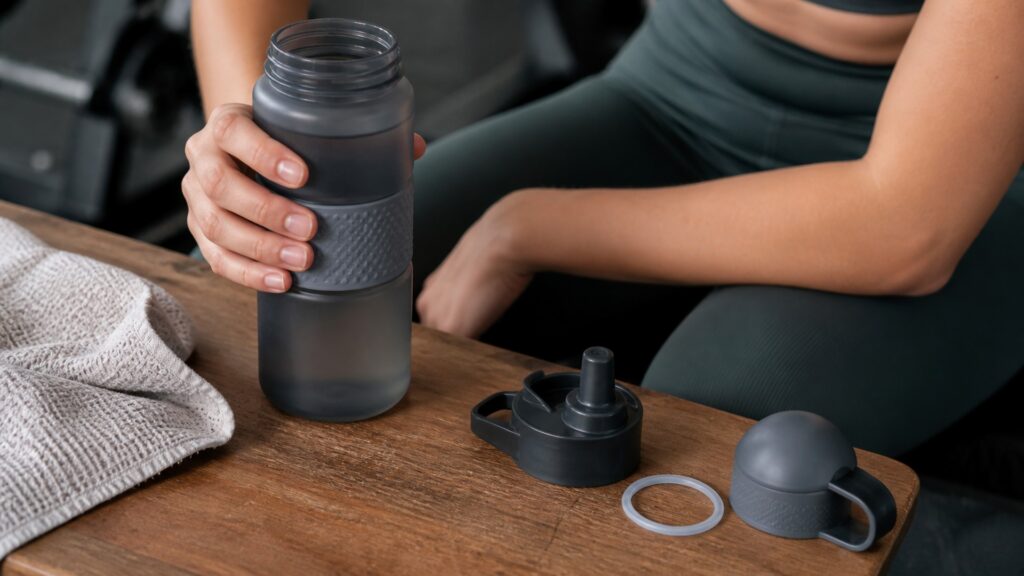
A practical explanation of bottle design, fluid access, sealing, and routine fit.
Tip: A water bottle is useful only if it is easy enough to carry, drink from, refill, and clean in the places you actually use it.
These terms explain why simple bottles can feel very different in practice.
The bottle body is the main chamber that holds fluid and determines capacity, grip, weight, and durability.
The cap system closes the bottle and controls how quickly the user can open, sip, or pour.
Flow rate is how quickly water leaves the bottle through the mouth, straw, spout, or opening.
Insulation slows temperature change so drinks stay colder or warmer longer.
Cleaning access is how easily the user can reach interior surfaces, cap parts, straws, and seals.
Carry fit is how well the bottle works with bags, cup holders, bike cages, handles, and daily movement.
Tip: The best water bottle is less about novelty and more about reducing friction every time you drink, refill, and clean.
Every water bottle has to hold fluid, make drinking convenient, and prevent leaks when closed. The tradeoff is that a design optimized for fast sipping may not be the easiest to clean or the safest in a bag.
Small design choices change how the bottle behaves during ordinary use.
A larger bottle reduces refill frequency, but it can become heavy or awkward. A smaller bottle is easier to carry, but it may run out too quickly during long sessions or hot days.
Capacity should match the refill opportunities in the user's routine.
Plastic, stainless steel, glass, and soft bottles each have different strengths. The right choice depends on whether the user values light weight, insulation, taste neutrality, squeeze flow, or ruggedness.
Material choice should support the setting where the bottle gets used most.
Water bottles can collect odors, residue, and buildup around caps, straws, seals, and threads. Cleaning access matters because a bottle used daily also needs daily maintenance.
Cleanability is a core feature, not an afterthought.
A bottle for a desk, a gym floor, a backpack, a bike, or a car cup holder may need a different shape and cap. A strong design on paper can fail if it does not fit the real carrying situation.
A water bottle works best when it disappears into the routine.
The bottle improves access to fluids, but it does not manage hydration by itself.
They keep water available at a desk, gym, car, trail, or commute.
They can reduce single-use bottles and make drinking easier to repeat.
They cannot decide how much fluid a person needs.
Poor cleaning habits can make even a good bottle unpleasant.
Simple products still have meaningful design tradeoffs.
They all hold liquid, but cap design, materials, cleaning access, and carry fit can change daily usefulness.
A larger bottle can reduce refills, but it may be too heavy or awkward to carry.
Insulation helps with temperature, but it adds weight and may not matter for short use.
Caps, seals, straws, and threads may still need inspection and drying.
Tip: Choose for the routine first, then compare features.
Short answers about capacity, caps, cleaning, and everyday use.
Leak resistance and easy drinking are usually most important, followed closely by cleaning access.
Choose insulated if temperature matters for hours. Choose non-insulated if light weight and simplicity matter more.
The best size is the one you will carry and refill. Bigger is useful only if it still fits the routine.
Straw caps can make sipping easier, but they add parts that need careful cleaning.
A water bottle works well when it makes drinking, carrying, refilling, and cleaning easy enough to repeat.
Water bottles work by making fluid access portable, repeatable, and easier to fit into daily routines.
The best bottle is the one whose size, cap, material, cleaning needs, and carry fit match the places where it will actually be used.
Use these Review Streets paths to compare related fitness categories and practical buying decisions.
Explore the category before comparing individual products.
Compare related gear for fluids, powders, and workout fueling routines.
Compare mixing-focused bottles with simpler hydration options.
Choose a retailer
Prices checked regularly. We may earn a commission at no cost to you.