
How Water & Hygiene Health Devices Works

The Water & Hygiene Health Devices category includes options with several working pathways. In broad terms, Water & Hygiene Health Devices deliver, heat, filter, contain, or direct water and hygiene materials for drinking, washing, toileting, oral care, or skin care. When considering water & hygiene health devices, selection should begin with the particular input and result expected from the individual product.

A practical review centers on water source, temperature, flow, filter certification, cleaning, drying, contact surfaces, and user technique. Real value becomes visible during supporting safer hygiene when mobility, dexterity, contamination risk, or water quality creates a specific barrier. Limits also matter: a hygiene device cannot make contaminated water safe unless it is designed, certified, maintained, and used for that contaminant.

By: Review Streets Research Lab
Updated: August 20, 2026
Explainer · 8-12 min read
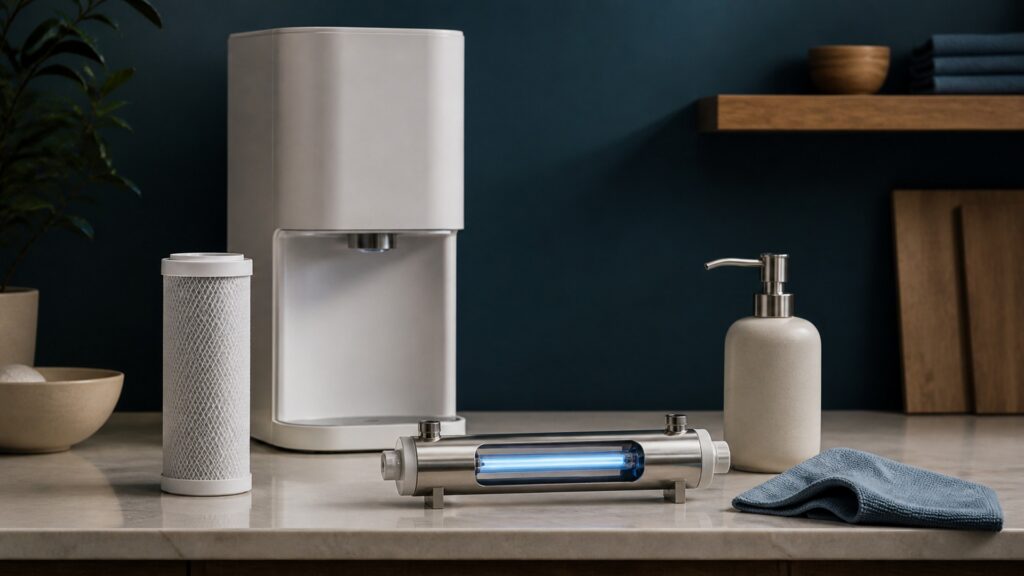
People-free editorial still life illustrating filtration treatment washing and sanitation pathways
What You'll Learn

Understand the working system behind water & hygiene health devices

Connect the active pathway, observation method, daily setting, risk controls, and realistic boundary for water & hygiene health devices.

  • Define the exact purpose
  • Trace the active pathway
  • Measure a useful response
  • Test real-world fit
  • Control the main risks
  • Respect the category boundary

Tip: Read the concept as part of a system, then connect it back to the use case.

Definitions

Six Concepts That Shape This Decision

These definitions connect the main idea to the variables, limits, and practical signals readers need to compare options.

Water & Hygiene Health Devices

This topic covers a health or wellness approach with a distinct operating role: Water & Hygiene Health Devices deliver, heat, filter, contain, or direct water and hygiene materials for drinking, washing, toileting, oral care, or skin care.

  • Before relying on water & hygiene health devices, its value depends on whether that mechanism matches a clearly stated purpose.
  • Evaluate water source, temperature, flow, filter certification, cleaning, drying, contact surfaces, and user technique rather than relying on the category name.
  • A central boundary remains: a hygiene device cannot make contaminated water safe unless it is designed, certified, maintained, and used for that contaminant.

Active input

The physical, nutritional, behavioral, electrical, optical, or informational exposure delivered during water & hygiene health devices.

  • During a water & hygiene health devices trial, identifying the input prevents packaging from being confused with mechanism.
  • Record dose, timing, route, settings, and duration where relevant.
  • With water & hygiene health devices in view, an input can be measurable without being necessary, effective, or safe.

Response measure

An observation chosen to show whether water & hygiene health devices changed the intended outcome.

  • For this topic, useful review includes water source, temperature, flow, filter certification, cleaning, drying, contact surfaces, and user technique.
  • For water & hygiene health devices, establish a baseline and use comparable conditions at follow-up.
  • In this water & hygiene health devices discussion, a proxy score should not be treated as proof of diagnosis or broad health improvement.

Use context

The real task, environment, timing, and user conditions surrounding water & hygiene health devices.

  • With water & hygiene health devices in view, context determines whether the approach remains usable outside an ideal demonstration.
  • Test the setting represented by supporting safer hygiene when mobility, dexterity, contamination risk, or water quality creates a specific barrier.
  • In a water & hygiene health devices decision, success in one situation cannot establish suitability across every routine or user.

Failure mode

A predictable way that water & hygiene health devices can become ineffective, burdensome, misleading, or harmful.

  • Important concerns include scalding, microbial growth, cross-contamination, filter neglect, slips, skin damage, and unsafe electrical use near water.
  • During a water & hygiene health devices trial, plan prevention, detection, and a response for the most consequential failure.
  • At follow-up for water & hygiene health devices, low invasiveness or consumer availability does not eliminate failure modes.

Review threshold

A preselected point for changing, stopping, or escalating the plan involving water & hygiene health devices.

  • In a water & hygiene health devices decision, thresholds prevent indefinite use when benefit remains unclear or conditions change.
  • Use symptom, function, adverse-effect, and time-based criteria.
  • For someone evaluating water & hygiene health devices, self-monitoring should never delay urgent help for serious or rapidly changing symptoms.

Tip: Keep the definitions connected; the strongest answer usually comes from the whole system, not one term.

Purpose

Define the practical job of Water & Hygiene Health Devices

A useful plan begins with one observable outcome. The proposed goal should match the category's real role: Water & Hygiene Health Devices deliver, heat, filter, contain, or direct water and hygiene materials for drinking, washing, toileting, oral care, or skin care. In a water & hygiene health devices decision, broad hopes should be translated into a task, symptom, function, or intake question that can be reviewed.

  • State the desired change
  • Choose a review period
  • Identify who makes the decision
  • Keep alternatives visible

Purpose gives Water & Hygiene Health Devices a reason to be used and a reason to be stopped.

Pathway

Follow the active input through the system

The operating pathway becomes concrete when stated directly: Water & Hygiene Health Devices deliver, heat, filter, contain, or direct water and hygiene materials for drinking, washing, toileting, oral care, or skin care. For someone evaluating water & hygiene health devices, dose, technique, timing, route, and user conditions can strengthen or interrupt that pathway, so copying another person's routine may not reproduce the same exposure.

  • Identify the input
  • Check technique and timing
  • Confirm the relevant dose
  • Note conditions that interrupt delivery

Understanding the pathway makes Water & Hygiene Health Devices easier to evaluate without promotional shortcuts.

Observation

Select measurements that fit water & hygiene health devices

The most useful observations include water source, temperature, flow, filter certification, cleaning, drying, contact surfaces, and user technique. During a water & hygiene health devices trial, establish what is normal before the change, repeat the observation under comparable conditions, and decide in advance what difference would be meaningful enough to alter the plan.

  • Record a baseline
  • Use consistent conditions
  • Separate signal from variation
  • Connect numbers with function

Measurement should clarify water & hygiene health devices, not create a score that has no practical consequence.

Daily fit

Move water & hygiene health devices into an ordinary setting

A revealing scenario is supporting safer hygiene when mobility, dexterity, contamination risk, or water quality creates a specific barrier. With water & hygiene health devices in view, the routine should include storage, preparation, cleaning, charging, food access, reminders, assistance, and cost whenever those factors apply to the topic.

  • Test the complete sequence
  • Include difficult days
  • Count recurring costs
  • Create a realistic fallback

A plan for water & hygiene health devices succeeds only when the user can repeat it under real conditions.

Safety

Control the main failure mode before relying on water & hygiene health devices

The principal concerns include scalding, microbial growth, cross-contamination, filter neglect, slips, skin damage, and unsafe electrical use near water. In a water & hygiene health devices decision, review instructions, personal vulnerabilities, interactions, warning signs, and the point at which a product or self-guided routine should give way to qualified care.

  • Name the likely failure
  • Use explicit stop rules
  • Review changing health conditions
  • Do not mask progression

Safe use of water & hygiene health devices depends on recognizing both adverse effects and false reassurance.

Quick Reality Check

What Water & Hygiene Health Devices can and cannot establish

Before relying on water & hygiene health devices, the category can be assessed through its mechanism, practical fit, and a defined outcome. In a water & hygiene health devices decision, its value remains bounded by individual conditions, measurement quality, and the limits of consumer products.

What a careful review can show

A structured trial can reveal whether a plan involving water & hygiene health devices changes water source, temperature, flow, filter certification, cleaning, drying, contact surfaces, and user technique under realistic conditions.

Within water & hygiene health devices use, clear stop rules can identify burden, adverse effects, and the point at which the plan should change.

What the result cannot prove

A favorable response to water & hygiene health devices cannot by itself diagnose the original problem or predict every future outcome.

Water & Hygiene Health Devices cannot replace professional assessment when severe, persistent, unexplained, or rapidly changing symptoms are present.

Common Myths

Misconceptions That Distort the Decision

Common shortcuts and misunderstandings can make the topic seem simpler than it is.

Myth: one water & hygiene health devices approach works the same way for everyone

When assessing water & hygiene health devices, users differ in anatomy, diet, health, technique, environment, medicines, expectations, and baseline function. For water & hygiene health devices, the relevant evidence is water source, temperature, flow, filter certification, cleaning, drying, contact surfaces.

Myth: more intensity always makes water & hygiene health devices more effective

Within water & hygiene health devices use, a stronger dose, tighter fit, longer session, larger serving, or higher setting can increase burden without improving the target. The pathway for water & hygiene health devices remains constrained because a hygiene device.

Myth: a quick improvement proves water & hygiene health devices solved the cause

With water & hygiene health devices in view, short-term changes can reflect natural variation, expectation, rest, timing, or temporary symptom modulation. A useful response may still matter, but water & hygiene health devices cannot confirm diagnosis merely because the first.

Myth: consumer availability makes water & hygiene health devices risk free

Relevant risks include scalding, microbial growth, cross-contamination, filter neglect, slips, skin damage, and unsafe electrical use near water. Labels, appropriate technique, personal medical context, and escalation thresholds still matter even when water & hygiene health devices can be purchased without.

Tip: Treat strong claims as starting points for comparison, not final answers.

FAQ

Questions to Ask Before Choosing

Concise answers to common questions readers may have after the main explanation.

What should be checked before trying water & hygiene health devices?

Define the intended outcome, review directions and contraindications, establish baseline conditions, and confirm that the planned use reflects how water & hygiene health devices deliver, heat, filter, contain, or direct water and hygiene materials for drinking, washing, toileting, oral care.

How can someone evaluate the effect of water & hygiene health devices?

Track water source, temperature, flow, filter certification, cleaning, drying, contact surfaces, and user technique under comparable conditions and connect the result with daily function. Before relying on water & hygiene health devices, use a predetermined review date, note adverse effects.

When should a plan involving water & hygiene health devices be changed or stopped?

When considering water & hygiene health devices, stop when instructions require it, adverse effects appear, symptoms worsen, the product is damaged or contaminated, the burden exceeds value, or the defined trial shows no meaningful benefit. Escalate serious changes promptly.

When is professional guidance appropriate for water & hygiene health devices?

Seek guidance for severe, persistent, unexplained, or rapidly changing symptoms; significant medical conditions; pregnancy; childhood use; complex medicines; recent surgery or injury; or uncertainty about whether water & hygiene health devices fits the actual problem.

Bottom Line

Evaluate water & hygiene health devices through the job, active pathway, useful measurements, daily setting, and main failure modes. With water & hygiene health devices in view, topic-specific evidence is more valuable than a long feature list or a broad wellness promise.

Keep the boundary visible: a hygiene device cannot make contaminated water safe unless it is designed, certified, maintained, and used for that contaminant. In a water & hygiene health devices decision, use defined outcomes and stop rules so the decision can change when the evidence or circumstances change.

Next Steps

Go Deeper or Compare Your Options

Use these Review Streets paths to connect the explainer to related categories, comparisons, and next decisions.