
Water Tank
The water tank holds the water that the internal paddles move through during each stroke.
- Example: a clear tank at the front or side of the rower
- Check: look for fill marks and leak signs
- Limit: tank size and placement vary by model
Water resistance rowers work by moving paddles through a tank of water as the user pulls the handle. The harder and faster the stroke, the more drag the paddles meet, which makes the resistance feel connected to the user's effort.
That water-based feel is the reason many people like these rowers. They can sound and respond more like outdoor rowing than magnetic machines, but they also bring tradeoffs: tank fill level, storage, weight, maintenance, and monitor accuracy all matter.
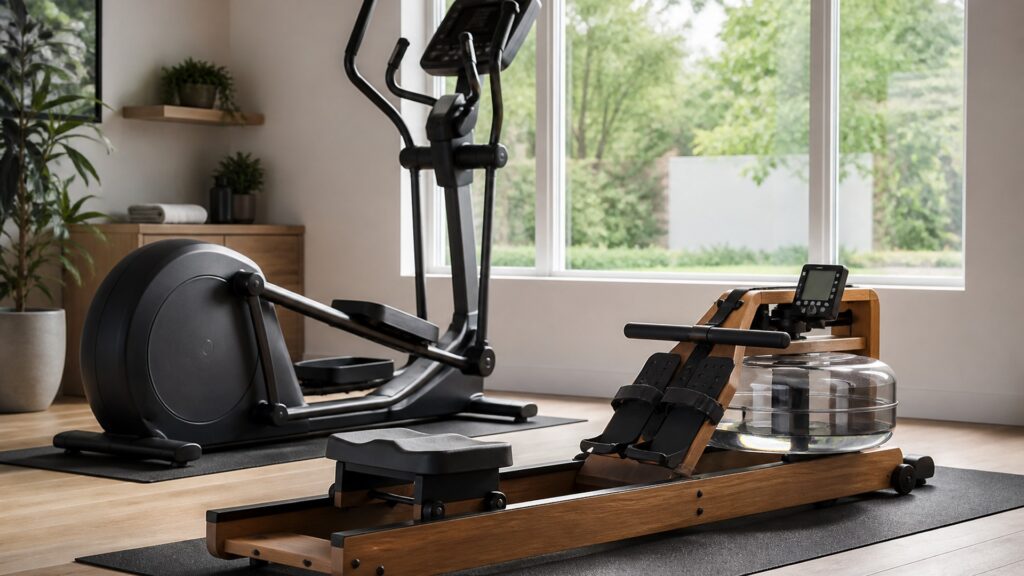
A practical explanation of tank drag, stroke force, water feel, setup, and maintenance.
Tip: Judge the rower by the full stroke, not just the sound of the water.
These terms explain what happens between the handle pull and the resistance felt by the user.
The water tank holds the water that the internal paddles move through during each stroke.
Paddle drag is the resistance created when paddles push against water inside the tank.
Stroke force is how much effort the user puts into the drive phase of the rowing stroke.
Fill level is the amount of water in the tank, which can change the baseline resistance feel.
Water sound is the audible churn produced by the tank during rowing.
Tank care includes water treatment, storage, and inspection needed to keep the rower usable.
Tip: Water rowers feel simple during use, but tank setup and care still affect long-term ownership.
When the user pulls, paddles move through the water. Water resists that motion, and the resistance rises naturally as the stroke becomes harder or faster.
The resistance is tied closely to how the stroke is performed.
A water rower often feels less like a fixed setting and more like a response to effort. That can make steady rowing feel smooth and intervals feel more natural for users who like self-paced resistance.
The machine rewards a smooth stroke more than a forceful tug.
Many water rowers let the user adjust the water level within a recommended range. More water can make the flywheel feel heavier, while less water can make the stroke feel lighter.
Fill level is part of setup, not something to change casually every workout.
The water sound is a selling point for some users and a drawback for others. The tank also adds weight and may affect how easy the rower is to move or store.
The rower has to fit the home as well as the workout.
Water resistance rowers are not maintenance-free. The tank may need treatment tablets, inspection, and careful handling to prevent cloudiness, leaks, or odor.
A water rower works best when tank care is treated as part of ownership.
The water tank creates a distinctive feel, but it also adds ownership details.
Resistance responds naturally to stroke effort.
The water sound and feel can make steady rowing more satisfying.
The tank adds weight, sound, and maintenance.
Fill level and storage instructions matter.
Water resistance is intuitive, but it is not magic.
Tank feel can be pleasant, but stroke mechanics and rower design still matter.
More water changes the baseline feel, but effort and technique still drive the session.
They can sound soothing, but the water churn is audible.
Most water rowers require some form of water treatment or inspection.
Tip: The best water rower is smooth, stable, and easy to maintain in the actual home.
Short answers about tank resistance, sound, setup, and maintenance.
Paddles move through water inside a tank, and the water resists the motion as the user pulls.
Yes. Harder and faster strokes usually create more drag, so the effort rises with the user's input.
Many models let you adjust water level within a recommended range, but it is not as quick as turning a magnetic resistance dial.
They make water-churning sound. Some users like it, but it should be tested in the room where the rower will be used.
Water rowers use tank drag for a responsive rowing feel, but tank care and home fit matter.
Water resistance rowers work by turning each stroke into paddle drag inside a water tank.
They can feel smooth and responsive, but buyers should check tank setup, sound, storage, and maintenance before choosing one.
Use these Review Streets paths to compare related categories and practical next decisions.
Explore the broader rowing-machine category.
Compare water resistance with magnetic resistance.
Compare more home cardio options.
Choose a retailer
Prices checked regularly. We may earn a commission at no cost to you.