
Flat Bench
A flat bench provides a fixed horizontal surface for pressing, rowing, and support exercises.
- Example: dumbbell bench press on a flat pad
- Check: test pad height and stability
- Limit: it does not provide incline or decline angles
Weight benches work by giving the lifter a stable surface for pressing, rowing, step-up, core, and dumbbell exercises. The bench does not provide resistance by itself. It positions the body so free weights, racks, cables, or bodyweight movements can be performed with more control.
The main differences between benches are adjustability, stability, pad shape, height, weight capacity, wheel or handle placement, and whether the bench fits the exercises and equipment around it.
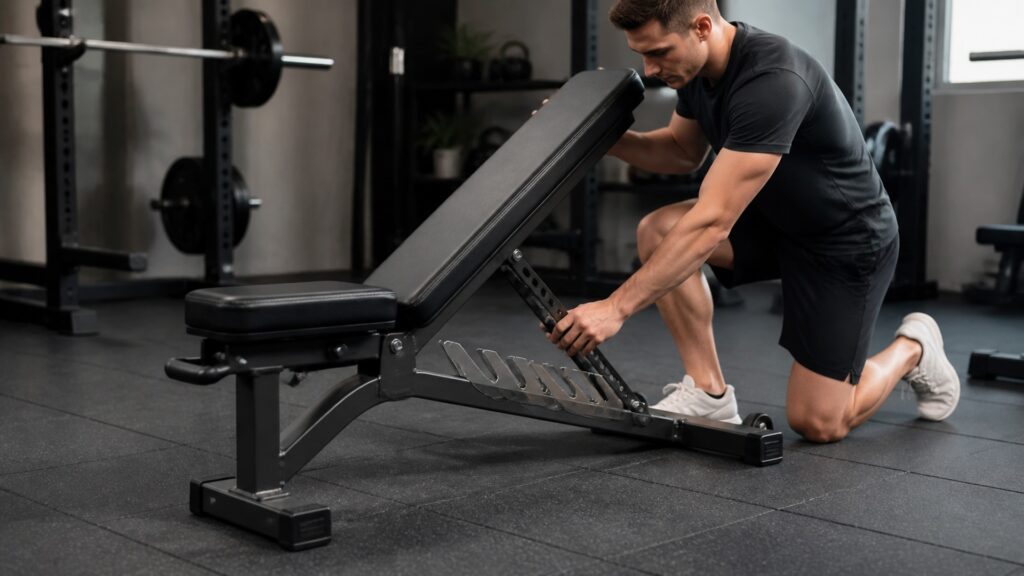
A practical look at flat, incline, adjustable, and utility bench setup.
Tip: Start with the exercises the weight benches must support every week, then judge features by whether they make those movements easier to repeat.
These concepts clarify how weight benches fit real home strength training decisions.
A flat bench provides a fixed horizontal surface for pressing, rowing, and support exercises.
An adjustable bench changes back-pad or seat angles for different exercises.
Pad stability is how steady the bench feels under load and movement.
Bench height is the distance from floor to pad surface.
Angle setting is the incline, flat, or decline position used for an exercise.
Equipment fit is how well the bench works with racks, dumbbells, cables, and room layout.
Tip: The best choice is the one that matches the user's repeated workouts, available space, and setup habits.
A weight bench creates a stable surface so the lifter can press, row, brace, or support the body during strength movements.
The bench works by making body position repeatable.
Incline, flat, and decline positions shift how pressing, rowing, and shoulder work feel. The angle should match the exercise goal.
Angle changes are useful when they are secure and repeatable.
Wobble, pad shift, or frame flex can make a simple lift feel uncertain. Stability matters more as loads increase.
A stable bench lets the lifter focus on the exercise.
Bench height affects foot position, arch, and control. Pad width and shape affect shoulder movement and comfort.
Small bench dimensions can change how lifts feel.
A bench often pairs with racks, dumbbells, cables, or Smith machines. It should fit the equipment and leave enough working clearance.
A bench is part of the setup, not just a standalone pad.
Benches expand exercise options, but they do not replace resistance or good setup.
They support pressing, rowing, core, and dumbbell work.
Adjustable benches add useful exercise angles.
They do not provide resistance on their own.
Poor stability or fit can limit otherwise good exercises.
A bench is simple equipment, but details still matter.
Stability, height, and capacity matter as loads increase.
Angles help only when the bench stays stable and fits the routine.
Too much softness can reduce stability.
It usually needs dumbbells, a rack, cables, or bodyweight exercises to create training value.
Tip: Broad equipment claims deserve a practical setup check before they influence a purchase.
Short answers for comparing home gym equipment.
It supports body position for pressing, rowing, core, dumbbell, and rack-based exercises.
Choose flat for simplicity and stability, and adjustable for more exercise angles.
Check stability, height, capacity, pad shape, angle settings, and equipment fit.
Yes, if the bench length, height, and wheels fit the rack setup.
A weight bench works by making body position stable and repeatable for loaded exercises.
Weight benches work by supporting the body so pressing, rowing, dumbbell, rack, and cable exercises can be performed with stable positioning.
The best bench fits the user's body, equipment, room, and repeated exercise angles.
Use these Review Streets paths to compare related categories and practical next decisions.
Explore bench styles, adjustments, and home-gym fit.
Compare rack-based strength setups that often pair with benches.
Review cable-focused equipment for angle-based accessory work.
Choose a retailer
Prices checked regularly. We may earn a commission at no cost to you.